



Filters
SORT
Product Availability –
Brand –
Liquid Line –
Suction Line –
Insulation Thickness –
Length (Feet) –
Review Score –
 --%3E %3Csvg version='1.1' id='Fill' xmlns='http://www.w3.org/2000/svg' xmlns:xlink='http://www.w3.org/1999/xlink' x='0px' y='0px' viewBox='0 0 100 100' enable-background='new 0 0 100 100' xml:space='preserve'%3E %3Cpath fill='%23F15C02' d='M79.44,0.95H20.56C9.78,0.95,0.95,9.78,0.95,20.56v58.87c0,10.79,8.82,19.61,19.61,19.61h58.87 c10.79,0,19.61-8.83,19.61-19.61V20.56C99.05,9.78,90.22,0.95,79.44,0.95z M65.38,58.24l9.38,29.58L49.69,69.78L24.5,87.82 l9.34-29.6L8.8,39.6l30.73-0.17c0,0,6.98-19.61,10-28.93c0.54,1.36,9.88,29.1,9.88,29.1H91.2L65.38,58.24z'/%3E %3C/svg%3E)
 --%3E %3Csvg version='1.1' id='With-RB' xmlns='http://www.w3.org/2000/svg' xmlns:xlink='http://www.w3.org/1999/xlink' x='0px' y='0px' viewBox='0 0 100 100' enable-background='new 0 0 100 100' xml:space='preserve'%3E %3Cpath fill='%23FBC8B4' d='M79.44,0.95H20.56C9.78,0.95,0.95,9.78,0.95,20.56v58.87c0,10.79,8.82,19.61,19.61,19.61h58.87 c10.79,0,19.61-8.83,19.61-19.61V20.56C99.05,9.78,90.22,0.95,79.44,0.95z M65.38,58.24l9.38,29.58L49.69,69.78L24.5,87.82 l9.34-29.6L8.8,39.6l30.73-0.17c0,0,6.98-19.61,10-28.93c0.54,1.36,9.88,29.1,9.88,29.1H91.2L65.38,58.24z'/%3E %3C/svg%3E)
Price Range –
Standard Refrigerant Line Sets

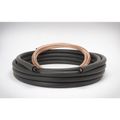
 --%3E %3Csvg version='1.1' id='No-RB' xmlns='http://www.w3.org/2000/svg' xmlns:xlink='http://www.w3.org/1999/xlink' x='0px' y='0px' viewBox='0 0 100 100' enable-background='new 0 0 100 100' xml:space='preserve'%3E %3Cpath fill='%23CECECE' d='M79.44,0.95H20.56C9.78,0.95,0.95,9.78,0.95,20.56v58.87c0,10.79,8.82,19.61,19.61,19.61h58.87 c10.79,0,19.61-8.83,19.61-19.61V20.56C99.05,9.78,90.22,0.95,79.44,0.95z M65.38,58.24l9.38,29.58L49.69,69.78L24.5,87.82 l9.34-29.6L8.8,39.6l30.73-0.17c0,0,6.98-19.61,10-28.93c0.54,1.36,9.88,29.1,9.88,29.1H91.2L65.38,58.24z'/%3E %3C/svg%3E)


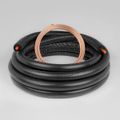
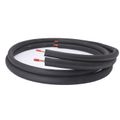
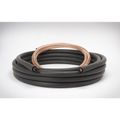




 --%3E %3Csvg version='1.1' id='Half' xmlns='http://www.w3.org/2000/svg' xmlns:xlink='http://www.w3.org/1999/xlink' x='0px' y='0px' viewBox='0 0 100 100' enable-background='new 0 0 100 100' xml:space='preserve'%3E %3Cg%3E %3Cpath fill='%23F15C02' d='M30.05,70.23l3.79-12.01L8.8,39.6l30.73-0.17c0,0,6.98-19.61,10-28.93c0.54,1.36,9.88,29.1,9.88,29.1h1.58 L93.71,7.18c-3.58-3.82-8.66-6.23-14.28-6.23H20.56C9.78,0.95,0.95,9.78,0.95,20.56v58.87c0,5.41,2.22,10.32,5.79,13.88 L30.05,70.23z'/%3E %3C/g%3E %3Cpath fill='%23FBC8B4' d='M93.71,7.18L60.98,39.6H91.2L65.38,58.24l9.38,29.58L49.69,69.78L24.5,87.82l5.55-17.59L6.75,93.32 c3.55,3.54,8.44,5.73,13.82,5.73h58.87c10.79,0,19.61-8.83,19.61-19.61V20.56C99.05,15.4,97.01,10.69,93.71,7.18z'/%3E %3C/svg%3E)
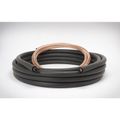
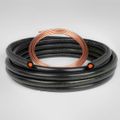
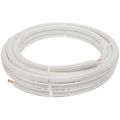
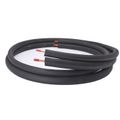
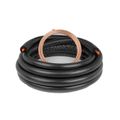
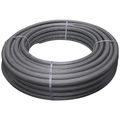

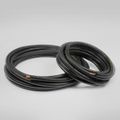
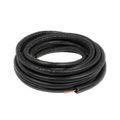
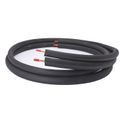
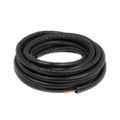

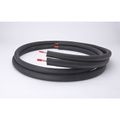
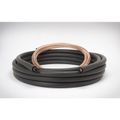
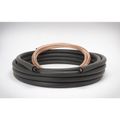

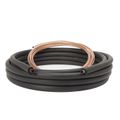
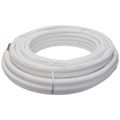
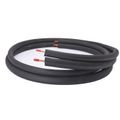
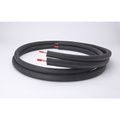

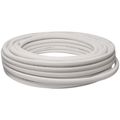
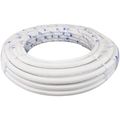
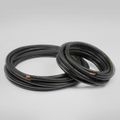
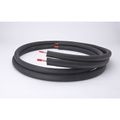
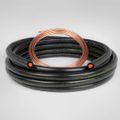
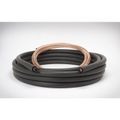
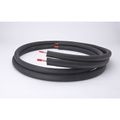
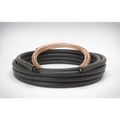
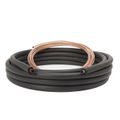
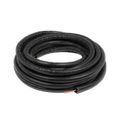
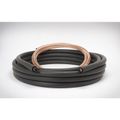
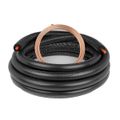
Standard refrigerant line sets are the matched pair of copper tubing, a smaller liquid line and a larger suction line, that connect an outdoor condensing unit to an indoor evaporator coil or air handler. Line sets carry refrigerant between the two halves of a split system, so the tubing diameters have to match both the equipment's rated tonnage and the manufacturer's connection sizes. Standard line sets come insulated on the suction line to prevent condensation and heat gain along its run, while the liquid line typically ships bare or lightly wrapped. Length and diameter both affect system performance: a line set that's too long or undersized for the application increases pressure drop and can starve the coil of refrigerant. Confirming the distance between the condenser and the indoor unit, along with the required tonnage, before ordering keeps the system charged correctly on the first startup.
Subcategories
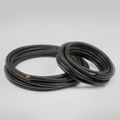
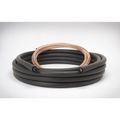
- Standard Insulated Line Sets: Standard insulated line sets pair a bare liquid line with a foam-insulated suction line, matching the most common residential split-system configuration. Insulation on the suction line keeps the colder refrigerant from sweating inside walls, attics, or crawlspaces. Contractors stock these in common length increments to cover the majority of single-story residential runs.
- Refrigerant Line Set Length Options: Line sets are sold in fixed length increments to match typical condenser-to-air-handler distances, from short runs for closet-mounted equipment to longer runs for equipment set further from the house. Choosing a length close to the actual run minimizes excess coiled tubing that has to be buried or hidden. Cutting a line set short is straightforward, but running short leaves no room for a proper flare or braze connection.
- Line Set Diameter and Tonnage Matching: Liquid and suction line diameters are sized to the tonnage of the connected equipment, with larger tonnage systems requiring a larger suction line diameter to keep refrigerant velocity and oil return within range. Installing a line set with the wrong suction diameter can trap compressor oil in the line, leading to premature compressor wear. Manufacturers publish line set sizing charts by tonnage and equipment model to confirm the correct pairing before installation.
Buying Guide
Start with the distance between the outdoor condensing unit and the indoor coil or air handler, measured along the actual routing path rather than a straight line, since that number determines which length of line set to order. Add extra length for vertical runs, wall penetrations, or any routing around obstacles, and round up rather than down since a line set can be trimmed on site but not extended without an added coupling.
Next, confirm the tonnage of the system and cross-reference it against the manufacturer's line set sizing chart, since liquid and suction line diameters both change with tonnage. Pairing an undersized suction line with a larger system restricts refrigerant flow and can damage the compressor over time, while an oversized line risks poor oil return at low load.
Standard Refrigerant Line Sets ship with the suction line pre-insulated, but contractors working in exposed or high-heat-gain locations such as attics sometimes add supplemental insulation to the liquid line as well. Checking whether the connections needed are flare fittings or brazed joints matters too, since some equipment calls for one method over the other, and confirming compatibility with the refrigerant type in use before final connections are made avoids a comeback for a slow leak.
Frequently Asked Questions
How do I figure out what length line set I need?
Measure the actual routing distance between the condenser and the indoor coil, including any vertical rise, wall penetrations, and bends around obstacles, rather than a straight-line distance. Rounding up to the next available length increment is easier than extending a line set that comes up short.
Can I use a smaller diameter line set to save on material cost?
No. Line set diameter is matched to system tonnage by the equipment manufacturer, and undersizing the suction line restricts refrigerant flow, disrupts oil return to the compressor, and can shorten compressor life. Checking the manufacturer's line set sizing chart against the installed tonnage is the right way to confirm diameter before ordering.
Does the liquid line need insulation too?
Standard line sets typically ship with insulation on the suction line only, since that's the line carrying colder refrigerant vapor prone to condensation. Liquid line insulation is added in specific situations, such as long runs through hot attic space, to reduce heat gain into the refrigerant before it reaches the metering device.
What happens if I install a line set that's too long for the run?
Excess coiled tubing left in a wall or attic space adds pressure drop and extra refrigerant charge requirements, and coiled sections can trap oil if not sloped correctly. Trimming the line set to the actual measured run and properly supporting any necessary bends keeps the system operating within its rated charge.
Are flare fittings or brazed connections required on these line sets?
Connection method depends on the equipment manufacturer's installation instructions, with many residential systems approved for flare connections and some commercial or high-efficiency systems requiring brazed joints. Checking the equipment's installation manual before starting the connection avoids having to redo a joint that doesn't meet the manufacturer's warranty terms.
