




Stop & Waste Valves

 --%3E %3Csvg version='1.1' id='No-RB' xmlns='http://www.w3.org/2000/svg' xmlns:xlink='http://www.w3.org/1999/xlink' x='0px' y='0px' viewBox='0 0 100 100' enable-background='new 0 0 100 100' xml:space='preserve'%3E %3Cpath fill='%23CECECE' d='M79.44,0.95H20.56C9.78,0.95,0.95,9.78,0.95,20.56v58.87c0,10.79,8.82,19.61,19.61,19.61h58.87 c10.79,0,19.61-8.83,19.61-19.61V20.56C99.05,9.78,90.22,0.95,79.44,0.95z M65.38,58.24l9.38,29.58L49.69,69.78L24.5,87.82 l9.34-29.6L8.8,39.6l30.73-0.17c0,0,6.98-19.61,10-28.93c0.54,1.36,9.88,29.1,9.88,29.1H91.2L65.38,58.24z'/%3E %3C/svg%3E)

 --%3E %3Csvg version='1.1' id='Fill' xmlns='http://www.w3.org/2000/svg' xmlns:xlink='http://www.w3.org/1999/xlink' x='0px' y='0px' viewBox='0 0 100 100' enable-background='new 0 0 100 100' xml:space='preserve'%3E %3Cpath fill='%23F15C02' d='M79.44,0.95H20.56C9.78,0.95,0.95,9.78,0.95,20.56v58.87c0,10.79,8.82,19.61,19.61,19.61h58.87 c10.79,0,19.61-8.83,19.61-19.61V20.56C99.05,9.78,90.22,0.95,79.44,0.95z M65.38,58.24l9.38,29.58L49.69,69.78L24.5,87.82 l9.34-29.6L8.8,39.6l30.73-0.17c0,0,6.98-19.61,10-28.93c0.54,1.36,9.88,29.1,9.88,29.1H91.2L65.38,58.24z'/%3E %3C/svg%3E)
 --%3E %3Csvg version='1.1' id='With-RB' xmlns='http://www.w3.org/2000/svg' xmlns:xlink='http://www.w3.org/1999/xlink' x='0px' y='0px' viewBox='0 0 100 100' enable-background='new 0 0 100 100' xml:space='preserve'%3E %3Cpath fill='%23FBC8B4' d='M79.44,0.95H20.56C9.78,0.95,0.95,9.78,0.95,20.56v58.87c0,10.79,8.82,19.61,19.61,19.61h58.87 c10.79,0,19.61-8.83,19.61-19.61V20.56C99.05,9.78,90.22,0.95,79.44,0.95z M65.38,58.24l9.38,29.58L49.69,69.78L24.5,87.82 l9.34-29.6L8.8,39.6l30.73-0.17c0,0,6.98-19.61,10-28.93c0.54,1.36,9.88,29.1,9.88,29.1H91.2L65.38,58.24z'/%3E %3C/svg%3E)
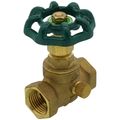
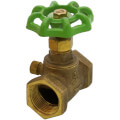
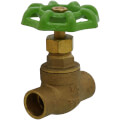
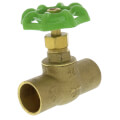
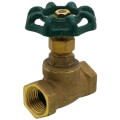
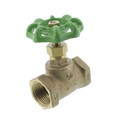
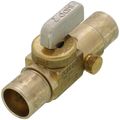
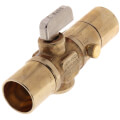
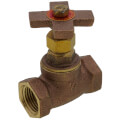
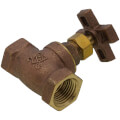
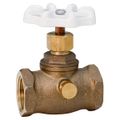


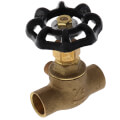
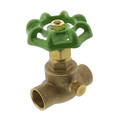
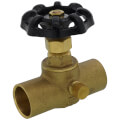
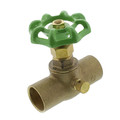
Stop and waste valves are plumbing shutoff valves that include a small drain port, or waste port, downstream of the seat, letting a plumber close the valve and drain the line beyond it in a single operation. Contractors install them on exterior hose bibs, irrigation lines, and other water service runs that need to be fully drained before winter to prevent a freeze-related pipe failure. The valve typically threads or solders into the supply line, with the waste port positioned so gravity pulls water out of the downstream piping once the main seat is closed. Because a stop and waste valve doubles as both a shutoff and a drain point, it eliminates the need for a separate drain valve or a boiler-drain fitting elsewhere on the same run.
Subcategories
- Threaded Stop & Waste Valves: Threaded stop and waste valves connect to a water line using standard NPT threads, making them a straightforward choice for retrofits where the existing pipe is already threaded or where a union or adapter fitting will make the transition. Plumbers commonly use threaded versions on exterior hose bib supply lines that need a shutoff point inside a heated space before the line runs out through an exterior wall. The waste port on a threaded model is typically a small side outlet with a removable plug.
- Solder/Sweat Stop & Waste Valves: Solder or sweat stop and waste valves are designed to be soldered directly into a copper supply line, giving a permanent, leak-resistant connection on new construction or full repipe jobs. Soldered valves see heavy use on underground or crawlspace water service lines feeding an outdoor sillcock, where a soldered joint holds up better over time than a threaded connection exposed to soil moisture. Most solder-style valves include a full-port design to minimize pressure loss through the valve body.
- PEX/Push-Fit Stop & Waste Valves: PEX and push-fit stop and waste valves connect to PEX tubing using a crimp, clamp, or push-fit connection instead of solder or pipe threads, which speeds up installation on repipe jobs already using PEX throughout the house. A push-fit version can be installed without any special crimping tool, making it a practical option for a service call where matching the existing PEX connection method saves time. Like other stop and waste valves, these still include a waste port for draining the downstream line.
Buying Guide
Selecting the right connection type is the first decision on a stop and waste valve. Threaded valves suit retrofits into existing pipe threads, solder valves give the most durable long-term connection on copper supply lines, and PEX or push-fit versions match the speed of a modern repipe. Picking a connection type that matches the rest of the run avoids adding extra couplings or adapters that create more potential leak points.
Orientation matters just as much as connection type. Stop & Waste Valves need to be installed with the waste port positioned correctly relative to the direction of water flow and the slope of the downstream line, or the line won't drain fully when the valve closes. Installing one backward is a common mistake that only becomes obvious the first time a line needs draining and water is still trapped downstream.
Material and pressure rating round out the decision. Bronze and brass bodies are standard for most residential water service applications, while a higher pressure rating may be needed on a commercial job with elevated system pressure. Confirming local code requirements for backflow prevention is also worth doing before finalizing a valve choice, since some jurisdictions require an additional check valve or vacuum breaker alongside a stop and waste valve on certain installations.
Frequently Asked Questions
What does the waste port on a stop and waste valve actually do?
The waste port is a small drain opening downstream of the main valve seat that lets trapped water escape once the valve is closed, fully draining the line beyond it. That's what allows a single valve to both shut off flow and drain the downstream piping in one step, which matters for winterizing an exterior hose bib or irrigation line.
Why would I choose a stop and waste valve over a standard ball valve?
A standard ball valve only shuts off flow, leaving water trapped in the downstream line where it can freeze and split a pipe in cold weather. A stop and waste valve drains that downstream section automatically when closed, which is why it's the standard choice for exterior water lines in climates with freezing winters.
Does orientation matter when installing a stop and waste valve?
Yes. The valve needs to be installed with the waste port and flow direction matching the manufacturer's markings, and the downstream line should slope enough to let water drain by gravity once the valve closes. Installing it backward or on a level line can leave water trapped even with the valve fully closed.
Can a stop and waste valve be used on a PEX water line?
Yes, PEX and push-fit versions are available that connect using a crimp, clamp, or push-fit fitting instead of solder or pipe threads. That connection type works well on repipe jobs already using PEX throughout the house, since it matches the rest of the system's plumbing.
What material should a stop and waste valve be for an underground water service line?
Bronze or brass bodies are standard for buried water service applications because of their corrosion resistance in contact with soil moisture. Confirming the valve's pressure rating and connection type match the rest of the service line before installation helps avoid a leak at the joint after burial.
