




Filters
SORT
Product Availability –
Brand –
Product Type –
Length (Inches) –
Review Score –
 --%3E %3Csvg version='1.1' id='Fill' xmlns='http://www.w3.org/2000/svg' xmlns:xlink='http://www.w3.org/1999/xlink' x='0px' y='0px' viewBox='0 0 100 100' enable-background='new 0 0 100 100' xml:space='preserve'%3E %3Cpath fill='%23F15C02' d='M79.44,0.95H20.56C9.78,0.95,0.95,9.78,0.95,20.56v58.87c0,10.79,8.82,19.61,19.61,19.61h58.87 c10.79,0,19.61-8.83,19.61-19.61V20.56C99.05,9.78,90.22,0.95,79.44,0.95z M65.38,58.24l9.38,29.58L49.69,69.78L24.5,87.82 l9.34-29.6L8.8,39.6l30.73-0.17c0,0,6.98-19.61,10-28.93c0.54,1.36,9.88,29.1,9.88,29.1H91.2L65.38,58.24z'/%3E %3C/svg%3E)
 --%3E %3Csvg version='1.1' id='With-RB' xmlns='http://www.w3.org/2000/svg' xmlns:xlink='http://www.w3.org/1999/xlink' x='0px' y='0px' viewBox='0 0 100 100' enable-background='new 0 0 100 100' xml:space='preserve'%3E %3Cpath fill='%23FBC8B4' d='M79.44,0.95H20.56C9.78,0.95,0.95,9.78,0.95,20.56v58.87c0,10.79,8.82,19.61,19.61,19.61h58.87 c10.79,0,19.61-8.83,19.61-19.61V20.56C99.05,9.78,90.22,0.95,79.44,0.95z M65.38,58.24l9.38,29.58L49.69,69.78L24.5,87.82 l9.34-29.6L8.8,39.6l30.73-0.17c0,0,6.98-19.61,10-28.93c0.54,1.36,9.88,29.1,9.88,29.1H91.2L65.38,58.24z'/%3E %3C/svg%3E)
Price Range –
Rooftop Support



 --%3E %3Csvg version='1.1' id='No-RB' xmlns='http://www.w3.org/2000/svg' xmlns:xlink='http://www.w3.org/1999/xlink' x='0px' y='0px' viewBox='0 0 100 100' enable-background='new 0 0 100 100' xml:space='preserve'%3E %3Cpath fill='%23CECECE' d='M79.44,0.95H20.56C9.78,0.95,0.95,9.78,0.95,20.56v58.87c0,10.79,8.82,19.61,19.61,19.61h58.87 c10.79,0,19.61-8.83,19.61-19.61V20.56C99.05,9.78,90.22,0.95,79.44,0.95z M65.38,58.24l9.38,29.58L49.69,69.78L24.5,87.82 l9.34-29.6L8.8,39.6l30.73-0.17c0,0,6.98-19.61,10-28.93c0.54,1.36,9.88,29.1,9.88,29.1H91.2L65.38,58.24z'/%3E %3C/svg%3E)

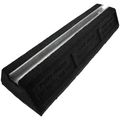

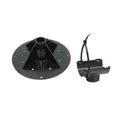
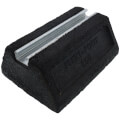
 --%3E %3Csvg version='1.1' id='Half' xmlns='http://www.w3.org/2000/svg' xmlns:xlink='http://www.w3.org/1999/xlink' x='0px' y='0px' viewBox='0 0 100 100' enable-background='new 0 0 100 100' xml:space='preserve'%3E %3Cg%3E %3Cpath fill='%23F15C02' d='M30.05,70.23l3.79-12.01L8.8,39.6l30.73-0.17c0,0,6.98-19.61,10-28.93c0.54,1.36,9.88,29.1,9.88,29.1h1.58 L93.71,7.18c-3.58-3.82-8.66-6.23-14.28-6.23H20.56C9.78,0.95,0.95,9.78,0.95,20.56v58.87c0,5.41,2.22,10.32,5.79,13.88 L30.05,70.23z'/%3E %3C/g%3E %3Cpath fill='%23FBC8B4' d='M93.71,7.18L60.98,39.6H91.2L65.38,58.24l9.38,29.58L49.69,69.78L24.5,87.82l5.55-17.59L6.75,93.32 c3.55,3.54,8.44,5.73,13.82,5.73h58.87c10.79,0,19.61-8.83,19.61-19.61V20.56C99.05,15.4,97.01,10.69,93.71,7.18z'/%3E %3C/svg%3E)
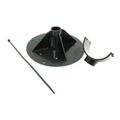
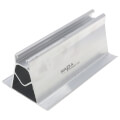
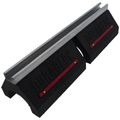
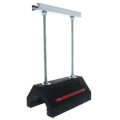
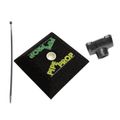
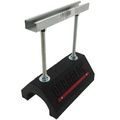
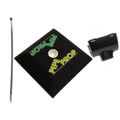
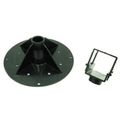

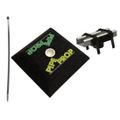
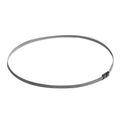
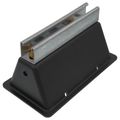
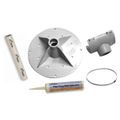

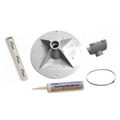
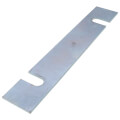

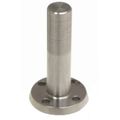

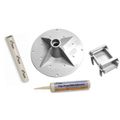

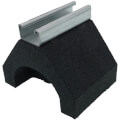
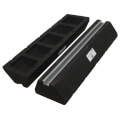
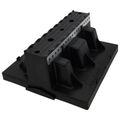
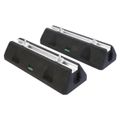
Rooftop supports keep HVAC piping, conduit, ductwork, and equipment elevated off the roof surface, protecting both the roofing membrane and the components running across it. Setting pipe or equipment directly on a roof deck traps moisture, damages the membrane over time, and creates a tripping and snow-load hazard during service visits. A properly spaced support system distributes weight evenly and keeps runs level, which matters for condensate drainage and refrigerant piping alike. Rooftop supports come in configurations for single pipes, multiple parallel runs, and heavier equipment like condensing units or rooftop package units. Getting the spacing and load rating right during design avoids sagging runs or roof damage later, which is why rooftop supports show up on nearly every commercial mechanical rooftop installation.
Subcategories
- Single-Pipe Rooftop Supports: Single-pipe supports carry one refrigerant line, conduit run, or small pipe across a rooftop, cradling it above the membrane at a consistent height. Techs use these on smaller residential or light commercial jobs where only one or two lines need to cross the roof. Spacing supports at consistent intervals keeps the pipe from sagging between points. They're a common choice for mini-split line sets and small conduit runs.
- Multi-Pipe Rooftop Supports: Multi-pipe or trapeze-style supports carry several parallel runs, such as refrigerant lines, condensate piping, and conduit, on a single rooftop rack. Commercial rooftop installations with multiple RTUs or a shared piping corridor typically use this configuration to keep runs organized and level. Consolidating several lines onto one support system also reduces the number of roof penetrations needed for anchoring. Fewer roof penetrations also matters when the roofing contractor needs to sign off on rooftop work.
- Equipment Mounting Supports: Heavier rooftop equipment, like condensing units or package units, needs a support rated for the equipment's full weight rather than a pipe-rated support. These typically distribute load across a wider footprint to avoid concentrated point loads on the roof deck. Confirming the equipment's operating weight against the support's load rating is a standard step before installation. Getting this wrong risks roof damage or an unstable equipment mount.
- Non-Penetrating Support Bases: Non-penetrating supports use a weighted base, rather than a roof penetration, to anchor pipe or equipment supports in place. Contractors favor them on roofs where the warranty terms restrict additional penetrations, or where the roofing membrane can't be disturbed. Ballast weight in the base needs to account for local wind load requirements. Non-penetrating supports show up often on retrofit jobs where the roof was installed after the original piping design.
Buying Guide
Start a rooftop support layout by counting what's actually crossing the roof: single lines, parallel pipe runs, conduit, or heavier equipment like condensing units. Counting the actual runs determines whether single-pipe supports, multi-pipe trapeze racks, or equipment-rated bases fit the job.
Load rating matters as much as spacing. Rooftop Supports rated for light pipe runs won't hold up under a condensing unit or package unit, so matching the support to the actual equipment weight avoids a failed installation down the line. Spacing intervals for pipe runs should follow the pipe manufacturer's sag limits, since supports placed too far apart let lines dip and pool condensate.
Roof type and warranty terms narrow the choice further. Some roofing warranties restrict new penetrations, which pushes the job toward non-penetrating, ballasted support bases instead of anchored posts. Ballast weight then needs to account for local wind load requirements, particularly on taller buildings or coastal areas. Finally, plan for the number of roof penetrations the job actually needs. Consolidating multiple lines onto shared multi-pipe supports cuts down on penetrations compared to running individual supports for every line, which roofing contractors and building owners generally prefer to see on a rooftop mechanical layout.
Frequently Asked Questions
Do rooftop pipe supports need to avoid roof penetrations?
Not always, but many roofing warranties restrict additional penetrations, which is where non-penetrating, ballasted support bases come in. Confirming the roof warranty terms before choosing a support style avoids a conflict during final inspection.
How far apart should rooftop pipe supports be spaced?
Spacing depends on the pipe size and material, following the pipe manufacturer's sag limits for that specific run. Supports placed too far apart let the line sag between points, which can pool condensate or stress fittings over time.
Can the same support hold a condensing unit and a pipe run?
No, equipment-rated supports and pipe supports are built for different load ranges. A condensing unit or package unit needs a support rated for its full operating weight, not a support designed for a single pipe or conduit run.
What's the benefit of a multi-pipe trapeze support over individual supports?
Consolidating several parallel runs onto one trapeze-style support reduces the total number of roof penetrations or ballast points needed. It also keeps runs organized and level across a shared rooftop corridor.
Do rooftop supports need extra ballast in high-wind areas?
Yes, non-penetrating support bases rely on ballast weight to stay anchored, and that weight needs to account for local wind load requirements. Coastal or high-rise locations typically need more ballast than a low-wind inland site.
