




Filters
SORT
Product Availability –
Category –
Brand –
Size –
Finish –
Outside Diameter –
Review Score –
 --%3E %3Csvg version='1.1' id='Fill' xmlns='http://www.w3.org/2000/svg' xmlns:xlink='http://www.w3.org/1999/xlink' x='0px' y='0px' viewBox='0 0 100 100' enable-background='new 0 0 100 100' xml:space='preserve'%3E %3Cpath fill='%23F15C02' d='M79.44,0.95H20.56C9.78,0.95,0.95,9.78,0.95,20.56v58.87c0,10.79,8.82,19.61,19.61,19.61h58.87 c10.79,0,19.61-8.83,19.61-19.61V20.56C99.05,9.78,90.22,0.95,79.44,0.95z M65.38,58.24l9.38,29.58L49.69,69.78L24.5,87.82 l9.34-29.6L8.8,39.6l30.73-0.17c0,0,6.98-19.61,10-28.93c0.54,1.36,9.88,29.1,9.88,29.1H91.2L65.38,58.24z'/%3E %3C/svg%3E)
 --%3E %3Csvg version='1.1' id='With-RB' xmlns='http://www.w3.org/2000/svg' xmlns:xlink='http://www.w3.org/1999/xlink' x='0px' y='0px' viewBox='0 0 100 100' enable-background='new 0 0 100 100' xml:space='preserve'%3E %3Cpath fill='%23FBC8B4' d='M79.44,0.95H20.56C9.78,0.95,0.95,9.78,0.95,20.56v58.87c0,10.79,8.82,19.61,19.61,19.61h58.87 c10.79,0,19.61-8.83,19.61-19.61V20.56C99.05,9.78,90.22,0.95,79.44,0.95z M65.38,58.24l9.38,29.58L49.69,69.78L24.5,87.82 l9.34-29.6L8.8,39.6l30.73-0.17c0,0,6.98-19.61,10-28.93c0.54,1.36,9.88,29.1,9.88,29.1H91.2L65.38,58.24z'/%3E %3C/svg%3E)
Price Range –
Strut Clamps



 --%3E %3Csvg version='1.1' id='No-RB' xmlns='http://www.w3.org/2000/svg' xmlns:xlink='http://www.w3.org/1999/xlink' x='0px' y='0px' viewBox='0 0 100 100' enable-background='new 0 0 100 100' xml:space='preserve'%3E %3Cpath fill='%23CECECE' d='M79.44,0.95H20.56C9.78,0.95,0.95,9.78,0.95,20.56v58.87c0,10.79,8.82,19.61,19.61,19.61h58.87 c10.79,0,19.61-8.83,19.61-19.61V20.56C99.05,9.78,90.22,0.95,79.44,0.95z M65.38,58.24l9.38,29.58L49.69,69.78L24.5,87.82 l9.34-29.6L8.8,39.6l30.73-0.17c0,0,6.98-19.61,10-28.93c0.54,1.36,9.88,29.1,9.88,29.1H91.2L65.38,58.24z'/%3E %3C/svg%3E)

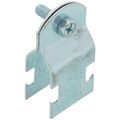


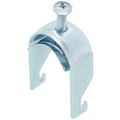
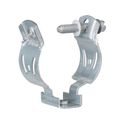
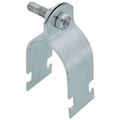
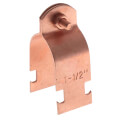


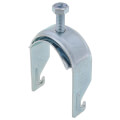
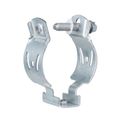


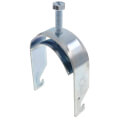


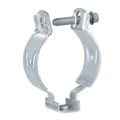
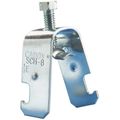
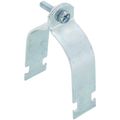
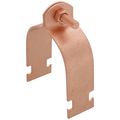
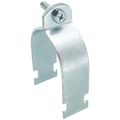
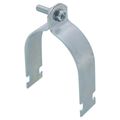

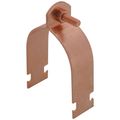
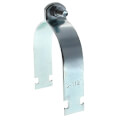

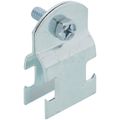
Strut clamps are fasteners designed to secure pipe, conduit, and tubing to strut channel systems in commercial, industrial, and mechanical room installations. Also called channel clamps, they wrap around a pipe or conduit and bolt directly to the channel's slotted rail, eliminating the need for drilled supports or welded brackets. Strut clamps are manufactured in a range of styles, including one-piece and two-piece designs, cushioned versions for insulated or vibration-sensitive lines, and conduit-specific clamps sized for electrical metallic tubing. Most are stamped from steel and finished with electrogalvanized or hot-dip galvanized coatings to resist corrosion in mechanical rooms, plant floors, and other demanding environments.
Contractors rely on strut clamps because they speed up rough-in work: a technician can position, adjust, and reposition a clamp along the channel without re-drilling or re-welding anything. For plumbing, HVAC, and electrical crews working from a strut-based support system, choosing the right clamp size and style keeps pipe runs secure, organized, and code-compliant.
Subcategories
- Conduit Clamps: Conduit clamps hold electrical metallic tubing and rigid conduit against strut channel in commercial wiring installations. They're sized to match standard conduit trade sizes and used to keep conduit runs straight and properly spaced along a wall or ceiling-mounted channel. Electricians choose them to match the conduit material and the surrounding environment. Most are available in steel or aluminum construction.
- Pipe Clamps: Pipe clamps secure copper, steel, or plastic pipe to strut channel in plumbing and hydronic heating systems. They're built with a wider saddle than conduit clamps to accommodate pipe outside diameters rather than conduit trade sizes. Mechanical contractors use them on domestic water, hydronic, and fire protection lines that run alongside strut-mounted equipment. A properly matched pipe clamp prevents the line from shifting or sagging between support points.
- Cushioned Clamps: Cushioned clamps include a rubber or foam liner between the clamp body and the pipe to reduce vibration and prevent metal-on-metal contact. They're specified on refrigerant lines, insulated piping, and any run where noise transmission or condensation is a concern. HVAC technicians use cushioned clamps on line sets and chilled water piping where the liner also helps maintain the vapor barrier around insulated tubing. The cushioning material needs to be compatible with the line's insulation and operating temperature.
- Two-Piece Clamps: Two-piece clamps split into a top and bottom half that bolt together around the pipe or conduit, making them easier to install on runs that are already in place. They're a common choice for retrofit work where a one-piece clamp would require disconnecting or threading the line through the opening. Contractors use two-piece designs when working in tight mechanical rooms or above finished ceilings where maneuvering room is limited. Sizing still follows the same trade-size or outside-diameter rules as one-piece clamps.
Buying Guide
Choosing the right strut clamp starts with matching the clamp to what it's holding: conduit clamps are sized by trade size, while pipe clamps are sized by outside diameter, so measuring the actual line before ordering avoids a clamp that's too loose or too tight. Material selection matters as much as size. Steel clamps with an electrogalvanized finish work well in dry, indoor mechanical rooms, while hot-dip galvanized or stainless steel clamps hold up better in damp basements, exterior applications, or coastal environments where corrosion is a bigger concern.
For lines that carry vibration, like refrigerant piping or equipment connected to compressors and pumps, a cushioned clamp helps prevent the metal-on-metal contact that leads to noise and premature wear. Insulated lines need a cushioned or padded clamp sized to fit over the insulation rather than the bare pipe, so it's worth checking whether the listed size refers to the pipe or the insulated outside diameter.
Installation access also affects the choice between one-piece and two-piece designs. One-piece clamps are generally more economical and slightly stronger, but two-piece clamps make retrofit work faster since they don't require threading the pipe through the clamp opening. Strut clamps are a small part of any support system, but the correct size, material, and style keep pipe and conduit runs secure, quiet, and protected from corrosion for the life of the installation.
Frequently Asked Questions
What's the difference between a conduit clamp and a pipe clamp?
Conduit clamps are sized by electrical trade size and shaped to grip rigid conduit or EMT, while pipe clamps use a wider saddle sized by the pipe's actual outside diameter. Using a conduit clamp on pipe, or vice versa, usually results in a loose fit that won't hold the line securely. Matching the clamp type to the material being supported is the first step in choosing the right part.
Do strut clamps work with any brand of strut channel?
Most strut clamps are designed to standard slotted channel dimensions and fit common channel brands, but it's worth confirming the channel's slot width and depth before ordering. Channel systems from different manufacturers generally follow the same industry dimensions, which is why clamps are largely interchangeable across brands. Checking the clamp's listed compatibility avoids a mismatch on the jobsite.
When should I use a cushioned clamp instead of a standard clamp?
Cushioned clamps are the better choice on refrigerant lines, insulated piping, and any run where vibration or noise transmission is a concern. The rubber or foam liner keeps the pipe from contacting bare metal, which reduces wear and helps preserve the insulation's vapor barrier. Standard clamps work fine for uninsulated, low-vibration lines like most domestic water piping.
Can strut clamps be used outdoors or in damp locations?
Yes, but the finish matters. A standard electrogalvanized clamp is intended for dry, indoor use, while hot-dip galvanized or stainless steel clamps are built to resist the corrosion that comes with outdoor exposure or damp basements. Choosing the wrong finish for the environment shortens the clamp's service life.
Are one-piece or two-piece strut clamps easier to install on existing pipe runs?
Two-piece clamps are generally easier for retrofit work because they split apart and bolt around the pipe without needing to thread the line through an opening. One-piece clamps typically need to be installed before the pipe is fully run, or slid on from an open end. For jobs where the piping is already in place, two-piece clamps save time.
