




'/%3E%3C/svg%3E)
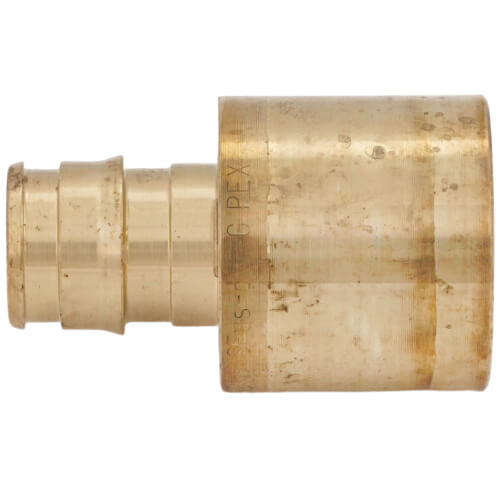
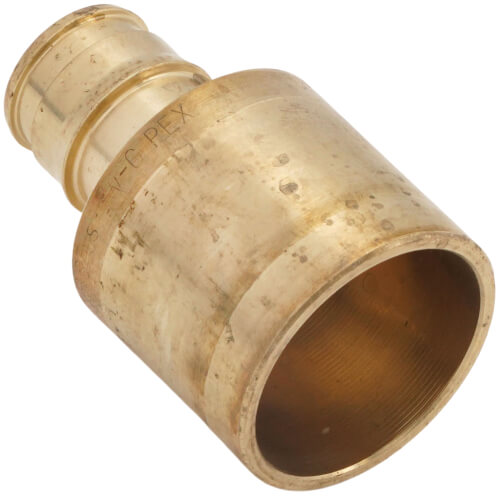
1/2" ProPEX x 3/4" Female Sweat Copper Pipe Adapter (Lead Free Brass)
 --%3E %3Csvg version='1.1' id='Fill' xmlns='http://www.w3.org/2000/svg' xmlns:xlink='http://www.w3.org/1999/xlink' x='0px' y='0px' viewBox='0 0 100 100' enable-background='new 0 0 100 100' xml:space='preserve'%3E %3Cpath fill='%23F15C02' d='M79.44,0.95H20.56C9.78,0.95,0.95,9.78,0.95,20.56v58.87c0,10.79,8.82,19.61,19.61,19.61h58.87 c10.79,0,19.61-8.83,19.61-19.61V20.56C99.05,9.78,90.22,0.95,79.44,0.95z M65.38,58.24l9.38,29.58L49.69,69.78L24.5,87.82 l9.34-29.6L8.8,39.6l30.73-0.17c0,0,6.98-19.61,10-28.93c0.54,1.36,9.88,29.1,9.88,29.1H91.2L65.38,58.24z'/%3E %3C/svg%3E)
 --%3E %3Csvg version='1.1' id='Half' xmlns='http://www.w3.org/2000/svg' xmlns:xlink='http://www.w3.org/1999/xlink' x='0px' y='0px' viewBox='0 0 100 100' enable-background='new 0 0 100 100' xml:space='preserve'%3E %3Cg%3E %3Cpath fill='%23F15C02' d='M30.05,70.23l3.79-12.01L8.8,39.6l30.73-0.17c0,0,6.98-19.61,10-28.93c0.54,1.36,9.88,29.1,9.88,29.1h1.58 L93.71,7.18c-3.58-3.82-8.66-6.23-14.28-6.23H20.56C9.78,0.95,0.95,9.78,0.95,20.56v58.87c0,5.41,2.22,10.32,5.79,13.88 L30.05,70.23z'/%3E %3C/g%3E %3Cpath fill='%23FBC8B4' d='M93.71,7.18L60.98,39.6H91.2L65.38,58.24l9.38,29.58L49.69,69.78L24.5,87.82l5.55-17.59L6.75,93.32 c3.55,3.54,8.44,5.73,13.82,5.73h58.87c10.79,0,19.61-8.83,19.61-19.61V20.56C99.05,15.4,97.01,10.69,93.71,7.18z'/%3E %3C/svg%3E)


MANUALS (2)
Product Highlights


Description
ProPEX® Lead-free Brass Adapter transitions Uponor PEX tubing to copper pipe. Lead-free Brass Fittings are safe for direct burial in the soil.
Uponor's lead-free brass transition fittings, valves and wall boxes carry the NSF us-pw-G marking for lead-free compliance to meet state lead-free legislation, and exceed the U.S. Safe Drinking Water Act. Now you can combine lead-free brass fittings with Uponor's PEX tubing, EP offering and ProPEX Out-of-the-Wall Support System for a complete lead-free solution from the inlet to the faucet. The new lead-free offerings feature Uponor's unique ProPEX fitting system for strong, durable connections without the need for torches, glues, solvents or gauges.
Specs
| Application: | Plumbing Heating |
|---|---|
| Size: | 1/2" x 3/4" |
| Sweat Size: | 3/4" |
| Material: | Brass |
| Fitting System Compatibility: | Expansion PEX |
| Standards Met: | ASTM F1960 ASTM F877 NSF |
| Max Pressure (PSI): | 200 |
| Warranty: | 25 Year (Limited) |
| Tubing Compatibility: | PEX |
| Max Temp (F): | 200°F |
| Lead Free: | Yes |


Questions?
You May Also Need
Product Reviews
Most Liked Positive Review
ProPress Sweat Adaptor
Most Liked Negative Review
 --%3E %3Csvg version='1.1' id='With-RB' xmlns='http://www.w3.org/2000/svg' xmlns:xlink='http://www.w3.org/1999/xlink' x='0px' y='0px' viewBox='0 0 100 100' enable-background='new 0 0 100 100' xml:space='preserve'%3E %3Cpath fill='%23FBC8B4' d='M79.44,0.95H20.56C9.78,0.95,0.95,9.78,0.95,20.56v58.87c0,10.79,8.82,19.61,19.61,19.61h58.87 c10.79,0,19.61-8.83,19.61-19.61V20.56C99.05,9.78,90.22,0.95,79.44,0.95z M65.38,58.24l9.38,29.58L49.69,69.78L24.5,87.82 l9.34-29.6L8.8,39.6l30.73-0.17c0,0,6.98-19.61,10-28.93c0.54,1.36,9.88,29.1,9.88,29.1H91.2L65.38,58.24z'/%3E %3C/svg%3E)
Careful making sweat joint
The worst fitting I've ever experienced to solder
if you use uponor pex this is a no brainer
No
no
Great part to transition from my copper line to PEX
Yes definitely
too slow
Awesome product I only use Uponor now
Well made
Great product, saves time, prevents leaks
Product Q&A
7 QuestionsQ: I want to make sure I understand this correctly,thos piece connects the copper pipe to the pex pipe correct? If so I understand how to get the pex side to work/stay on but how do I ensure the copper pipe stays in the fitting without coming out?
Asked by Erica 8 years ago
Add your answer
Verified Reply- SupplyHouse StaffThe copper side fits over a 3/4" pipe and must be soldered to it.
Verified Reply- RyanThe connection is a Solder connection. You'd need a soldering iron to make said connection
Q: Does this adapter require a union or coupling, or does it fit over copper pipe, i.e. it is an F-connector and copper pipe is M-connector?
Asked by Steve 14 years ago
Add your answer
Verified Reply- PexSupply StaffThis is a female pipe adapter. It fits over 1/2" copper pipe for soldering.
does not require a coupling
Yes it will fit over the pipe. The manufacturer gives the overall dimensions too at uponor.
Q: According to the product manual specifications, parts LF4507575 and LF4517575 look almost identical with the only difference being the overall length. Is length the only difference or are the specification diagrams incorrect?
Asked by Grant 14 years ago
Add your answer
Verified Reply- PexSupply StaffLF4517575 is a copper pipe adapter (meaning that it fits over 3/4" copper pipe) and LF4507575 is a copper fitting adapter (meaning that it fits inside of 3/4" copper fittings).
LF4507575 looks like it goes inside the copper pipe. the other one fits outside. I prefer the outside one
According to http://www.uponor-usa.com/~/media/Files/Product%20Documents/LFBrsFitt_LS_P124_3%2009.aspx?sc.. One is for sweat to tube the other to a fitting.
Look closely and you will fine that LF4517575 has a female copper sweating end and LF4517575 a male copper sweating end. Both are manufactured with same type of Lead free NSF Brass with Propex 3/4 male end other
It looks like LF4517575 is 3/4" ID (designed to slip OVER 3/4" copper pipe) while LF4507575 would be 3/4" OD (designed to slip INSIDE a fitting such as the LF4517575).
Grant: From what I can tell, part LF4517575 get sweated over a copper pipe. In the case of ¾” copper pipe, the ID of this fitting will be approximately 7/8”. This would be just like sweating a coupling onto a pipe. Part LF4507575 gets sweated into a copper fitting. In the case of ¾” copper pipe, or fitting in this case, the OD of this fitting will be approximately 7/8”. This would be used if you needed to make a close joint, say right after an elbow. You could just sweat this into one side of the 900 fitting without using a short pipe stub. I hope this help, Keybal
One fits inside of 3/4" copper fitting and other fits end on a 3/4" copper pipe
I don't know about the numbering system Uphonor uses or if changes have been made since the merge from Wisbro. However make sure of the type of fitting---for instance fittings like this have two varieties--- 1. fittings that go over pipe, and 2. fittings that go into another fitting. Each will have a different diameter where it is soldered. Also the Uphonor web site may have technical info that will help in differentiating. One more thing---Lead Free fittings are now required in California and Vermont and the difference in numbering could indicate changes in actual lead, as well as zinc, levels. Hope this helps John
Pex and pro pex are two different parts. The pex fitting is smaller and the pex pipe is slipped on and a clamp is put over the fitting and squezzed on with a tool. Pro pex fittings are larger in diameter on the end that the pex plastic pipe is attached. That is because a special expansion tool is used to expand the inside diameter of the pex pipe and then it is immediately shoved onto the fitting and it shrinks around it and no clamps are required.
LF4517575 appears to be a sweat nipple (copper tube inserted in end of fitting) where you would solder the 2 together. LF4507575 appears to be a a fitting, where you would put a joint link over the the ends of both the fitting and a copper tubing. The first would require the tubing to be 3/4" so it could be inserted in the fitting. The second would allow up-or-down conversion of tubings (copper-to-pex), where the copper tubing could be 1", 3/4" or 1/2". There are adapters for up-or-down converting copper tubing from one size to another. This fitting would allow you to standardize the pex tubing size (ie, allow you to only buy one size, instead of multiple ones).
Q: Hi, The problem is right at the beginning when i try tinning the fidding first before sweating it on, the solder just runs right off the brass, is this normal? Should I go right to sweating it on?
Asked by SS 14 years ago
Add your answer
Be sure to use plenty of flux. I prepare the surface with 120 grit emory cloth and a wire brush to open the surface of the brass, hit it with flux and directly solder to copper. No problems here.
Use a round wire brush to clean the female fitting and the male fitting with any abrasive cloth or even steel wool. Then coat both fittings with flux, put both fittings together and heat up with a tod it should suck the solder right in to the union.
yes just go ahead and solder it directly to the copper tubing. Make sure you sand and flux it too.
clean both fitting and pipe flux both put together and sodder
I just sweat it on. Make sure you have used your wire brush on the pipe and the inside of the fitting, and use your flux. Worked like a charm for me.
Copper and brass fittings are never “tinned” before being fitted to copper pipe. The correct method is to clean both the end of the pipe and the inside of the fitting. This is best accomplished using a tool fitted with inside and outside brushes that are sized for the tubing and fitting being joined, i.e. ½”, ¾” etc. When properly cleaned, the end of the tubing and the inside of the fitting should be bright and shiny and absolutely free of any residue. Use a flux that is compatible with the plumbing solder being used and coat BOTH the end of the tube and the inside of the fitting. Use a propane torch and direct the tip of the flame on the fitting, not the tube. Periodically touch the tip of the solder to the joint between the fitting and the tube. When the fitting and the tube are hot enough the solder will start to melt. Let the solder start to flow while keeping the flame on the fitting. The heat will wick the solder into the joint between the fitting and the tubing. This will happen rather fast, one or two seconds. When the joint appears full remove the torch flame from the fitting. Do not disturb the fitting or tube while it is cooling. DO NOT apply a wet rag until the solder has cooled to a solid state. Disturbing or cooling the solder while it is in a liquid or plastic state will cause it to crystallize and you will have a leaking joint. It is best to practice this before trying it on the real thing. Bob Gensler
yes, just sweat it.
If you are sweating brass to cooper clean both peices flux add heat and solder. Sent from my Verizon Wireless Phone
Soldering these fitting to copper drove me nuts. Rarely ever had a leak when soldering until working with this material. Finally went to Oatey No 95 lead free tinning flux. Problem solved. Hours of wasted time and a big hit on my ego.
Q: Hi, I am having trouble getting solder to stick to these fiddings. I insured they are cleaned properly, with sand paper and flux, Is there a certain type of flux or solder that works best with these fiddings? Note: I soldered streight copper to copper with same solder and flux with no trouble.
Asked by SS 14 years ago
Add your answer
It is a bulky part so you may need to heat it up more, and/or use SafeFlo solder I recommend a solder-bearing water-soluble flux paste. It has solder in it so the moment the part reaches solder melting temperature the solder in the paste covers it, making sure no oxide forms causing any issues.
Fellow Shopper, I have soldered hundreds of these fittings without one problem. I use Nokorode flux, clean the fittings and pipe as usual, and solder with lead free solder. If you're not using these for domestic water then you can use 50/50 solder (it melts at a much lower temp). Heat the fittings all the way around and do not get them any hotter than is necessary to make the solder flow. If you heat a fitting cherry red then your screwed, it won't solder. I hope this helps, Pat D... www.waterpowerliving.com
Brass can be difficult to solder and the difficulty is not unique to these fittings. There are two solutions. The best solution is to use Propress copper fittings (from Viega, available from and dedicated plumbing supply stores), but they require a Propress tool (the tool is increasingly available for rental at plumbing supply houses). This option will bypass the solder problem, give you an excellent connection and take about 1/100 of the time as soldering. The second option is to be patient with soldering the brass. It might have residue on it that requires more cleaning than copper (oil, from the casting process). It takes longer to heat but cools faster. And you have to be especially careful to heat the fitting evenly without overheating it. There are other suggestions if you do an Internet search on soldering brass.
Soldering is all about preparation. DO NOT touch the surfaces with your bare hands. The oils on them are bad for soldering. Sand both the male and female surfaces with a fine sand paper. Apply an activated flux and use rosin core solder. Lead based ones are illegal now so do not use them. Heat all away around the female fitting evenly and let the solder get sucked into the joint. Do not continue to apply heat after the solder has gone into the joint. Another little trick is to sand the end of the female fitting. This allows the solder to from a ring around the end of the fitting with the male pipe surface. This is like a little insurance in case there is any failure at the main joint. Be sure all the fittings are dry when you solder. You can call me at***.****. I have not had a leak ever soldering new pex fittings. Paul
There should be nothing special about soldering these connectors. I used generic copper pipe solder and flux without any issues. As you mentioned, just make sure you have cleaned them up with sandpaper and then applied a uniform layer of flux. Beyond that, make sure you have your adapter and pipe both heated to the same temp (eg: do it slowly to make sure the heat is uniform). It should suck the solder into the joint when you get it to the correct temp and touch the solder to the connection. Good luck!
I had the same problem. I was using Lenox water soluable flux and mapp torch and found the flux burned quickly, making the joint impossible to solder. I switched to Dutch boy petroleum based tinning flux and conventional propane fuel and had much better results. Also make sure to sand the end ring of the fitting and wipe the dirt and grit out of the fitting and off the pipe before fluxing. Hope this helps.
I sweated about thirty of these fittings using lead free solder and flux. I only applied the torch to the brass fitting to avoid overheating the copper and had complete success.
I have used Oatey self tinning flux in the green can to make the adapter connections. The flame should be applied to the adapter and not the copper Pipe. A. Farr
I had a similar problem. Make sure you buff each fitting thoroughly with a wire brush, steel wool, or emery paper, and wipe them clean with a clean, dry cloth before fluxing them and soldering. Be sure you flux them with good, clean flux and make sure they are completely heated before applying the solder (mapp gas burns hotter and works better than propane). Good luck! RT
Heat low and slow starting with pex fitting because wall is thicker, let heat from thick wall go towards regular copper fitting without actually heating it. No special flux or solder needed.
Q: Is the sweat end of this fitting cupped or street?
Asked by 15 years ago
Add your answer
Verified Reply- PexSupply StaffThe sweat end of this LF4517575 fitting goes over 3/4" copper pipe, so it is cupped. The street version (LF4507575) goes inside of a 3/4" copper fitting on the sweat side.
Q: with these products, all I need is the expander,,, there is no lock ring required?
Asked by steve 15 years ago
Add your answer
Verified Reply- PexSupply StaffNo, you would need a 1/2" ProPEX expander ring.