




Filters
SORT
Product Availability –
Brand –
Size –
Connection Type –
Connection Method –
Material –
Review Score –
 --%3E %3Csvg version='1.1' id='Fill' xmlns='http://www.w3.org/2000/svg' xmlns:xlink='http://www.w3.org/1999/xlink' x='0px' y='0px' viewBox='0 0 100 100' enable-background='new 0 0 100 100' xml:space='preserve'%3E %3Cpath fill='%23F15C02' d='M79.44,0.95H20.56C9.78,0.95,0.95,9.78,0.95,20.56v58.87c0,10.79,8.82,19.61,19.61,19.61h58.87 c10.79,0,19.61-8.83,19.61-19.61V20.56C99.05,9.78,90.22,0.95,79.44,0.95z M65.38,58.24l9.38,29.58L49.69,69.78L24.5,87.82 l9.34-29.6L8.8,39.6l30.73-0.17c0,0,6.98-19.61,10-28.93c0.54,1.36,9.88,29.1,9.88,29.1H91.2L65.38,58.24z'/%3E %3C/svg%3E)
 --%3E %3Csvg version='1.1' id='With-RB' xmlns='http://www.w3.org/2000/svg' xmlns:xlink='http://www.w3.org/1999/xlink' x='0px' y='0px' viewBox='0 0 100 100' enable-background='new 0 0 100 100' xml:space='preserve'%3E %3Cpath fill='%23FBC8B4' d='M79.44,0.95H20.56C9.78,0.95,0.95,9.78,0.95,20.56v58.87c0,10.79,8.82,19.61,19.61,19.61h58.87 c10.79,0,19.61-8.83,19.61-19.61V20.56C99.05,9.78,90.22,0.95,79.44,0.95z M65.38,58.24l9.38,29.58L49.69,69.78L24.5,87.82 l9.34-29.6L8.8,39.6l30.73-0.17c0,0,6.98-19.61,10-28.93c0.54,1.36,9.88,29.1,9.88,29.1H91.2L65.38,58.24z'/%3E %3C/svg%3E)
Price Range –
Wye Strainers

 --%3E %3Csvg version='1.1' id='No-RB' xmlns='http://www.w3.org/2000/svg' xmlns:xlink='http://www.w3.org/1999/xlink' x='0px' y='0px' viewBox='0 0 100 100' enable-background='new 0 0 100 100' xml:space='preserve'%3E %3Cpath fill='%23CECECE' d='M79.44,0.95H20.56C9.78,0.95,0.95,9.78,0.95,20.56v58.87c0,10.79,8.82,19.61,19.61,19.61h58.87 c10.79,0,19.61-8.83,19.61-19.61V20.56C99.05,9.78,90.22,0.95,79.44,0.95z M65.38,58.24l9.38,29.58L49.69,69.78L24.5,87.82 l9.34-29.6L8.8,39.6l30.73-0.17c0,0,6.98-19.61,10-28.93c0.54,1.36,9.88,29.1,9.88,29.1H91.2L65.38,58.24z'/%3E %3C/svg%3E)

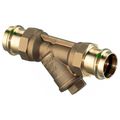

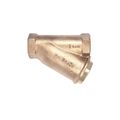
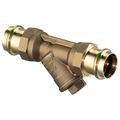
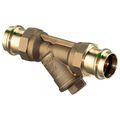
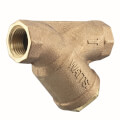
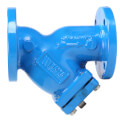
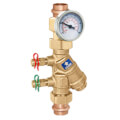
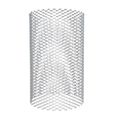
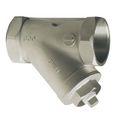
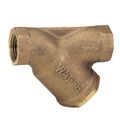

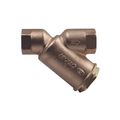
Wye strainers are inline filtration devices, shaped like the letter Y, that protect pumps, valves, meters, and other downstream equipment from dirt, scale, and debris carried in a piping system. Fluid enters the strainer and passes through a perforated or mesh screen housed in the angled leg of the Y before continuing downstream, while trapped particles collect in that same leg for easy removal. Plumbers and mechanical contractors install them ahead of components that are sensitive to debris, such as steam traps, control valves, and pump seals, where even small particles can cause premature wear or clogging. Bronze, iron, and stainless steel body options cover potable water, steam, and process piping across residential, commercial, and industrial systems. Screens come in a range of mesh sizes, so the strainer can be matched to the particle size that needs to be caught without creating excessive pressure drop across the fitting. A blowdown or drain valve on many models allows the strainer to be flushed without fully disassembling the housing, which keeps routine maintenance quick.
Subcategories
- Bronze Wye Strainers: Bronze wye strainers are common on residential and light commercial water lines because the alloy resists corrosion in potable water service. Threaded or solder connections fit smaller pipe sizes typical of these applications. Their lighter weight compared with iron or steel makes them easier to handle during installation in tight mechanical spaces. Many plumbing codes specifically call for bronze or similarly rated materials on domestic water lines.
- Iron Body Wye Strainers: Iron body wye strainers handle larger pipe sizes and higher pressure ratings found in commercial and industrial systems. Flanged connections are typical on these larger units, giving a bolted joint suited to process piping and larger water mains. The heavier iron casting withstands rougher job site handling and supports bigger internal screens. Fire protection and industrial water systems frequently specify iron body strainers.
- Stainless Steel Wye Strainers: Stainless steel wye strainers are chosen for corrosive or high-purity applications, including some food, chemical, and specialty process lines. The material resists pitting and staining better than bronze or iron in aggressive fluid conditions. Sanitary or high-purity systems often pair a stainless body with a matching stainless screen to avoid introducing contamination. Higher material cost is offset by the strainer's resistance to corrosion over the system's service life.
- Steam Service Wye Strainers: Steam service wye strainers are built with pressure and temperature ratings suited to steam and condensate lines rather than cold water service. Screens on these units are sized to protect steam traps and control valves from scale and pipe debris without restricting steam flow. Blowdown valves let maintenance staff clear collected debris while the system stays in operation. Boiler rooms and steam distribution piping are the most common locations for this type.
Buying Guide
Match the strainer's body material and pressure rating to the service it will protect first, since a strainer rated for cold water won't hold up on a steam or high-temperature process line. Pipe size and connection type come next: threaded and solder ends suit smaller residential and light commercial runs, while flanged connections handle larger commercial and industrial systems. Screen mesh size is just as important as body material. A finer mesh catches smaller particles but needs more frequent cleaning, while a coarser mesh runs longer between service visits but lets more fine debris through. Wye strainers should be installed with the screen leg oriented so trapped debris settles away from the main flow path, and most manufacturers specify a minimum straight pipe run before and after the fitting for even flow distribution. Consider whether a blowdown valve is needed for routine maintenance. Without one, clearing the screen means shutting down the line and removing the strainer cap each time. For systems where debris loads are heavy or unpredictable, a strainer with a larger screen area reduces how often cleaning is required. Once material, pressure class, and connection type are settled, confirm the strainer meets the piping code that applies to the installation before ordering.
Frequently Asked Questions
What's the difference between a wye strainer and a basket strainer?
A wye strainer has a compact, angled body that fits inline with less space than a basket strainer, which uses a vertical chamber and a removable basket screen. Basket strainers typically hold more debris before needing cleaning, while wye strainers are often chosen where space is limited or the fitting needs a lower profile.
How often should a wye strainer be cleaned?
Cleaning frequency depends on the debris load in the system and the mesh size of the screen. A pressure gauge or differential reading across the strainer helps identify when the screen is loading up and due for cleaning, rather than relying on a fixed schedule alone.
Can a wye strainer be installed in any orientation?
Most wye strainers can be installed horizontally or vertically, but the screen leg should point downward or to the side so debris settles away from the main flow path and stays accessible for cleaning. Checking the manufacturer's installation instructions before mounting avoids a poor orientation.
What mesh size should be used for a wye strainer?
Mesh size depends on what needs to be protected downstream. Coarser mesh suits general debris protection ahead of pumps, while finer mesh is used ahead of sensitive components like control valves or steam traps where smaller particles could cause damage.
Do wye strainers need a blowdown valve?
A blowdown valve isn't required, but it lets maintenance staff flush accumulated debris without shutting down the line or removing the strainer cap. Systems with frequent debris loads benefit most from having one installed.
