



Yellow Polyethylene (PE) Gas Line

 --%3E %3Csvg version='1.1' id='Fill' xmlns='http://www.w3.org/2000/svg' xmlns:xlink='http://www.w3.org/1999/xlink' x='0px' y='0px' viewBox='0 0 100 100' enable-background='new 0 0 100 100' xml:space='preserve'%3E %3Cpath fill='%23F15C02' d='M79.44,0.95H20.56C9.78,0.95,0.95,9.78,0.95,20.56v58.87c0,10.79,8.82,19.61,19.61,19.61h58.87 c10.79,0,19.61-8.83,19.61-19.61V20.56C99.05,9.78,90.22,0.95,79.44,0.95z M65.38,58.24l9.38,29.58L49.69,69.78L24.5,87.82 l9.34-29.6L8.8,39.6l30.73-0.17c0,0,6.98-19.61,10-28.93c0.54,1.36,9.88,29.1,9.88,29.1H91.2L65.38,58.24z'/%3E %3C/svg%3E)





 --%3E %3Csvg version='1.1' id='No-RB' xmlns='http://www.w3.org/2000/svg' xmlns:xlink='http://www.w3.org/1999/xlink' x='0px' y='0px' viewBox='0 0 100 100' enable-background='new 0 0 100 100' xml:space='preserve'%3E %3Cpath fill='%23CECECE' d='M79.44,0.95H20.56C9.78,0.95,0.95,9.78,0.95,20.56v58.87c0,10.79,8.82,19.61,19.61,19.61h58.87 c10.79,0,19.61-8.83,19.61-19.61V20.56C99.05,9.78,90.22,0.95,79.44,0.95z M65.38,58.24l9.38,29.58L49.69,69.78L24.5,87.82 l9.34-29.6L8.8,39.6l30.73-0.17c0,0,6.98-19.61,10-28.93c0.54,1.36,9.88,29.1,9.88,29.1H91.2L65.38,58.24z'/%3E %3C/svg%3E)
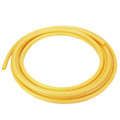

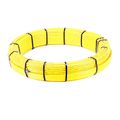

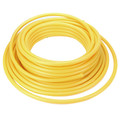
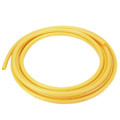
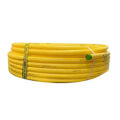
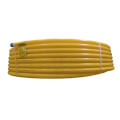
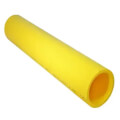
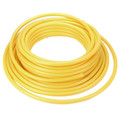
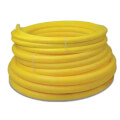
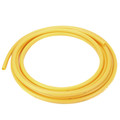
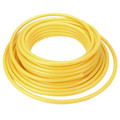

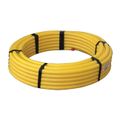
PE gas pipe is polyethylene piping approved for underground distribution of natural gas and propane, valued by installers for its flexibility, corrosion resistance, and ability to be joined by heat fusion instead of threaded or soldered connections. The category covers coiled and straight-length pipe along with the fittings, tracer wire, and transition components used to bring a buried gas line from the main or tank into a mechanical room or meter set. Because the pipe carries fuel gas rather than water, it's manufactured and rated to different standards than water-service polyethylene pipe, and the two are not interchangeable even when the outside diameter looks similar. Gas utility and code requirements for tracer wire, tracking tape, and minimum burial depth vary by jurisdiction, so installers confirm local code before specifying pipe diameter and wall thickness for a given run.
Subcategories
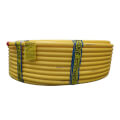
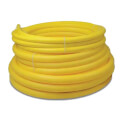
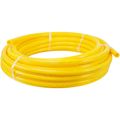
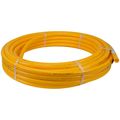
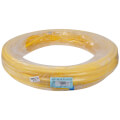
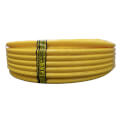
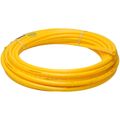
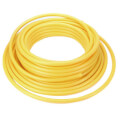
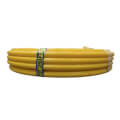
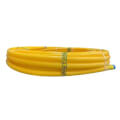
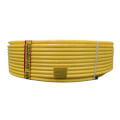
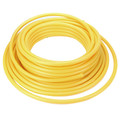
- PE Gas Pipe Coils: Coiled polyethylene gas pipe ships in continuous lengths and is used for longer underground runs where minimizing the number of joints reduces potential leak points. Coils are typically pulled off a reel and laid directly in the trench, then joined to fittings or a riser at each end with heat-fused or mechanical connections. Smaller diameters are common for service lines running from a main or tank to a building, while larger diameters serve longer distribution runs.
- PE Gas Pipe Fittings: Fittings join sections of polyethylene gas pipe to each other or transition the line to a metal riser, meter set, or mechanical fitting at the building entrance. Most fittings are heat-fused, either by socket fusion or electrofusion, which melts the mating surfaces so they form a continuous, monolithic joint rather than a mechanical seal. Fitting size and pressure rating need to match the pipe's diameter and wall thickness.
- Risers and Transition Fittings: A riser brings the buried polyethylene pipe up out of the ground and transitions it to steel or another rigid pipe material at the point where it enters a building or connects to a meter. These transition fittings typically use a factory-made polyethylene-to-steel joint rather than a field-fused connection, since a reliable transition at grade is critical where the pipe is exposed to physical damage and UV exposure that buried pipe doesn't see.
- Tracer Wire and Locating Accessories: Because polyethylene pipe doesn't conduct electricity or respond to a metal detector, tracer wire is buried alongside the pipe so the line can be located later with standard locating equipment. Tracking tape placed above the pipe also warns anyone digging in the area that a gas line runs below. Local gas utility and code requirements typically dictate wire gauge and tape placement, so confirming those requirements before backfilling avoids a failed inspection.
Buying Guide
Confirm the pipe's SDR (standard dimension ratio) and pressure rating before ordering, since PE Gas Pipe is manufactured to specific pressure classes and using an underrated pipe for the system's operating pressure is a code violation as well as a safety issue. Local gas utility specifications often dictate a minimum SDR for a given service, so checking with the utility or the authority having jurisdiction before purchasing avoids a rejected installation.
Verify that fittings and joining methods match the pipe manufacturer and diameter. Socket fusion and electrofusion require compatible tooling and technique, and mixing pipe and fittings from different manufacturers without confirming compatibility risks a joint that looks sound but fails under pressure or soil movement.
Plan tracer wire and tracking tape into the job before backfilling the trench, not after. Most jurisdictions require continuous, uninterrupted tracer wire routed with the pipe and connected at risers and transition fittings so the run can be located electronically later.
Account for transition fittings at every point where the buried polyethylene pipe meets rigid metal pipe, since a buried polyethylene-to-steel joint is typically only approved as a factory-made fitting rather than a field connection. Confirming riser and transition fitting sizes match the pipe diameter avoids a mismatched joint discovered mid-installation.
Frequently Asked Questions
Can PE gas pipe be used interchangeably with PE water pipe?
No, gas-rated polyethylene pipe and water-service polyethylene pipe are manufactured and rated to different standards even when they look similar. Gas pipe is typically yellow-jacketed or marked specifically for fuel gas service, and using water-rated pipe on a gas line is a code violation.
Why does polyethylene gas pipe need tracer wire?
Polyethylene doesn't conduct electricity and can't be found with a standard metal detector once it's buried, so tracer wire run alongside the pipe lets a locating crew find the line electronically later. Most jurisdictions require continuous tracer wire connected at every riser and transition fitting.
What's the difference between socket fusion and electrofusion?
Socket fusion heats the pipe end and a matching fitting socket directly with a heating tool, then joins them under pressure to form a fused joint. Electrofusion uses a fitting with an embedded heating element that's powered by a control box to fuse the joint from the inside. Both methods require tooling and technique specific to the pipe and fitting manufacturer.
Where does a transition from polyethylene to steel pipe typically happen?
The transition usually happens at a riser near the building entrance or meter set, where the buried polyethylene pipe comes up out of the ground and connects to rigid steel pipe or the meter itself. The transition is normally made with a factory-manufactured fitting rather than a field-fused joint.
What determines the correct SDR rating for a gas pipe installation?
The system's operating pressure and the local gas utility's specifications determine the minimum SDR (standard dimension ratio) required for a given run. Checking with the utility or the authority having jurisdiction before ordering pipe confirms the correct pressure class for the job.
