




'/%3E%3C/svg%3E)
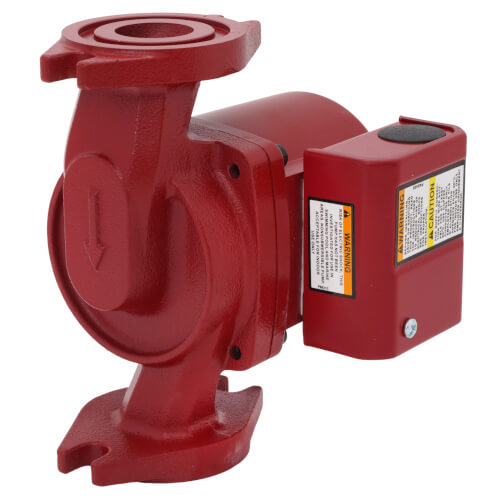
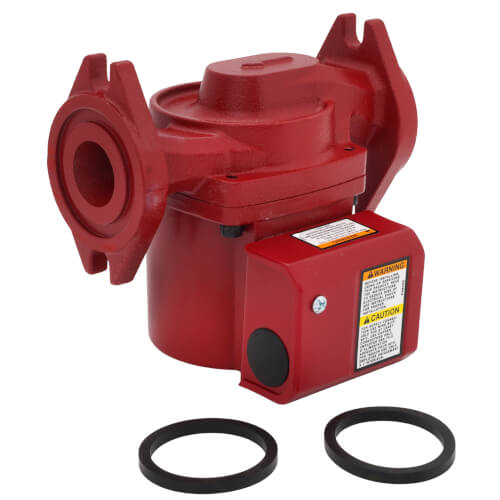
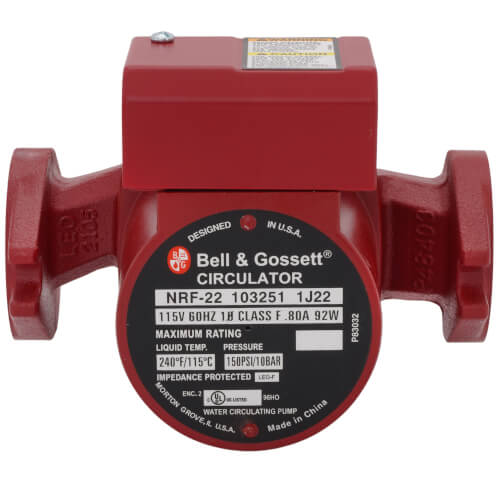
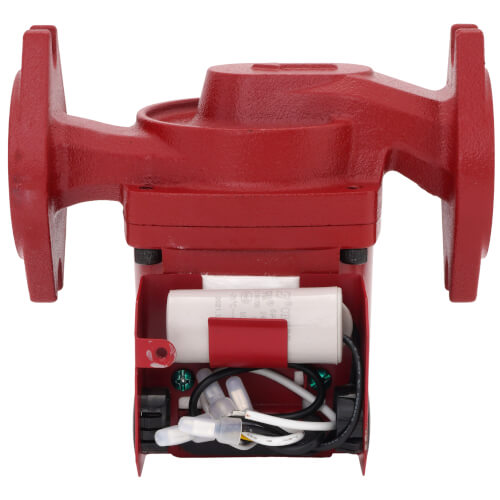
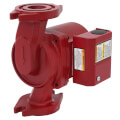
1/25 HP, NRF-22 Red Fox Circulator Pump
 --%3E %3Csvg version='1.1' id='Fill' xmlns='http://www.w3.org/2000/svg' xmlns:xlink='http://www.w3.org/1999/xlink' x='0px' y='0px' viewBox='0 0 100 100' enable-background='new 0 0 100 100' xml:space='preserve'%3E %3Cpath fill='%23F15C02' d='M79.44,0.95H20.56C9.78,0.95,0.95,9.78,0.95,20.56v58.87c0,10.79,8.82,19.61,19.61,19.61h58.87 c10.79,0,19.61-8.83,19.61-19.61V20.56C99.05,9.78,90.22,0.95,79.44,0.95z M65.38,58.24l9.38,29.58L49.69,69.78L24.5,87.82 l9.34-29.6L8.8,39.6l30.73-0.17c0,0,6.98-19.61,10-28.93c0.54,1.36,9.88,29.1,9.88,29.1H91.2L65.38,58.24z'/%3E %3C/svg%3E)
 --%3E %3Csvg version='1.1' id='Half' xmlns='http://www.w3.org/2000/svg' xmlns:xlink='http://www.w3.org/1999/xlink' x='0px' y='0px' viewBox='0 0 100 100' enable-background='new 0 0 100 100' xml:space='preserve'%3E %3Cg%3E %3Cpath fill='%23F15C02' d='M30.05,70.23l3.79-12.01L8.8,39.6l30.73-0.17c0,0,6.98-19.61,10-28.93c0.54,1.36,9.88,29.1,9.88,29.1h1.58 L93.71,7.18c-3.58-3.82-8.66-6.23-14.28-6.23H20.56C9.78,0.95,0.95,9.78,0.95,20.56v58.87c0,5.41,2.22,10.32,5.79,13.88 L30.05,70.23z'/%3E %3C/g%3E %3Cpath fill='%23FBC8B4' d='M93.71,7.18L60.98,39.6H91.2L65.38,58.24l9.38,29.58L49.69,69.78L24.5,87.82l5.55-17.59L6.75,93.32 c3.55,3.54,8.44,5.73,13.82,5.73h58.87c10.79,0,19.61-8.83,19.61-19.61V20.56C99.05,15.4,97.01,10.69,93.71,7.18z'/%3E %3C/svg%3E)


MANUALS (4)
Product Highlights


Description
Specifications
- Power Rating: 1/25 HP
- Pump Body Material: Cast Iron
- Electrical Rating: 115V
- Motor: 2940 RPM Full Speed
- Phase: Single
- Full Load Current: 0.8 Amp
- Thermal Protection: Impedance
- Face: 6 Inches
- Inlet/Outlet: Flanged
- Best Efficiency: 10 GPM @ 8 Feet of Head
- Feet of Head: @ 20 GPM 2
- Max. Operating Pressure: 150 PSI (10 bars)
- Max. Operating Temperature:
- Cast Iron Body: 240°F (115°C)
- Brass and Stainless Steel Body: 230°F (107°C)
Specs
| Material: | Cast Iron |
|---|---|
| Amperage: | 0.8 |
| Application: | Heating |
| Voltage: | 115V |
| Max Pressure (PSI): | 150 |
| Type: | Pump |
| Horse Power: | 1/25 |
| Connection Size: | 3/4" 1" 1-1/4" 1-1/2" |
| Flow Range (GPM): | 0-22 |
| Max Flow (GPM): | 22 |
| Head Range (ft.): | 0-15 |
| Max Head (Ft): | 15 |
| Hertz: | 60 |
| Phase: | 1 |
| RPM: | 2940 |
| Max Temp (F): | 240°F |
| Connection Type: | Flanged x Flanged |
| Warranty: | 3 Year |


Questions?
Compare Similar Products
You May Also Need
Product Reviews
Most Liked Positive Review
 --%3E %3Csvg version='1.1' id='With-RB' xmlns='http://www.w3.org/2000/svg' xmlns:xlink='http://www.w3.org/1999/xlink' x='0px' y='0px' viewBox='0 0 100 100' enable-background='new 0 0 100 100' xml:space='preserve'%3E %3Cpath fill='%23FBC8B4' d='M79.44,0.95H20.56C9.78,0.95,0.95,9.78,0.95,20.56v58.87c0,10.79,8.82,19.61,19.61,19.61h58.87 c10.79,0,19.61-8.83,19.61-19.61V20.56C99.05,9.78,90.22,0.95,79.44,0.95z M65.38,58.24l9.38,29.58L49.69,69.78L24.5,87.82 l9.34-29.6L8.8,39.6l30.73-0.17c0,0,6.98-19.61,10-28.93c0.54,1.36,9.88,29.1,9.88,29.1H91.2L65.38,58.24z'/%3E %3C/svg%3E)
good product. Easy to install.
Most Liked Negative Review
Bell and Gossett circulating pump NRF-22
Warranty Red Fox circulation pump replacement
Circulation pump
Useg time
Great product
Great product, I would buy again
great product
Product is solid but the service is outstanding
Yes
Great people to deal with
I would buy this product again
Product Q&A
17 QuestionsQ: Dose this pump come in bronze or ss so I can use with potable water?
Asked by 2cmorgan 15 years ago
Add your answer
Verified Reply- PexSupply StaffYes, it is. You will need model NBF-22 ( http://www.pexsupply.com/Bell-Gossett-103252-1-25-HP-NBF-22-Bronze-Circulator-Pump-8640000-p ).
Q: Where can I purchase a starter capacitor for a Bell and Gossett NRF-22 circulator? The failed pump that I have, the capacitor is split wide open.
Asked by 16 years ago
Add your answer
Verified Reply- PexSupply StaffThe manufacturer does not offer replacement starter capacitors.
Q: Why does water get into the cartridge and lock the pump up?
Asked by 16 years ago
Add your answer
Verified Reply- PexSupply StaffIt is okay for water to be in the cartridge (it must be there for the pump to function properly). It would only be a problem if water gets into the motor casing section of the cartridge. Other possible causes of pump lock-up are air penetration, stuck ball-bearings, clogs, or using a cast iron pump in an open system.
Q: Is this an replacement for Bell & Gossett Little Red Booster Pump, LR20B, 1/20 hp, max 125 psi?
Asked by 16 years ago
Add your answer
Verified Reply- PexSupply StaffBell & Gossett still produces the LR-20 pump ( http://www.pexsupply.com/Bell-Gossett-106507-1-20-HP-LR-20-WR-Little-Red-Pump-5605000-p ). The NRF-22 pump can be used in lieu of the LR-20, as the hydraulics are similar. The construction and operation of the pumps are different. The NRF-22 is a wet rotor pump - meaning that the system fluid is circulated around the rotor (through the motor) and lubricates the bearings. The LR-20 is a dry motor design using a mechanical seal. Both pumps work great in clean systems. If the system is dirty with particles in the fluid, a pump with a mechanical seal (LR-20) is better suited.
Q: I have an outdoor furnace that is about 30-40 feet from the air handler. It is plumbed with 3/4 copper. With this be a sufficient circulating pump?
Asked by 16 years ago
Add your answer
Verified Reply- PexSupply StaffThe selection of the appropriate pump is based on the GPM (gallons per minute) and head pressure of the system.
Q: I have two of the NRF-22 pumps installed with my boiler. The plumber wired them to be running 24 hours a day because he claims the water is dirty and has particles and the pumps would fail if they are stopped for long time. He told me that the operating cost of these pumps is maybe a $1/month when there is no demand for heat. The nameplate on the pump states 92watts - is this the maximum or constant? These pumps are running at constant speed as far as I can figure out from the literature.
Asked by gordonp1 16 years ago
Add your answer
Verified Reply- PexSupply StaffThe 92 watt rating is the constant. This is a single speed pump so as soon as it turns on it will be running on that 92 watt the whole time.
92 Watts is full load, but either way, I would not want to have them running continuously and unnecessarily, wasting electricity. From the NRF-22 spec sheet: "Self-cleaning particle shield protects the shaft and bearings from system start-up debris"
Circulator pumps should run only when the thermostat(s) call for heat, and they will not be damaged by sitting idle when they are not needed. Get a different plumber. This one doesn't understand how hydronic heating systems work. He can't do simple math, either. The pump will consume 92 watts when it's running. Period. 92 watts * 24 hours/day * 30 days/month = 66,240 watt-hours/month = 66kwh/month. If you're paying 15 cents per kwh, it's costing you TEN dollars a month PER PUMP to keep them running 24x7. If they run only when needed for heat, figure maybe one-fourth that much.
Q: What is the difference between taco, bell & gossett, and Grundfos circulator pumps? The excisting pumps on my furnace are taco 009, is there a compairable difference between the brands and prices as compaired to how well they work? I have had to replace one or both of the pumps every fall on my furnace and it's getting not only rediculous but very expensive as I am a single mom of three. I bought the outdoor furncae thinking it would be a better heat source but it seems to be a headache to purchase parts that are so expensive and then have to figure out how to fix them myself is even worse! HELP!!!
Asked by Patty Hubler 16 years ago
Add your answer
Verified Reply- PexSupply StaffTaco, Bell & Gossett and Grundfos all have comparable pumps within a close price range. If you have an open system, which most outdoor boilers are, you are going to require a stainless steel or bronze pump. A cast iron pump in that application will corrode and rust and fail within the year.