




Bluefin Push-Fit Fittings

PEX Fittings


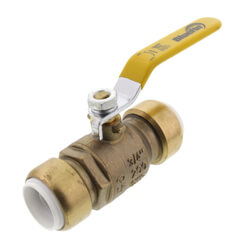


| PRODUCT | SIZE | SINGLE UNIT | BOX UP & SAVE | STOCK STATUS | LIST | COMPARE |
|---|---|---|---|---|---|---|
Added! $7.47 each BOX UP & SAVE 10% Added! $67.30 box of 10 $6.73 each (10% Saving) In Stock  Get 58 by Mon, Nov 23 In Stock Get 58 by Mon, Nov 23 | BOX UP & SAVE 10% Added! $67.30 box of 10 $6.73 each (10% Saving) | In Stock Get 58 by Mon, Nov 23 In Stock Get 58 by Mon, Nov 23 | ||||
Added! $10.78 each BOX UP & SAVE 10% Added! $97.00 box of 10 $9.70 each (10% Saving) In Stock Get 3 by Mon, Nov 23 In Stock Get 3 by Mon, Nov 23 | BOX UP & SAVE 10% Added! $97.00 box of 10 $9.70 each (10% Saving) | In Stock Get 3 by Mon, Nov 23 In Stock Get 3 by Mon, Nov 23 | ||||

Bluefin push-fit fittings are mechanical plumbing connectors that join copper, PEX, and CPVC pipe without soldering, gluing, or crimping. A push-fit fitting uses an internal stainless steel grab ring and rubber O-ring to grip and seal the pipe as soon as it's inserted, creating a connection rated for potable water and hydronic heating applications. Because no torch, flame, or specialty crimp tool is required, these fittings speed up repairs and new installs alike, especially in tight spaces or occupied buildings where open flame isn't practical.
For plumbers and mechanical contractors, push-fit connections cut labor time on repair calls, remodels, and mixed-material transitions where copper meets PEX or CPVC in the same run. Bluefin's line covers the common configurations contractors reach for most: couplings, elbows, tees, and reducers, letting a single fitting style bridge multiple pipe materials on one job without carrying separate soldering or gluing supplies.
Subcategories
- Couplings: Couplings join two lengths of pipe in a straight run, commonly used to repair a damaged section or extend an existing line. Slip couplings allow for pipe that can't be pulled apart, which is useful in wall or floor cavities where the line can't move. Contractors reach for these on repair calls where cutting out and re-plumbing a full section isn't practical.
- Elbows: Elbows change the direction of a pipe run, typically at 90 degree or 45 degree angles, and let a line navigate around framing, joists, or existing plumbing without additional fittings. Push-fit elbows are especially useful in finished spaces where cutting into a wall to accommodate a soldered joint isn't an option.
- Tees: Tees split a single pipe run into two directions, adding a branch line for a fixture, appliance, or additional zone without breaking into the existing supply line at more than one point. They're a common choice when adding a new fixture to an existing water line.
- Reducers: Reducers transition between two different pipe diameters within the same run, letting a contractor step down from a larger supply line to a smaller branch feeding an individual fixture or appliance without swapping pipe materials.
Buying Guide
Choosing the right push-fit fitting starts with confirming pipe material and outside diameter, since Bluefin push-fit fittings are designed to accept copper, PEX, and CPVC pipe interchangeably within their rated size range. Measure the pipe before ordering rather than assuming based on nominal size, since actual outside diameter can vary slightly between materials.
Next, consider whether the connection needs to be removable for future service. Standard push-fit fittings are designed as permanent connections once installed, while a disconnect tool can release the fitting from the pipe if the connection needs to be taken apart later for repairs or modifications. Keeping a disconnect tool on hand is worth it for any contractor who plans to reuse fittings across jobs.
Application matters too. Bluefin push-fit fittings suit potable water and hydronic heating lines, but contractors should always check the pressure and temperature rating printed on the fitting body against the system it's going into, particularly on hydronic or recirculating lines that run hotter than typical domestic water service.
Finally, think through the mix of fitting shapes needed for the job before checking out. A repair call might only need one coupling, but a full remodel touching multiple fixtures often calls for a mix of couplings, elbows, tees, and reducers. Bluefin Push-Fit Fittings are stocked in the shapes contractors use most, so buying a small assortment for the truck can save a return trip for a single missing fitting.
Storage and handling also affect performance over time. Keep push-fit fittings in their original packaging until use to protect the O-ring and grab ring from dirt or debris, since either one can compromise the seal once the fitting is installed.
Frequently Asked Questions
Can Bluefin push-fit fittings connect copper pipe to PEX pipe in the same run?
Yes. One of the main advantages of push-fit fittings is joining dissimilar pipe materials, including copper to PEX or copper to CPVC, within a single fitting body without adapters.
Do push-fit fittings require any special tools to install?
No soldering torch, crimp tool, or glue is needed for installation. The pipe end should be cut square and deburred, then inserted fully into the fitting until it seats against the internal stop.
Can a push-fit fitting be removed and reused after installation?
A push-fit connection can be released using a disconnect tool that depresses the grab ring, allowing the pipe to be pulled free. Once removed, the fitting can be reinstalled on a fresh, undamaged section of pipe.
Are Bluefin push-fit fittings rated for hot water and hydronic heating lines?
Many push-fit fittings are rated for both potable hot water and hydronic heating applications, but the pressure and temperature rating varies by fitting, so contractors should confirm the rating printed on the fitting matches the system's operating conditions.
What causes a push-fit fitting to leak after installation?
Leaks are most often caused by a pipe end that wasn't cut square, wasn't deburred, or wasn't inserted far enough to fully seat against the internal stop. Debris on the O-ring from unprotected storage can also prevent a proper seal.
