




Class T Power Fuses

 --%3E %3Csvg version='1.1' id='Fill' xmlns='http://www.w3.org/2000/svg' xmlns:xlink='http://www.w3.org/1999/xlink' x='0px' y='0px' viewBox='0 0 100 100' enable-background='new 0 0 100 100' xml:space='preserve'%3E %3Cpath fill='%23F15C02' d='M79.44,0.95H20.56C9.78,0.95,0.95,9.78,0.95,20.56v58.87c0,10.79,8.82,19.61,19.61,19.61h58.87 c10.79,0,19.61-8.83,19.61-19.61V20.56C99.05,9.78,90.22,0.95,79.44,0.95z M65.38,58.24l9.38,29.58L49.69,69.78L24.5,87.82 l9.34-29.6L8.8,39.6l30.73-0.17c0,0,6.98-19.61,10-28.93c0.54,1.36,9.88,29.1,9.88,29.1H91.2L65.38,58.24z'/%3E %3C/svg%3E)


 --%3E %3Csvg version='1.1' id='No-RB' xmlns='http://www.w3.org/2000/svg' xmlns:xlink='http://www.w3.org/1999/xlink' x='0px' y='0px' viewBox='0 0 100 100' enable-background='new 0 0 100 100' xml:space='preserve'%3E %3Cpath fill='%23CECECE' d='M79.44,0.95H20.56C9.78,0.95,0.95,9.78,0.95,20.56v58.87c0,10.79,8.82,19.61,19.61,19.61h58.87 c10.79,0,19.61-8.83,19.61-19.61V20.56C99.05,9.78,90.22,0.95,79.44,0.95z M65.38,58.24l9.38,29.58L49.69,69.78L24.5,87.82 l9.34-29.6L8.8,39.6l30.73-0.17c0,0,6.98-19.61,10-28.93c0.54,1.36,9.88,29.1,9.88,29.1H91.2L65.38,58.24z'/%3E %3C/svg%3E)


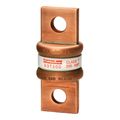

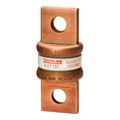
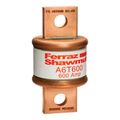


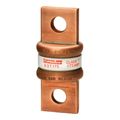



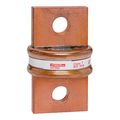


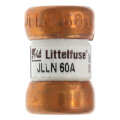
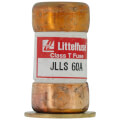
Class T Power Fuses are fast-acting, current-limiting fuses built into a compact body that takes up roughly a third of the space required by a comparable Class R fuse. Electricians and panel builders use them anywhere board space is tight but the circuit still needs a high interrupting rating, including load centers, panelboards, switchboards, and metering centers. Bussmann's JJN series covers the 300-volt range while the JJS series covers 600 volt applications, with amp ratings spanning 1 to 1200 amps across the full Class T lineup. The fuse body uses unique physical dimensions that prevent a lower-rated fuse from being substituted into a Class T holder, which keeps someone from accidentally dropping in an underrated fuse during a swap. The dimensional lockout, combined with the fast-acting current limitation, is why Class T fuses remain a common spec on service equipment and motor control centers where panel space and fault current protection both matter.
Subcategories
- 300-Volt Class T Fuses: 300-volt Class T fuses, sold under Bussmann's JJN designation, cover circuits rated up to 300 volts AC and carry an interrupting rating of 200,000 amps at that voltage. Electricians spec them on panelboards, load centers, and switchboards where the service voltage tops out at 300 volts and space inside the enclosure is limited. The compact body fits gutter space that a Class R or Class J fuse of the same amp rating would not fit into. JJN fuses cover amp ratings from 1 amp up through 600 amps within the 300-volt line.
- 600-Volt Class T Fuses: 600-volt Class T fuses, sold under Bussmann's JJS designation, handle circuits rated up to 600 volts AC for services and equipment that exceed the 300-volt threshold. Panel builders working on larger commercial or industrial gear reach for JJS fuses anywhere the extra voltage headroom is needed alongside the same compact Class T body. The higher voltage rating doesn't change the physical dimensions much, so JJS fuses still fit the same current-limiting holders used across the Class T line. Confirming the system voltage before ordering keeps a 300-volt JJN from getting specified onto a 600-volt service by mistake.
- Low Amp-Rating Class T Fuses: Low amp-rating Class T fuses cover smaller branch circuits, starting at 1 amp on the low end of the Mersen A3T and Bussmann JJN and JJS lines. Electricians use these ratings on control circuits, lighting panels, and smaller equipment feeders where the full 1200 amp range of the Class T lineup isn't needed. The compact Class T body still applies at these lower ratings, so panel space savings carry through even on smaller circuits. Picking the amp rating that matches the circuit's actual load, not just the breaker size, keeps the fuse from nuisance tripping.
- High Amp-Rating Class T Fuses: High amp-rating Class T fuses run up to 1200 amps at the top of the Mersen A3T and Bussmann Class T product lines, covering service entrance and large feeder applications. Contractors working on switchgear, metering centers, and large motor control centers rely on this end of the range where fault current protection matters most. The current-limiting design holds up at these higher ratings just as well as it does on smaller fuses, cutting let-through energy during a short circuit. Verifying the interrupting rating alongside the amp rating matters most at this end of the range, since large services often see higher available fault current.
Buying Guide
Start with the system voltage before looking at anything else. Circuits rated up to 300 volts call for the JJN-style Class T fuse, while anything running up to 600 volts needs the JJS-style rating instead, and mixing the two up puts an undersized fuse on a circuit it was never rated to protect. Confirm the panel or switchboard nameplate voltage against the fuse rating before finalizing an order.
Amp rating comes next, and it needs to match the actual load on the circuit rather than just the breaker size sitting next to it. Class T Power Fuses cover a wide range, from 1 amp up to 1200 amps, so there's little reason to round up to a higher rating than the circuit calls for. Oversizing a fuse defeats the point of branch circuit protection, since it lets a fault run longer before the fuse clears it.
Physical space inside the enclosure is the next practical check, since Class T fuses run about a third of the size of a comparable Class R fuse, which is exactly why they show up in tight panelboards, load centers, and metering centers where gutter space is limited.
Interrupting rating rounds out the decision. Higher available fault current on a service calls for checking that the fuse's interrupting rating, commonly 200,000 amps on Class T fuses, covers the maximum fault current the equipment could see.
Frequently Asked Questions
What's the difference between a Class T and Class R fuse?
Class T fuses run about a third of the physical size of a comparable Class R fuse while still delivering fast-acting, current-limiting protection. The compact body makes Class T fuses the better fit for panelboards, load centers, and switchboards where gutter space is tight. Class R fuses take up more room but are still common in equipment designed around their larger dimensions, so panel space is usually the deciding factor between the two.
What amp ratings are available in Class T fuses?
Class T fuses cover amp ratings from 1 amp up to 1200 amps across the full product line from manufacturers like Bussmann and Mersen. Smaller ratings suit control circuits and lighting panels, while the higher end of the range covers service entrance and large feeder applications. Matching the amp rating to the actual circuit load, rather than the breaker size, keeps the fuse from nuisance tripping.
What's the difference between JJN and JJS Class T fuses?
JJN fuses are rated for 300-volt circuits while JJS fuses are rated for 600-volt circuits, and both come from Bussmann's Class T lineup. Checking the panel or switchboard nameplate voltage against the fuse designation before ordering keeps a 300-volt fuse from ending up on a 600-volt service. Both series share the same compact Class T body and fast-acting current limitation.
Can a Class T fuse be replaced with a different fuse class?
Class T fuses use unique physical dimensions that prevent a fuse from a different class from being substituted into a Class T holder or block. The dimensional lockout keeps someone from accidentally dropping in a lower-rated or mismatched fuse during a swap. Replacing a Class T fuse always means ordering the same class and matching voltage and amp rating exactly.
What's the interrupting rating on a Class T fuse?
Class T fuses commonly carry an interrupting rating of 200,000 amps, giving them enough current-limiting capability to protect equipment during a high fault current event. Checking the available fault current on a service against the fuse's interrupting rating confirms the fuse can safely clear a fault without failing. Panel builders on larger commercial and industrial jobs pay close attention to this rating alongside the voltage and amp rating.
