




Filters
SORT
Product Availability –
Brand –
Product Type –
Application –
Pipe Size –
Review Score –
 --%3E %3Csvg version='1.1' id='Fill' xmlns='http://www.w3.org/2000/svg' xmlns:xlink='http://www.w3.org/1999/xlink' x='0px' y='0px' viewBox='0 0 100 100' enable-background='new 0 0 100 100' xml:space='preserve'%3E %3Cpath fill='%23F15C02' d='M79.44,0.95H20.56C9.78,0.95,0.95,9.78,0.95,20.56v58.87c0,10.79,8.82,19.61,19.61,19.61h58.87 c10.79,0,19.61-8.83,19.61-19.61V20.56C99.05,9.78,90.22,0.95,79.44,0.95z M65.38,58.24l9.38,29.58L49.69,69.78L24.5,87.82 l9.34-29.6L8.8,39.6l30.73-0.17c0,0,6.98-19.61,10-28.93c0.54,1.36,9.88,29.1,9.88,29.1H91.2L65.38,58.24z'/%3E %3C/svg%3E)
 --%3E %3Csvg version='1.1' id='With-RB' xmlns='http://www.w3.org/2000/svg' xmlns:xlink='http://www.w3.org/1999/xlink' x='0px' y='0px' viewBox='0 0 100 100' enable-background='new 0 0 100 100' xml:space='preserve'%3E %3Cpath fill='%23FBC8B4' d='M79.44,0.95H20.56C9.78,0.95,0.95,9.78,0.95,20.56v58.87c0,10.79,8.82,19.61,19.61,19.61h58.87 c10.79,0,19.61-8.83,19.61-19.61V20.56C99.05,9.78,90.22,0.95,79.44,0.95z M65.38,58.24l9.38,29.58L49.69,69.78L24.5,87.82 l9.34-29.6L8.8,39.6l30.73-0.17c0,0,6.98-19.61,10-28.93c0.54,1.36,9.88,29.1,9.88,29.1H91.2L65.38,58.24z'/%3E %3C/svg%3E)
Price Range –
Deburring Tools




 --%3E %3Csvg version='1.1' id='Half' xmlns='http://www.w3.org/2000/svg' xmlns:xlink='http://www.w3.org/1999/xlink' x='0px' y='0px' viewBox='0 0 100 100' enable-background='new 0 0 100 100' xml:space='preserve'%3E %3Cg%3E %3Cpath fill='%23F15C02' d='M30.05,70.23l3.79-12.01L8.8,39.6l30.73-0.17c0,0,6.98-19.61,10-28.93c0.54,1.36,9.88,29.1,9.88,29.1h1.58 L93.71,7.18c-3.58-3.82-8.66-6.23-14.28-6.23H20.56C9.78,0.95,0.95,9.78,0.95,20.56v58.87c0,5.41,2.22,10.32,5.79,13.88 L30.05,70.23z'/%3E %3C/g%3E %3Cpath fill='%23FBC8B4' d='M93.71,7.18L60.98,39.6H91.2L65.38,58.24l9.38,29.58L49.69,69.78L24.5,87.82l5.55-17.59L6.75,93.32 c3.55,3.54,8.44,5.73,13.82,5.73h58.87c10.79,0,19.61-8.83,19.61-19.61V20.56C99.05,15.4,97.01,10.69,93.71,7.18z'/%3E %3C/svg%3E)


 --%3E %3Csvg version='1.1' id='No-RB' xmlns='http://www.w3.org/2000/svg' xmlns:xlink='http://www.w3.org/1999/xlink' x='0px' y='0px' viewBox='0 0 100 100' enable-background='new 0 0 100 100' xml:space='preserve'%3E %3Cpath fill='%23CECECE' d='M79.44,0.95H20.56C9.78,0.95,0.95,9.78,0.95,20.56v58.87c0,10.79,8.82,19.61,19.61,19.61h58.87 c10.79,0,19.61-8.83,19.61-19.61V20.56C99.05,9.78,90.22,0.95,79.44,0.95z M65.38,58.24l9.38,29.58L49.69,69.78L24.5,87.82 l9.34-29.6L8.8,39.6l30.73-0.17c0,0,6.98-19.61,10-28.93c0.54,1.36,9.88,29.1,9.88,29.1H91.2L65.38,58.24z'/%3E %3C/svg%3E)


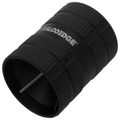


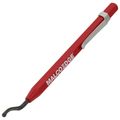


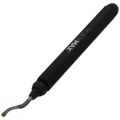


Deburring tools are hand tools designed to remove burrs, rough edges, and sharp ridges left behind after cutting or reaming pipe and tubing. Plumbers and HVAC technicians use them to clean up copper, PEX, and plastic pipe ends before soldering, pressing, gluing, or crimping a fitting, since a burr left in place can trap debris, restrict flow, or keep a fitting from seating correctly. Most deburring tools combine a cutting blade with a reamer point, letting a technician knock down the outside edge and clear the inside diameter in a single pass. Compact designs fit in a tool pouch and work well on tight jobsite cuts where a full-size reamer would be awkward to use. Picking the right deburring tool matters because a poorly cleaned pipe end is a common cause of a leaking joint, and catching that problem before assembly saves a callback.
Subcategories
- Manual Deburring Tools: Manual deburring tools are small, hand-operated blades built for quick, one-off cuts on the jobsite. A tradesperson can carry one in a pocket or tool pouch and use it right after cutting a length of pipe, before moving on to the next connection. They work on copper, PEX, and most plastic tubing without needing a separate reamer. Many models fold closed for safe storage between uses.
- Deburring Reamers: Deburring reamers focus on clearing burrs from the inside diameter of a pipe, which matters most on cuts made with a rotary or wheel-style cutter. A reamer point is inserted into the pipe end and turned until the inner edge is smooth, restoring full flow through the fitting. Reamers are often built into the same handle as an outer-edge blade for a combination tool.
- Deburring Tool Kits: Deburring tool kits bundle a handle with several interchangeable blades or reamer heads sized for different pipe diameters. A kit saves a technician from carrying multiple standalone tools on service calls that cover a range of pipe sizes. Replacement blades are typically sold separately once the originals dull.
- Replacement Blades: Replacement blades let a technician keep using an existing deburring tool handle instead of buying a new one once the cutting edge wears down. Blades are matched to a specific tool body, so checking compatibility before ordering avoids a mismatch. Keeping a spare blade on the truck avoids downtime mid-job.
Buying Guide
Selecting deburring tools starts with the pipe materials on hand. Copper responds well to a sharp blade, while PEX and other plastics call for a tool that will not gouge or crack the tubing wall. A tech who regularly switches between materials benefits from a kit with swappable heads rather than a single fixed blade. Size range is the next consideration. A tool rated for a narrow diameter range will not clear a burr on a larger pipe, so matching the tool to the most common pipe sizes on a route avoids carrying extra gear. Ergonomics count too, since a technician may use a deburring tool dozens of times a day; a comfortable grip and a blade that locks securely reduce fatigue and the risk of a slip. Durability matters for anyone doing this work daily rather than occasionally. A tool built with a metal body and a replaceable blade will outlast a disposable plastic model and cost less over time once blade replacement is factored in. Deburring tools that fold closed are safer to carry loose in a pouch alongside other hand tools. Finally, a technician working mostly with crimp or press fittings should confirm the reamer clears enough material for the crimp ring or press jaw to seat fully, since even a small residual burr can prevent a proper seal.
Frequently Asked Questions
What does a deburring tool actually do?
A deburring tool removes the sharp ridge and rough edge left on a pipe end after cutting. Clearing that burr lets a fitting seat fully and helps solder, adhesive, or a crimp ring form a tight seal.
Can the same deburring tool be used on copper and PEX?
Some deburring tools handle both materials, but it is worth checking the manufacturer's compatibility notes first. A blade sharp enough for copper can sometimes gouge softer plastic tubing, so a kit with interchangeable heads is often the safer choice for mixed-material work.
How do I know when to replace a deburring blade?
A dull blade will skate across the pipe end instead of cutting cleanly, or leave the burr only partially removed. Once a blade stops shaving material smoothly, it is time to swap in a fresh one.
Is a reamer the same thing as a deburring tool?
A reamer specifically clears the inside diameter of a cut pipe, while a deburring tool often combines a reamer point with an outer-edge blade. Many tools on the market do both jobs in a single handle.
Do I need a deburring tool for crimp or press fittings?
Yes. Even a fitting that relies on a crimp ring or press jaw instead of solder needs a clean, burr-free pipe end to form a reliable seal. Skipping this step is a common cause of early joint failure.
