




Dimmer Switches


 --%3E %3Csvg version='1.1' id='No-RB' xmlns='http://www.w3.org/2000/svg' xmlns:xlink='http://www.w3.org/1999/xlink' x='0px' y='0px' viewBox='0 0 100 100' enable-background='new 0 0 100 100' xml:space='preserve'%3E %3Cpath fill='%23CECECE' d='M79.44,0.95H20.56C9.78,0.95,0.95,9.78,0.95,20.56v58.87c0,10.79,8.82,19.61,19.61,19.61h58.87 c10.79,0,19.61-8.83,19.61-19.61V20.56C99.05,9.78,90.22,0.95,79.44,0.95z M65.38,58.24l9.38,29.58L49.69,69.78L24.5,87.82 l9.34-29.6L8.8,39.6l30.73-0.17c0,0,6.98-19.61,10-28.93c0.54,1.36,9.88,29.1,9.88,29.1H91.2L65.38,58.24z'/%3E %3C/svg%3E)


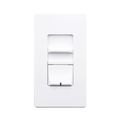
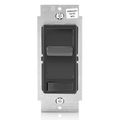


Dimmer switches are wall controls that replace a standard toggle switch, letting a homeowner or business adjust light output instead of settling for fully on or fully off. Most residential dimmer lines, like Lutron's Diva series, handle up to 150 watts of dimmable LED or CFL bulbs, or up to 600 watts of incandescent or halogen bulbs, on a single switch. Paddle and slide dimmers work with existing wiring and need no neutral wire, which keeps installation close to a standard switch swap in most older homes. Toggle-style dimmers pair a familiar switch action with a small slide control, while smart and wireless dimmers add app, voice, and remote control alongside manual operation at the wall. Getting the wattage rating and wiring requirements right before installation avoids flickering, humming, or a dimmer that trips on an overloaded circuit.
Subcategories
- Paddle and Slide Dimmers: Paddle and slide dimmers, like Lutron's Diva line, pair a large paddle switch with a side slider that sets brightness level. The line handles up to 150 watts of dimmable LED or CFL bulbs, or up to 600 watts of incandescent or halogen bulbs, and needs no neutral wire. Electricians install these in place of a standard switch in homes and offices where a simple, manual dimmer covers the need.
- Toggle-Style Dimmers: Toggle-style dimmers pair a traditional toggle switch action with a small slide control mounted alongside it. Homeowners who want the feel of a standard toggle switch but still want dimming ability choose this style over a paddle or rotary design. The toggle handles power switching while the slider sets the brightness level independently.
- Smart and Wireless Dimmers: Smart and wireless dimmers, like Lutron's Caseta line, add app, voice assistant, and remote control on top of manual operation at the switch. The line still handles up to 150 watts of dimmable LED or 600 watts of incandescent or halogen bulbs, matching the output of standard mechanical dimmers. Homeowners and property managers use this style to schedule lighting or control fixtures that are hard to reach with a standard switch.
- Plug-In Lamp Dimmers: Plug-in lamp dimmers, like Lutron's Credenza line, sit between a lamp's cord and the outlet instead of replacing a wall switch. The style suits renters or anyone who cannot rewire a wall switch but still wants dimming control on a table or floor lamp. A slide control on the plug-in unit sets brightness without any wiring work at all.
Buying Guide
Start a dimmer purchase by confirming the wattage of the bulbs going on the circuit. A dimmer rated for 150 watts of LED covers most modern fixtures, but a room running six or more incandescent bulbs may need the higher 600 watt incandescent rating on the same switch. Wiring matters just as much as wattage. Most paddle, slide, and toggle-style dimmers work without a neutral wire, which makes them a straightforward swap in older homes with two-wire boxes. Smart and wireless dimmers, on the other hand, often need a neutral wire or a compatible hub to enable app and voice control, so checking the box wiring before buying avoids a return trip to the supply house. Match the switch style to how the space gets used. A simple paddle or rotary dimmer covers a bedroom or dining room where manual control is enough, while a smart dimmer earns its cost in a rental property, vacation home, or space that benefits from scheduling and remote access. When stocking Dimmer Switches for a job, keep a mix of standard and no-neutral models on hand, since older homes and new construction often call for different wiring setups. Confirming bulb type, wattage, and wiring before the truck rolls cuts down on mismatched returns and callback trips.
Frequently Asked Questions
Does a dimmer switch need a neutral wire?
Most standard paddle, slide, and toggle-style dimmers work without a neutral wire, making them a direct swap for a standard toggle switch in older two-wire boxes. Smart and wireless dimmers often need a neutral wire or a compatible hub to run app and voice features. Checking the wire count in the switch box before buying avoids picking a dimmer that will not install as expected.
What wattage dimmer do I need for LED bulbs?
Most residential dimmers, including Lutron's Diva line, handle up to 150 watts of dimmable LED or CFL bulbs on a single switch. Adding up the wattage of every bulb on the circuit before buying confirms the dimmer will not overload. A fixture with several LED bulbs can still stay under the 150 watt rating since LED bulbs draw far less power than incandescent bulbs of similar brightness.
Can a dimmer switch control incandescent and LED bulbs on the same circuit?
A standard dimmer rated for 150 watts of LED and 600 watts of incandescent can run a mixed circuit as long as the combined wattage of every bulb stays under the appropriate rating for the lowest-rated bulb type present. Mixing bulb types on one dimmer sometimes causes uneven dimming since LED and incandescent bulbs respond differently to reduced voltage. Testing the circuit after installation catches flickering before it becomes a callback.
What is the difference between a smart dimmer and a standard dimmer?
A standard dimmer, like a paddle or toggle-style switch, only adjusts brightness manually at the wall. A smart dimmer, like Lutron's Caseta line, adds app, voice assistant, and remote control while still handling the same wattage ratings as a standard dimmer. Smart dimmers often need a neutral wire or hub, so checking wiring and compatibility ahead of installation matters more than with a standard model.
How many dimmer switches can go on one circuit?
The number of dimmers on a single circuit depends on the combined wattage of every bulb they control staying under the circuit's rated capacity, not a fixed count of switches. Multi-location setups, like three-way dimming, need a compatible companion switch paired with the main dimmer rather than two standard dimmers wired together. Checking the wattage rating and wiring diagram for the specific dimmer line before installing multiple switches avoids compatibility issues.
