




EC Max Motors

 --%3E %3Csvg version='1.1' id='No-RB' xmlns='http://www.w3.org/2000/svg' xmlns:xlink='http://www.w3.org/1999/xlink' x='0px' y='0px' viewBox='0 0 100 100' enable-background='new 0 0 100 100' xml:space='preserve'%3E %3Cpath fill='%23CECECE' d='M79.44,0.95H20.56C9.78,0.95,0.95,9.78,0.95,20.56v58.87c0,10.79,8.82,19.61,19.61,19.61h58.87 c10.79,0,19.61-8.83,19.61-19.61V20.56C99.05,9.78,90.22,0.95,79.44,0.95z M65.38,58.24l9.38,29.58L49.69,69.78L24.5,87.82 l9.34-29.6L8.8,39.6l30.73-0.17c0,0,6.98-19.61,10-28.93c0.54,1.36,9.88,29.1,9.88,29.1H91.2L65.38,58.24z'/%3E %3C/svg%3E)
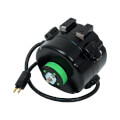

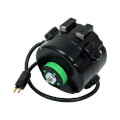
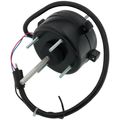
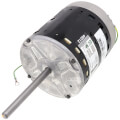
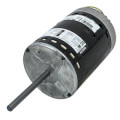
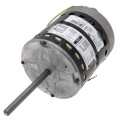
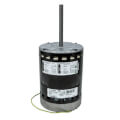
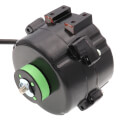
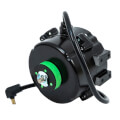

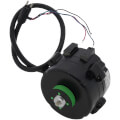
EC Max Motors are electronically commutated motors built for HVAC blower and fan applications where variable-speed control and lower energy draw matter more than constant fixed-speed operation. Unlike standard permanent split capacitor motors, an EC motor uses built-in electronics to adjust speed in response to system demand, so a fan or blower can ramp output up or down instead of running at one speed regardless of load. Contractors typically use EC Max Motors as direct or near-direct replacements when retrofitting older blower assemblies in furnaces, air handlers, and fan coils, or when specifying new equipment that calls for variable-speed operation. Because they rely on onboard control boards rather than a separate capacitor, wiring and mounting details can differ from motor to motor, so matching shaft size, rotation, and mounting pattern to the original equipment is the first step before ordering a replacement. Getting that match right upfront avoids a return trip to swap parts once installation is underway.
Subcategories
- Variable-Speed Blower Motors: Variable-speed blower motors adjust output automatically based on airflow demand, ramping up during heavy heating or cooling calls and slowing during light loads. HVAC technicians install them in furnaces and air handlers where manufacturers specify variable-speed operation for efficiency or comfort reasons. Because the speed profile is often programmed into the motor itself, replacement units need to match the original control logic as well as the physical mounting.
- Direct-Replacement EC Motors: Direct-replacement EC motors are built to match the shaft length, rotation, and mounting holes of a specific original equipment motor, so a technician can swap the failed unit without modifying the blower housing or fan bracket. These motors are commonly stocked for furnace and air handler models that see frequent motor failures in the field. Matching horsepower and frame size to the original nameplate data avoids airflow problems after installation.
- EC Motor Control Modules: Control modules pair with EC motor bodies to translate thermostat or board signals into the speed commands the motor understands. A failed control module can mimic a bad motor, so technicians often check the module before condemning the whole assembly. Replacing just the module, when compatible, cuts down the labor time compared with swapping the entire motor and fan assembly.
- Universal EC Motors: Universal EC motors ship with adjustable mounting brackets and multiple shaft options so a single part number can cover several original equipment applications. Field technicians favor them for service trucks because fewer part numbers need to be stocked to cover a range of furnace and air handler models. Programming or dip-switch settings on the motor itself typically set the speed profile after installation.
Buying Guide
Replacing a failed blower motor starts with confirming the original equipment specifications rather than assuming a like-for-like swap will work. Horsepower, voltage, rotation direction, and shaft diameter all need to match the original nameplate, since a mismatch on any of these points can cause airflow problems or premature failure. Frame size and mounting hole pattern matter just as much, since a motor that is electrically compatible but physically too large or too small for the housing will not install cleanly.
For furnace and air handler applications, checking whether the original manufacturer specified a variable-speed motor is an important early step, since replacing a variable-speed unit with a fixed-speed motor can change how the system responds to thermostat calls. EC Max Motors cover a range of horsepower and frame combinations, so cross-referencing the original part number against the replacement's specification sheet before ordering saves a return trip.
Control module compatibility is another common point of failure. Some replacement motors ship with an integrated module, while others require a separate module purchase, and mixing incompatible generations of hardware on these boards can prevent the motor from running at all. Confirming that the control module and motor body are matched, rather than assuming they are interchangeable across product generations, prevents a straightforward motor swap from turning into a troubleshooting call back to the same job site.
Frequently Asked Questions
What's the difference between an EC motor and a standard PSC motor?
An EC motor uses an integrated electronic control board to vary speed based on system demand, while a permanent split capacitor (PSC) motor runs at a fixed speed set by its wiring and capacitor. EC motors typically draw less power at partial loads because they are not running at full speed continuously. Replacing a PSC motor with an EC motor usually requires confirming that the blower housing and control wiring support variable-speed operation.
Can an EC Max Motor replace any failed blower motor?
Not without confirming compatibility first. Horsepower, shaft diameter, rotation, and mounting pattern all need to match the original motor's nameplate specifications, and the control module has to be compatible with the motor body being installed. Skipping that check can result in a motor that either will not fit the housing or will not run correctly once wired in.
Why would a blower run at the wrong speed after a motor swap?
A common cause is a control module or programming mismatch between the new motor and the original system logic. Even when the physical motor bolts in correctly, the module needs to be configured for the specific furnace or air handler model to produce the expected speed profile. Checking dip-switch settings or module compatibility against the equipment manual usually resolves the issue.
Do EC motors need a separate capacitor?
No. EC motors rely on an internal or attached control module rather than a run capacitor to operate, which is one of the main wiring differences from a standard PSC motor. A capacitor should not be wired into an EC motor circuit unless the manufacturer's documentation specifically calls for one.
How is horsepower rating determined for a replacement EC motor?
Horsepower is listed on the original motor's nameplate along with voltage, amperage, and rotation direction, and the replacement should match those figures rather than being estimated from the equipment's overall tonnage. Undersized or oversized horsepower relative to the original spec can affect airflow and system performance. Cross-referencing the nameplate data against the replacement motor's spec sheet is the most reliable way to confirm the right fit.
