




Filters
SORT
Product Availability –
Review Score –
 --%3E %3Csvg version='1.1' id='Fill' xmlns='http://www.w3.org/2000/svg' xmlns:xlink='http://www.w3.org/1999/xlink' x='0px' y='0px' viewBox='0 0 100 100' enable-background='new 0 0 100 100' xml:space='preserve'%3E %3Cpath fill='%23F15C02' d='M79.44,0.95H20.56C9.78,0.95,0.95,9.78,0.95,20.56v58.87c0,10.79,8.82,19.61,19.61,19.61h58.87 c10.79,0,19.61-8.83,19.61-19.61V20.56C99.05,9.78,90.22,0.95,79.44,0.95z M65.38,58.24l9.38,29.58L49.69,69.78L24.5,87.82 l9.34-29.6L8.8,39.6l30.73-0.17c0,0,6.98-19.61,10-28.93c0.54,1.36,9.88,29.1,9.88,29.1H91.2L65.38,58.24z'/%3E %3C/svg%3E)
 --%3E %3Csvg version='1.1' id='With-RB' xmlns='http://www.w3.org/2000/svg' xmlns:xlink='http://www.w3.org/1999/xlink' x='0px' y='0px' viewBox='0 0 100 100' enable-background='new 0 0 100 100' xml:space='preserve'%3E %3Cpath fill='%23FBC8B4' d='M79.44,0.95H20.56C9.78,0.95,0.95,9.78,0.95,20.56v58.87c0,10.79,8.82,19.61,19.61,19.61h58.87 c10.79,0,19.61-8.83,19.61-19.61V20.56C99.05,9.78,90.22,0.95,79.44,0.95z M65.38,58.24l9.38,29.58L49.69,69.78L24.5,87.82 l9.34-29.6L8.8,39.6l30.73-0.17c0,0,6.98-19.61,10-28.93c0.54,1.36,9.88,29.1,9.88,29.1H91.2L65.38,58.24z'/%3E %3C/svg%3E)
Price Range –
Honeywell & Honeywell Home Pressure Switches

 --%3E %3Csvg version='1.1' id='Half' xmlns='http://www.w3.org/2000/svg' xmlns:xlink='http://www.w3.org/1999/xlink' x='0px' y='0px' viewBox='0 0 100 100' enable-background='new 0 0 100 100' xml:space='preserve'%3E %3Cg%3E %3Cpath fill='%23F15C02' d='M30.05,70.23l3.79-12.01L8.8,39.6l30.73-0.17c0,0,6.98-19.61,10-28.93c0.54,1.36,9.88,29.1,9.88,29.1h1.58 L93.71,7.18c-3.58-3.82-8.66-6.23-14.28-6.23H20.56C9.78,0.95,0.95,9.78,0.95,20.56v58.87c0,5.41,2.22,10.32,5.79,13.88 L30.05,70.23z'/%3E %3C/g%3E %3Cpath fill='%23FBC8B4' d='M93.71,7.18L60.98,39.6H91.2L65.38,58.24l9.38,29.58L49.69,69.78L24.5,87.82l5.55-17.59L6.75,93.32 c3.55,3.54,8.44,5.73,13.82,5.73h58.87c10.79,0,19.61-8.83,19.61-19.61V20.56C99.05,15.4,97.01,10.69,93.71,7.18z'/%3E %3C/svg%3E)

 --%3E %3Csvg version='1.1' id='No-RB' xmlns='http://www.w3.org/2000/svg' xmlns:xlink='http://www.w3.org/1999/xlink' x='0px' y='0px' viewBox='0 0 100 100' enable-background='new 0 0 100 100' xml:space='preserve'%3E %3Cpath fill='%23CECECE' d='M79.44,0.95H20.56C9.78,0.95,0.95,9.78,0.95,20.56v58.87c0,10.79,8.82,19.61,19.61,19.61h58.87 c10.79,0,19.61-8.83,19.61-19.61V20.56C99.05,9.78,90.22,0.95,79.44,0.95z M65.38,58.24l9.38,29.58L49.69,69.78L24.5,87.82 l9.34-29.6L8.8,39.6l30.73-0.17c0,0,6.98-19.61,10-28.93c0.54,1.36,9.88,29.1,9.88,29.1H91.2L65.38,58.24z'/%3E %3C/svg%3E)
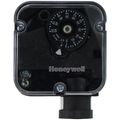
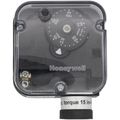
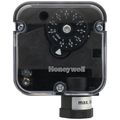
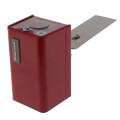
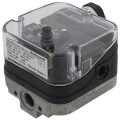
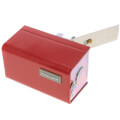
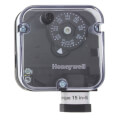
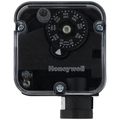
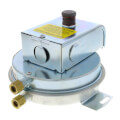


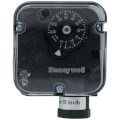
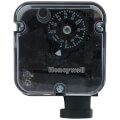
Honeywell and Honeywell Home pressure switches monitor air or gas pressure inside a furnace, boiler, or water heater and shut down the burner if pressure falls outside a safe range. Honeywell and Honeywell Home are distinct product lines, with Honeywell parts commonly found in commercial and legacy equipment and Honeywell Home parts serving current residential HVAC and water heating applications, so a technician needs to confirm which line the equipment on hand actually uses before ordering a replacement. Both lines of switches serve the same core safety function: confirming that a draft inducer or combustion blower has established proper airflow before allowing the gas valve to open. If pressure never reaches the switch's trip point, the control board locks out ignition rather than letting gas flow without confirmed venting. Technicians replace these switches when a unit repeatedly fails to ignite or shuts down mid-cycle with a pressure-related fault code. Matching the switch's pressure rating and port configuration to the original part keeps the safety interlock working as designed.
Subcategories
- Honeywell Pressure Switches: Honeywell pressure switches are commonly found in commercial boilers, rooftop units, and older residential furnaces still in service. Technicians servicing this equipment need to match the switch's pressure trip range and tubing port size to the original component rather than assuming a universal replacement will work. These switches typically mount near the draft inducer or combustion blower, wired into the control board's safety circuit. Replacing a failed switch restores the ignition lockout function that protects against venting problems.
- Honeywell Home Pressure Switches: Honeywell Home pressure switches serve current-production residential furnaces, boilers, and water heaters sold under the Honeywell Home brand and equipment lines that specify Honeywell Home components. These switches perform the same draft-proving function as their Honeywell counterparts but are built for the specific control boards and venting designs used in newer residential equipment. Contractors stock both Honeywell and Honeywell Home switches separately since the two lines aren't generally interchangeable across a mixed service route. Confirming the equipment's brand and model before the truck rolls avoids a return trip for the wrong part.
- Pressure Switch Tubing & Fittings: Tubing and fittings connect a pressure switch to the point in the venting or combustion air path where it needs to sense pressure. Technicians replace this tubing when it becomes cracked, kinked, or disconnected, which can cause a pressure switch to read incorrectly even when the switch itself is functioning normally. Silicone tubing is common in this application for its heat resistance near the flue or draft inducer housing. Checking the tubing before condemning the switch itself is a standard first troubleshooting step.
Buying Guide
The first step in replacing a pressure switch is confirming whether the equipment uses a Honeywell or a Honeywell Home part, since these are two distinct product lines built for different equipment generations rather than interchangeable options under one brand. Checking the existing switch's part number or the equipment's own documentation is more reliable than guessing based on the age of the unit.
Pressure trip range is the next critical spec, since a switch rated for the wrong range will either never trip during normal operation or trip too early and shut the unit down unnecessarily. Honeywell and Honeywell Home pressure switches are manufactured across a range of trip points to match different blower and inducer designs, so matching this rating to the original part is essential rather than optional.
Port and tubing connection style also needs to match the existing installation. Some switches use barbed ports for flexible tubing while others use threaded connections, and an adapter fitting is sometimes needed when a direct replacement isn't available in the same connection style. Confirming this detail before the job starts avoids a mid-repair trip back to the supply house.
Finally, a technician troubleshooting a lockout fault should verify the switch itself has actually failed before replacing it, since a cracked tubing line, a blocked vent, or a weak inducer motor can all produce the same symptom as a bad pressure switch. Ruling out these other causes first prevents an unnecessary parts swap that doesn't fix the underlying issue.
Frequently Asked Questions
Are Honeywell and Honeywell Home pressure switches interchangeable?
No, Honeywell and Honeywell Home are distinct product lines built for different equipment generations, and a switch from one line generally won't be a direct match for equipment designed around the other. Confirming which line the existing equipment uses, typically from the part number on the failed switch or the unit's documentation, is the safest way to order the correct replacement. Installing the wrong line's switch can result in a connection or calibration mismatch.
What does a pressure switch fault code usually indicate?
A pressure switch fault typically means the control board never saw the switch close, which happens when the draft inducer or combustion blower hasn't established enough airflow to trip the switch. This can point to a failed switch, but it can just as often point to a weak inducer motor, a blocked vent, or disconnected sensing tubing. Checking these other components before replacing the switch itself saves an unnecessary parts swap.
How often do pressure switches typically fail?
Pressure switches don't have a fixed replacement schedule and are typically only swapped when they fail or when troubleshooting points to them as the cause of an ignition lockout. Dust, moisture, or age can affect the internal diaphragm over time, gradually shifting the switch's trip point away from its original calibration. A unit that used to run reliably and now faults intermittently is a common sign the switch itself needs attention.
Why does a furnace lock out even though the inducer motor is running?
A running inducer motor isn't necessarily generating enough pressure differential to trip the switch, which can happen if the motor is weak, the vent is partially blocked, or the sensing tubing is disconnected or kinked. The switch is doing its job correctly in this case by preventing ignition without confirmed airflow. Isolating whether the fault is the switch, the tubing, or the motor itself requires checking each component in sequence.
What should be checked before replacing a pressure switch that keeps faulting?
Inspecting the sensing tubing for cracks, kinks, or disconnection is a quick first check, since a tubing problem can mimic a failed switch. Confirming the inducer or blower motor is producing adequate airflow, and checking the vent for blockage, rules out the other common causes of the same fault code. Only after these checks come back clean does replacing the switch itself become the likely fix.
