




King Electric

 --%3E %3Csvg version='1.1' id='No-RB' xmlns='http://www.w3.org/2000/svg' xmlns:xlink='http://www.w3.org/1999/xlink' x='0px' y='0px' viewBox='0 0 100 100' enable-background='new 0 0 100 100' xml:space='preserve'%3E %3Cpath fill='%23CECECE' d='M79.44,0.95H20.56C9.78,0.95,0.95,9.78,0.95,20.56v58.87c0,10.79,8.82,19.61,19.61,19.61h58.87 c10.79,0,19.61-8.83,19.61-19.61V20.56C99.05,9.78,90.22,0.95,79.44,0.95z M65.38,58.24l9.38,29.58L49.69,69.78L24.5,87.82 l9.34-29.6L8.8,39.6l30.73-0.17c0,0,6.98-19.61,10-28.93c0.54,1.36,9.88,29.1,9.88,29.1H91.2L65.38,58.24z'/%3E %3C/svg%3E)


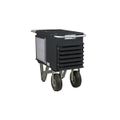
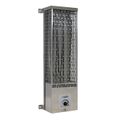
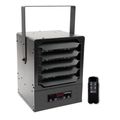
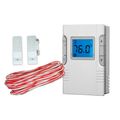
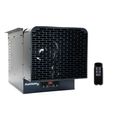
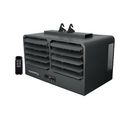
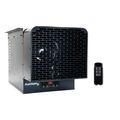
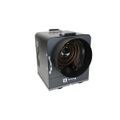
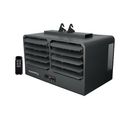
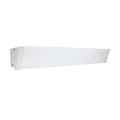
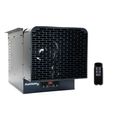
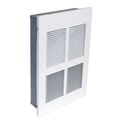
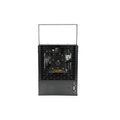
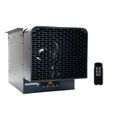
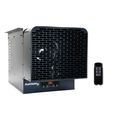
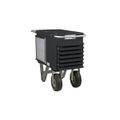

King Electric has manufactured electric heating equipment since 1958, with design and assembly based in Seattle, Washington. The company remains family owned and continues to build its catalog under a Designed and Assembled in the USA standard.
Six decades of manufacturing experience shaped a catalog that spans residential, commercial, and industrial heating along with heating cable systems and controls, serving electricians, builders, and mechanical contractors across North America.
Product Lines
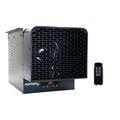
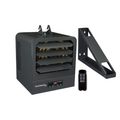
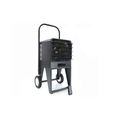
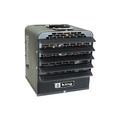
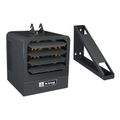
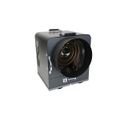
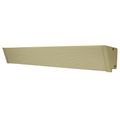
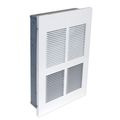
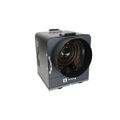
King's residential lineup includes electric baseboard heaters, wall and ceiling heaters, garage heaters, cove heaters, radiant panels, marine heaters, and portable units. Commercial offerings add fan-driven unit heaters, SafeTouch low-surface-temperature heaters, pumphouse heaters, and plenum heaters, while the industrial process line covers stainless steel, explosion-proof, and extreme-environment heaters.
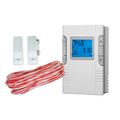
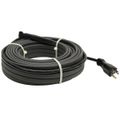
The brand also produces heating cable for snow melting, roof and gutter de-icing, and pipe freeze protection, along with hydronic heaters and furnaces, line-voltage and low-voltage thermostats, wireless controls, and high-velocity fans.
Why Contractors Specify King Electric
Electricians and mechanical contractors turn to King Electric when a project calls for domestically produced heating equipment with a long service history. A catalog built around ceramic thermal storage cores in baseboard models, sealed commercial units, and heavy-duty industrial heaters gives installers a consistent design language across residential and commercial jobs, reducing the number of separate manufacturers needed on a single build.
Matching thermostats and controls from the same brand simplify wiring and commissioning on retrofit and new construction work alike, and a single-source heating cable line covers snow melting, de-icing, and freeze protection without switching suppliers mid-project.
How to Choose King Electric Products
Selecting the right King Electric heater starts with matching heat output to room size and insulation level, then confirming the heater's voltage requirement against the electrical service already in place. Contractors installing in garages, workshops, or unconditioned spaces should look at the commercial and industrial unit heater lines rather than residential baseboard models, since those units are built for higher airflow and tougher environments.
For snow melting and freeze protection work, heating cable should be sized to the linear footage and application, whether roof edge, gutter, or buried pipe, before ordering. Pairing a heater with a matching King thermostat keeps control wiring straightforward on both retrofit and new installations.
Frequently Asked Questions
Does King Electric offer heaters in multiple voltage configurations?
Yes. King heaters and controls are built across multiple voltage configurations, so the electrical service available at the installation site should be confirmed against the specific model before ordering.
Are King Electric heaters suitable for garages and workshops?
The commercial and industrial unit heater lines are built for higher airflow and tougher conditions than residential baseboard models, making them a better fit for garages, workshops, and unconditioned spaces.
Can King thermostats be used with heaters from other manufacturers?
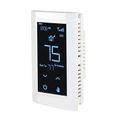
King line-voltage, low-voltage, and wireless thermostats are designed to pair with King heating equipment, though wiring should always be checked against the specific heater being controlled.
What is a ceramic thermal storage core, and why does it matter?
Found in King's baseboard heaters, the ceramic core stores and radiates heat evenly and will not leak the way a fluid-filled baseboard element can, which reduces callback risk on installed jobs.
Does King Electric make heating cable for roof and gutter de-icing?
Yes. The heating cable lineup covers snow melting, roof and gutter de-icing, and pipe freeze protection, sized by linear footage for the specific application.
