




Filters
SORT
Product Availability –
Brand –
Product Type –
Number Of Zones –
Refrigerant Type –
Cooling Capacity (BTU) –
Heating Capacity (BTU) –
SEER2 –
EER2 –
Energy Star Rated –
Liquid Line –
Suction Line –
Review Score –
 --%3E %3Csvg version='1.1' id='Fill' xmlns='http://www.w3.org/2000/svg' xmlns:xlink='http://www.w3.org/1999/xlink' x='0px' y='0px' viewBox='0 0 100 100' enable-background='new 0 0 100 100' xml:space='preserve'%3E %3Cpath fill='%23F15C02' d='M79.44,0.95H20.56C9.78,0.95,0.95,9.78,0.95,20.56v58.87c0,10.79,8.82,19.61,19.61,19.61h58.87 c10.79,0,19.61-8.83,19.61-19.61V20.56C99.05,9.78,90.22,0.95,79.44,0.95z M65.38,58.24l9.38,29.58L49.69,69.78L24.5,87.82 l9.34-29.6L8.8,39.6l30.73-0.17c0,0,6.98-19.61,10-28.93c0.54,1.36,9.88,29.1,9.88,29.1H91.2L65.38,58.24z'/%3E %3C/svg%3E)
 --%3E %3Csvg version='1.1' id='With-RB' xmlns='http://www.w3.org/2000/svg' xmlns:xlink='http://www.w3.org/1999/xlink' x='0px' y='0px' viewBox='0 0 100 100' enable-background='new 0 0 100 100' xml:space='preserve'%3E %3Cpath fill='%23FBC8B4' d='M79.44,0.95H20.56C9.78,0.95,0.95,9.78,0.95,20.56v58.87c0,10.79,8.82,19.61,19.61,19.61h58.87 c10.79,0,19.61-8.83,19.61-19.61V20.56C99.05,9.78,90.22,0.95,79.44,0.95z M65.38,58.24l9.38,29.58L49.69,69.78L24.5,87.82 l9.34-29.6L8.8,39.6l30.73-0.17c0,0,6.98-19.61,10-28.93c0.54,1.36,9.88,29.1,9.88,29.1H91.2L65.38,58.24z'/%3E %3C/svg%3E)
Price Range –
Multi Zone Mini Splits


 --%3E %3Csvg version='1.1' id='No-RB' xmlns='http://www.w3.org/2000/svg' xmlns:xlink='http://www.w3.org/1999/xlink' x='0px' y='0px' viewBox='0 0 100 100' enable-background='new 0 0 100 100' xml:space='preserve'%3E %3Cpath fill='%23CECECE' d='M79.44,0.95H20.56C9.78,0.95,0.95,9.78,0.95,20.56v58.87c0,10.79,8.82,19.61,19.61,19.61h58.87 c10.79,0,19.61-8.83,19.61-19.61V20.56C99.05,9.78,90.22,0.95,79.44,0.95z M65.38,58.24l9.38,29.58L49.69,69.78L24.5,87.82 l9.34-29.6L8.8,39.6l30.73-0.17c0,0,6.98-19.61,10-28.93c0.54,1.36,9.88,29.1,9.88,29.1H91.2L65.38,58.24z'/%3E %3C/svg%3E)
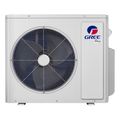








Multi Zone Mini Splits are ductless systems that connect a single outdoor condensing unit to several indoor air handlers, letting each room or zone run its own temperature setting instead of sharing one thermostat across a whole floor. Mitsubishi Electric's MXZ-C outdoor unit line, for example, spans seven system sizes ranging from 20,000 to 60,000 BTU/H and pairs with specific M-Series and P-Series indoor units to build out a zoned system. Ductless installation makes multi-zone systems a common retrofit choice in additions, converted attics, and older homes where extending existing ductwork isn't practical. Because one outdoor unit serves multiple rooms, contractors need to balance total indoor unit capacity against the outdoor unit's rated output rather than sizing each indoor head in isolation. Getting that balance right keeps every zone running efficiently instead of short cycling the compressor to satisfy an oversized indoor unit count.
Subcategories
- Outdoor Condensing Units: Outdoor condensing units are the single compressor and heat exchanger that serve every indoor zone connected to the system. Mitsubishi's MXZ-C lineup spans seven system sizes from 20,000 to 60,000 BTU/H, giving contractors a range of outdoor capacities to match total indoor unit load. Choosing the outdoor unit size comes before selecting indoor heads, since total indoor capacity has to stay within the outdoor unit's rated combination limits. Placement also matters, since the outdoor unit needs clearance for airflow and access for service on every visit.
- Wall-Mounted Indoor Units: Wall-mounted indoor units are the most common zone terminal in a multi-zone system, mounting high on an interior wall to distribute conditioned air across a room. Mitsubishi's MFZ-KX wall-mounted line reaches up to 21.6 SEER2 when paired with a compatible outdoor unit. Contractors choose wall-mounted units for straightforward retrofit jobs where ceiling or floor space for another indoor unit style isn't available. Each wall-mounted head runs its own zone independent of every other indoor unit on the system.
- Ducted and Multi-Position Air Handlers: Ducted and multi-position air handlers connect to a short duct run instead of discharging air directly into a room, letting one indoor unit condition more than one adjacent space. Mitsubishi's SVZ multi-position air handler reaches up to 19.5 SEER2, while the PVA line reaches up to 20.2 SEER2 depending on configuration. Contractors specify this style when a job calls for hidden equipment, such as a closet or attic installation, rather than a visible wall or ceiling unit. Short duct runs still keep the ductless efficiency advantage over a fully ducted central system.
- Zone Controllers and Thermostats: Zone controllers and thermostats give each indoor unit its own temperature setpoint instead of relying on a single control point for the whole system. Multi-zone systems let occupants set different temperatures across bedrooms, home offices, and living spaces served by the same outdoor unit. Contractors program zone priorities and schedules during commissioning so the system responds correctly when multiple zones call for conditioning at once. Compatible controllers vary by manufacturer and indoor unit type, so matching controller to equipment is part of the initial system design.
Buying Guide
Sizing a multi-zone system starts with the outdoor condensing unit, since every indoor unit connected to the system draws from that single unit's rated capacity. Mitsubishi's MXZ-C lineup, for example, spans seven system sizes from 20,000 to 60,000 BTU/H, and the combined capacity of every indoor unit planned for the job needs to fall within the outdoor unit's approved combination range rather than being sized room by room in isolation. Indoor unit style is the next decision, and it depends on the space more than personal preference: wall-mounted units suit straightforward retrofit rooms with wall space available, while ducted or multi-position air handlers fit jobs that call for hidden equipment in a closet or attic with a short duct run to a nearby room. Efficiency ratings vary by both indoor and outdoor unit combination, so the SEER2 number quoted for a Multi Zone Mini Splits system depends on which specific indoor units are paired with the outdoor condenser, not the outdoor unit alone. Zone count matters for both comfort and system balance. A system with too many small zones on one outdoor unit can lead to short cycling, since the compressor may struggle to modulate down far enough to satisfy a single small zone calling alone. Line set length and routing between the outdoor unit and each indoor unit also affects performance, so confirming a feasible refrigerant line path to every planned zone location is worth doing before finalizing a system size and indoor unit count.
Frequently Asked Questions
How many indoor units can connect to one outdoor unit?
The number of indoor units a single outdoor unit supports depends on the specific model line and its rated combination capacity. Mitsubishi's MXZ-C outdoor units, for instance, span seven system sizes from 20,000 to 60,000 BTU/H and pair with specific M-Series and P-Series indoor units. Total connected indoor capacity has to stay within the outdoor unit's approved range rather than being added freely. Checking the manufacturer's combination charts before finalizing a design confirms how many zones a given outdoor unit can actually support.
Can wall-mounted and ducted indoor units be mixed on the same system?
Many multi-zone outdoor units support mixing indoor unit styles, such as pairing wall-mounted heads in some rooms with a ducted or multi-position air handler serving a closet or attic space in others. Mitsubishi's SVZ and PVA air handler lines, for example, are designed to pair with the same outdoor unit families as the wall-mounted MFZ-KX line. Confirming compatibility between the specific indoor unit models and the outdoor unit selected is part of standard system design. Mixing styles gives more flexibility in matching equipment to each room's layout.
What SEER2 rating should be expected from a multi-zone system?
SEER2 rating depends on the specific combination of indoor and outdoor units installed, not a single number that applies across an entire product line. Mitsubishi's MFZ-KX wall-mounted units reach up to 21.6 SEER2 in certain combinations, while ducted air handlers like the SVZ and PVA lines reach up to 19.5 and 20.2 SEER2 respectively. Checking the rated SEER2 for the exact combination being installed, rather than the outdoor unit alone, gives an accurate efficiency expectation. Manufacturer combination guides list the tested rating for each approved pairing.
Why does a multi-zone system short cycle?
Short cycling on a multi-zone system often points to an imbalance between the outdoor unit's minimum modulation and the load of a single small zone calling for conditioning on its own. Systems with several very small zones added to one large outdoor unit are more prone to this than systems with zones sized closer to each other. Reviewing zone sizing against the outdoor unit's rated combination range during design reduces the risk of short cycling after installation. A contractor familiar with the specific manufacturer's combination charts can usually spot this mismatch before it becomes a service call.
Do all zones need to be the same indoor unit style?
Zones on the same multi-zone system don't need to match indoor unit style, since manufacturers generally support mixing wall-mounted, ducted, and multi-position units on one outdoor condenser within approved combination limits. Choosing indoor unit style room by room based on layout, rather than picking one style for the whole system, often fits a retrofit job better. Confirming each planned indoor unit against the outdoor unit's compatibility list is still necessary before finalizing the design. Flexibility across indoor unit styles is part of why multi-zone systems fit such a wide range of retrofit and addition projects.
