




Filters
SORT
Product Availability –
Size –
Capacity –
Material –
Review Score –
 --%3E %3Csvg version='1.1' id='Fill' xmlns='http://www.w3.org/2000/svg' xmlns:xlink='http://www.w3.org/1999/xlink' x='0px' y='0px' viewBox='0 0 100 100' enable-background='new 0 0 100 100' xml:space='preserve'%3E %3Cpath fill='%23F15C02' d='M79.44,0.95H20.56C9.78,0.95,0.95,9.78,0.95,20.56v58.87c0,10.79,8.82,19.61,19.61,19.61h58.87 c10.79,0,19.61-8.83,19.61-19.61V20.56C99.05,9.78,90.22,0.95,79.44,0.95z M65.38,58.24l9.38,29.58L49.69,69.78L24.5,87.82 l9.34-29.6L8.8,39.6l30.73-0.17c0,0,6.98-19.61,10-28.93c0.54,1.36,9.88,29.1,9.88,29.1H91.2L65.38,58.24z'/%3E %3C/svg%3E)
 --%3E %3Csvg version='1.1' id='With-RB' xmlns='http://www.w3.org/2000/svg' xmlns:xlink='http://www.w3.org/1999/xlink' x='0px' y='0px' viewBox='0 0 100 100' enable-background='new 0 0 100 100' xml:space='preserve'%3E %3Cpath fill='%23FBC8B4' d='M79.44,0.95H20.56C9.78,0.95,0.95,9.78,0.95,20.56v58.87c0,10.79,8.82,19.61,19.61,19.61h58.87 c10.79,0,19.61-8.83,19.61-19.61V20.56C99.05,9.78,90.22,0.95,79.44,0.95z M65.38,58.24l9.38,29.58L49.69,69.78L24.5,87.82 l9.34-29.6L8.8,39.6l30.73-0.17c0,0,6.98-19.61,10-28.93c0.54,1.36,9.88,29.1,9.88,29.1H91.2L65.38,58.24z'/%3E %3C/svg%3E)
Price Range –
Pipe Nipple Trays & Caddies


 --%3E %3Csvg version='1.1' id='Half' xmlns='http://www.w3.org/2000/svg' xmlns:xlink='http://www.w3.org/1999/xlink' x='0px' y='0px' viewBox='0 0 100 100' enable-background='new 0 0 100 100' xml:space='preserve'%3E %3Cg%3E %3Cpath fill='%23F15C02' d='M30.05,70.23l3.79-12.01L8.8,39.6l30.73-0.17c0,0,6.98-19.61,10-28.93c0.54,1.36,9.88,29.1,9.88,29.1h1.58 L93.71,7.18c-3.58-3.82-8.66-6.23-14.28-6.23H20.56C9.78,0.95,0.95,9.78,0.95,20.56v58.87c0,5.41,2.22,10.32,5.79,13.88 L30.05,70.23z'/%3E %3C/g%3E %3Cpath fill='%23FBC8B4' d='M93.71,7.18L60.98,39.6H91.2L65.38,58.24l9.38,29.58L49.69,69.78L24.5,87.82l5.55-17.59L6.75,93.32 c3.55,3.54,8.44,5.73,13.82,5.73h58.87c10.79,0,19.61-8.83,19.61-19.61V20.56C99.05,15.4,97.01,10.69,93.71,7.18z'/%3E %3C/svg%3E)




 --%3E %3Csvg version='1.1' id='No-RB' xmlns='http://www.w3.org/2000/svg' xmlns:xlink='http://www.w3.org/1999/xlink' x='0px' y='0px' viewBox='0 0 100 100' enable-background='new 0 0 100 100' xml:space='preserve'%3E %3Cpath fill='%23CECECE' d='M79.44,0.95H20.56C9.78,0.95,0.95,9.78,0.95,20.56v58.87c0,10.79,8.82,19.61,19.61,19.61h58.87 c10.79,0,19.61-8.83,19.61-19.61V20.56C99.05,9.78,90.22,0.95,79.44,0.95z M65.38,58.24l9.38,29.58L49.69,69.78L24.5,87.82 l9.34-29.6L8.8,39.6l30.73-0.17c0,0,6.98-19.61,10-28.93c0.54,1.36,9.88,29.1,9.88,29.1H91.2L65.38,58.24z'/%3E %3C/svg%3E)

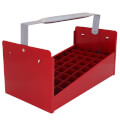
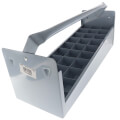
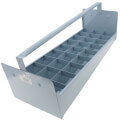
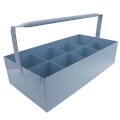
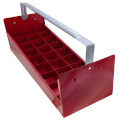
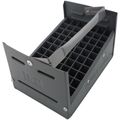
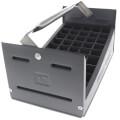
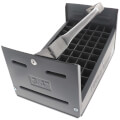
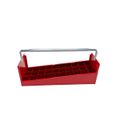
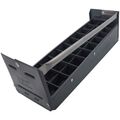
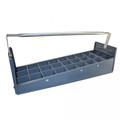

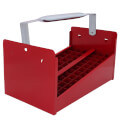
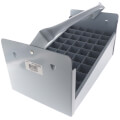
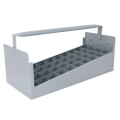
Nipple Trays are compartmentalized organizers that keep pipe nipples sorted by length and size on a truck or in a shop, replacing loose bins where the right fitting takes longer to find than it does to install. Trays are typically sized around a single pipe diameter, such as a 1/2 inch steel caddy holding 77 pieces or a 3/4 inch version holding 66, though combo trays covering two diameters in one case are also common. Plumbers and mechanical contractors use these on service calls where carrying a full range of nipple lengths in a compact case saves a trip back to the shop for a fitting that would otherwise sit buried in a toolbox. Steel and heavy polyethylene are the two common tray materials, chosen based on how much abuse the tray takes riding in a truck bed or service van day to day. A tray organized by length also makes it faster to spot when a size is running low before it becomes a problem mid-job.
Subcategories
- 1/2 Inch Nipple Trays: 1/2 inch nipple trays hold a single diameter of pipe nipple sorted by length, with steel caddies such as a 77-piece tray built for daily use on a service truck. Residential plumbers reach for this size most often, since 1/2 inch is the most common branch line diameter in domestic water and gas work. Keeping nipples pre-sorted by length in a dedicated tray cuts down on digging through a mixed bin for a short nipple versus a long one. Steel construction holds up to repeated loading and unloading better than plastic bins over a truck's service life.
- 3/4 Inch Nipple Trays: 3/4 inch nipple trays follow the same sorted-by-length layout as the 1/2 inch version, with steel options such as a 66-piece caddy covering this diameter. Contractors running larger residential or light commercial water lines and gas branches reach for this size regularly. A dedicated 3/4 inch tray keeps that inventory separate from smaller nipples, avoiding a mismatch grabbed in a hurry on a service call. Compartment counts run slightly lower than the 1/2 inch version since larger nipples take up more physical space per slot.
- 1 Inch Nipple Trays: 1 inch nipple trays are built for larger branch lines and mains work, with a steel caddy in this size commonly holding 50 pieces across its compartments. Commercial plumbers and mechanical contractors use this size more than residential crews, since 1 inch nipples show up more often on larger water and gas distribution runs. Fewer compartments than the smaller sizes reflect the larger physical footprint of each nipple. A dedicated 1 inch tray keeps this less frequently used size from getting lost in a mixed bin of smaller fittings.
- Combo Nipple Trays: Combo trays combine two nipple diameters, such as 1/2 inch and 3/4 inch, in one case with separate compartment sections for each size. Contractors who do not want to carry two separate trays favor this option for trucks with limited storage space. A single combo case covers the two most common residential branch line sizes without doubling up on hardware. Compartment layout keeps the two sizes visually separated even though they share one tray body.
Buying Guide
Picking a nipple tray starts with matching it to the pipe diameters actually used on a given route or job type, since a tray sized for the wrong diameter takes up truck space without solving the organization problem. Residential service work leans heavily on 1/2 inch, with 3/4 inch a close second, so a single-diameter tray in one of those sizes or a combo tray covering both usually covers the bulk of daily calls. Commercial and larger residential jobs pull in 1 inch and larger nipples more often, which calls for a dedicated tray in that size rather than trying to cram larger fittings into compartments built for smaller ones. Compartment count matters too: a higher piece count per tray means less frequent trips back to the shop to grab more of a specific length, but it also means a bulkier case competing for space in a service van. Material choice comes down to how the tray gets used day to day. Steel trays hold up better to being dropped, stacked, or left in a truck bed through a full range of weather, while lighter poly trays are easier to carry into a job site but wear faster under repeated heavy use. Nipple Trays that stay organized by length, rather than dumped back in mixed, save the most time on calls where finding the right nipple fast matters more than anything else. Labeling or color-coding compartments by length is a simple add-on that keeps a tray useful even after the printed size guide on the lid wears off.
Frequently Asked Questions
What size nipple tray does a typical plumbing service truck need?
Most residential service work runs on 1/2 inch and 3/4 inch pipe nipples, so a tray in one of those sizes, or a combo tray covering both, handles the bulk of daily calls. Trucks that also run commercial jobs benefit from adding a 1 inch tray for larger branch lines and mains work. Matching tray size to the diameters actually used on a route keeps truck storage efficient.
How many nipples does a typical nipple tray hold?
Capacity varies by size and brand, with steel caddies commonly holding around 77 pieces for 1/2 inch nipples, 66 pieces for 3/4 inch, and 50 pieces for 1 inch. Larger nipple sizes take up more physical space per compartment, which is why piece counts drop as pipe diameter increases. Choosing a higher-capacity tray means fewer trips back to the shop for a specific length.
Are steel or plastic nipple trays better for a work truck?
Steel trays hold up better to being dropped, stacked, or left in a truck bed through repeated daily use and rough weather. Plastic or poly trays weigh less and are easier to carry into a job site, though they wear faster under heavy use. The right choice usually comes down to how much abuse the tray takes riding in a vehicle versus how often it gets carried in and out on foot.
What is a combo nipple tray?
A combo nipple tray combines two pipe diameters, most commonly 1/2 inch and 3/4 inch, into one case with separate compartment sections for each size. Contractors who do not want to carry two separate trays favor this option on trucks with limited storage space. Compartment layout keeps the two sizes visually separated even though they share one tray body.
Why organize pipe nipples in a tray instead of a bin?
Sorting nipples by length and diameter in a dedicated tray cuts down on digging through a mixed bin to find the right fitting on a service call. A quick visual check of a tray also shows when a specific length is running low, before it turns into a problem mid-job. Loose bins tend to mix lengths and sizes together over time, which slows down exactly the kind of quick fix a nipple is usually needed for.
