




Prier


 --%3E %3Csvg version='1.1' id='No-RB' xmlns='http://www.w3.org/2000/svg' xmlns:xlink='http://www.w3.org/1999/xlink' x='0px' y='0px' viewBox='0 0 100 100' enable-background='new 0 0 100 100' xml:space='preserve'%3E %3Cpath fill='%23CECECE' d='M79.44,0.95H20.56C9.78,0.95,0.95,9.78,0.95,20.56v58.87c0,10.79,8.82,19.61,19.61,19.61h58.87 c10.79,0,19.61-8.83,19.61-19.61V20.56C99.05,9.78,90.22,0.95,79.44,0.95z M65.38,58.24l9.38,29.58L49.69,69.78L24.5,87.82 l9.34-29.6L8.8,39.6l30.73-0.17c0,0,6.98-19.61,10-28.93c0.54,1.36,9.88,29.1,9.88,29.1H91.2L65.38,58.24z'/%3E %3C/svg%3E)



 --%3E %3Csvg version='1.1' id='Fill' xmlns='http://www.w3.org/2000/svg' xmlns:xlink='http://www.w3.org/1999/xlink' x='0px' y='0px' viewBox='0 0 100 100' enable-background='new 0 0 100 100' xml:space='preserve'%3E %3Cpath fill='%23F15C02' d='M79.44,0.95H20.56C9.78,0.95,0.95,9.78,0.95,20.56v58.87c0,10.79,8.82,19.61,19.61,19.61h58.87 c10.79,0,19.61-8.83,19.61-19.61V20.56C99.05,9.78,90.22,0.95,79.44,0.95z M65.38,58.24l9.38,29.58L49.69,69.78L24.5,87.82 l9.34-29.6L8.8,39.6l30.73-0.17c0,0,6.98-19.61,10-28.93c0.54,1.36,9.88,29.1,9.88,29.1H91.2L65.38,58.24z'/%3E %3C/svg%3E)




Prier Products was established by German immigrant Anton Prier, who built a foundry to produce heavy-duty brass plumbing products for the American market. The company has kept that focus on durable brass fixtures for well over a century. It has grown into a manufacturer known specifically for wall and ground hydrants used in residential and commercial plumbing.
Prier is headquartered in Grandview, Missouri, where it continues to design and manufacture hydrants, faucets, and related brass plumbing components. The company has built its reputation around domestically manufactured products that hold up to repeated outdoor use. Its parts support in some cases covers products installed decades earlier.
Product Lines
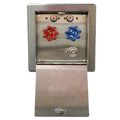
SupplyHouse carries Prier's hydrant lines, which span residential wall hydrants, commercial hydrants, and ground hydrants built for outdoor water access points. Residential hydrants are designed for anti-siphon protection and freeze resistance in exterior wall applications. Commercial hydrants extend that same anti-siphon design to wall, ground, and roof installations with a range of standard inlet sizes and lengths. Ground hydrants are built for below-grade or yard-level water access where ease of maintenance is a priority. Beyond hydrants, Prier also produces angle sill faucets, boiler drains, and lead-free brass components, rounding out a catalog focused on durable outdoor and utility plumbing fixtures.
Why Contractors Specify Prier
Contractors specify Prier hydrants largely for their anti-siphon design, which addresses a common code requirement around preventing contaminated water from being drawn back into a building's potable water supply. Prier builds its hydrants from heavy-duty brass and maintains parts support for products installed years earlier. Contractors also value the brand for service and replacement work on hydrants that may already be decades old at a property. The company's domestic manufacturing and compliance with ASSE, IAPMO, and CSA standards give contractors a straightforward way to confirm code compliance when specifying a hydrant for an inspected job.
How to Choose Prier Products
Match the hydrant type to the installation location first. Wall hydrants suit exterior wall penetrations, ground hydrants suit yard-level or below-grade access points, and roof hydrants are built specifically for rooftop water taps on commercial buildings. Confirm the correct length for a wall hydrant based on wall thickness. An incorrect length can leave the shutoff valve inside an unheated wall cavity where it remains vulnerable to freezing. Check the inlet size and connection type against the existing supply line before ordering, particularly on commercial jobs where inlet configurations vary more than on typical residential installations. When replacing an older hydrant, confirm parts availability for the specific model before assuming a full replacement is necessary. Prier's parts support in some cases covers products installed decades earlier.
Frequently Asked Questions
What does an anti-siphon design on a Prier hydrant actually prevent?
It prevents contaminated water from being drawn backward into the potable water supply, which is a common code requirement for outdoor hose bibs and hydrants.
How do I pick the right length for a Prier wall hydrant?
Length should be based on the wall thickness. This keeps the shutoff valve inside the heated interior space rather than in an unheated wall cavity, which helps prevent freeze damage.
Are Prier hydrants suitable for commercial buildings, or only residential?
Prier makes both residential and commercial hydrant lines. The commercial lineup covers wall, ground, and roof installations built for a wider range of inlet sizes and lengths.
Can parts still be found for an older Prier hydrant?
In some cases, yes. Prier's parts support in some cases covers products installed decades earlier, so confirm availability for the specific model before assuming a full replacement is needed.
What standards do Prier hydrants comply with?
Prier hydrants are built to comply with ASSE, IAPMO, and CSA standards, which helps contractors confirm code compliance when specifying a hydrant for an inspected job.
