




Filters
SORT
Product Availability –
Voltage –
Review Score –
 --%3E %3Csvg version='1.1' id='Fill' xmlns='http://www.w3.org/2000/svg' xmlns:xlink='http://www.w3.org/1999/xlink' x='0px' y='0px' viewBox='0 0 100 100' enable-background='new 0 0 100 100' xml:space='preserve'%3E %3Cpath fill='%23F15C02' d='M79.44,0.95H20.56C9.78,0.95,0.95,9.78,0.95,20.56v58.87c0,10.79,8.82,19.61,19.61,19.61h58.87 c10.79,0,19.61-8.83,19.61-19.61V20.56C99.05,9.78,90.22,0.95,79.44,0.95z M65.38,58.24l9.38,29.58L49.69,69.78L24.5,87.82 l9.34-29.6L8.8,39.6l30.73-0.17c0,0,6.98-19.61,10-28.93c0.54,1.36,9.88,29.1,9.88,29.1H91.2L65.38,58.24z'/%3E %3C/svg%3E)
Price Range –
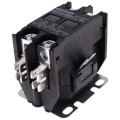
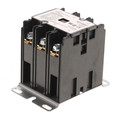
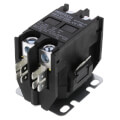
Rheem Contactors


 --%3E %3Csvg version='1.1' id='No-RB' xmlns='http://www.w3.org/2000/svg' xmlns:xlink='http://www.w3.org/1999/xlink' x='0px' y='0px' viewBox='0 0 100 100' enable-background='new 0 0 100 100' xml:space='preserve'%3E %3Cpath fill='%23CECECE' d='M79.44,0.95H20.56C9.78,0.95,0.95,9.78,0.95,20.56v58.87c0,10.79,8.82,19.61,19.61,19.61h58.87 c10.79,0,19.61-8.83,19.61-19.61V20.56C99.05,9.78,90.22,0.95,79.44,0.95z M65.38,58.24l9.38,29.58L49.69,69.78L24.5,87.82 l9.34-29.6L8.8,39.6l30.73-0.17c0,0,6.98-19.61,10-28.93c0.54,1.36,9.88,29.1,9.88,29.1H91.2L65.38,58.24z'/%3E %3C/svg%3E)
 --%3E %3Csvg version='1.1' id='Half' xmlns='http://www.w3.org/2000/svg' xmlns:xlink='http://www.w3.org/1999/xlink' x='0px' y='0px' viewBox='0 0 100 100' enable-background='new 0 0 100 100' xml:space='preserve'%3E %3Cg%3E %3Cpath fill='%23F15C02' d='M30.05,70.23l3.79-12.01L8.8,39.6l30.73-0.17c0,0,6.98-19.61,10-28.93c0.54,1.36,9.88,29.1,9.88,29.1h1.58 L93.71,7.18c-3.58-3.82-8.66-6.23-14.28-6.23H20.56C9.78,0.95,0.95,9.78,0.95,20.56v58.87c0,5.41,2.22,10.32,5.79,13.88 L30.05,70.23z'/%3E %3C/g%3E %3Cpath fill='%23FBC8B4' d='M93.71,7.18L60.98,39.6H91.2L65.38,58.24l9.38,29.58L49.69,69.78L24.5,87.82l5.55-17.59L6.75,93.32 c3.55,3.54,8.44,5.73,13.82,5.73h58.87c10.79,0,19.61-8.83,19.61-19.61V20.56C99.05,15.4,97.01,10.69,93.71,7.18z'/%3E %3C/svg%3E)

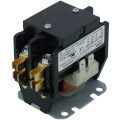
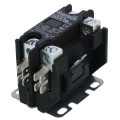
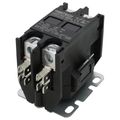
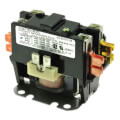
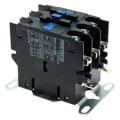
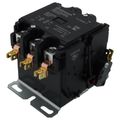
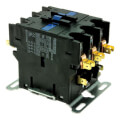
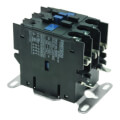
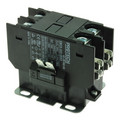
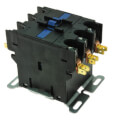
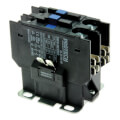
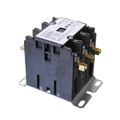
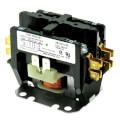
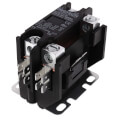
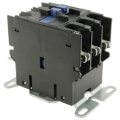
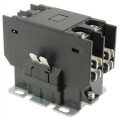
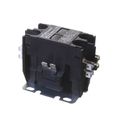
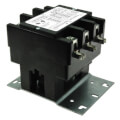
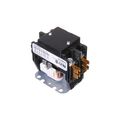
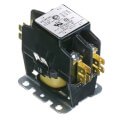


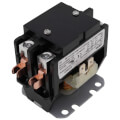
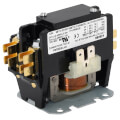
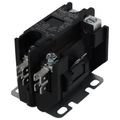
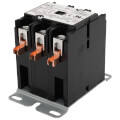
Rheem contactors are the electromechanical switches that turn compressor and condenser fan motor circuits on and off inside Rheem air conditioning and heat pump equipment. A contactor uses a low-voltage signal from the thermostat to pull in a set of contacts that then carry the higher-voltage current the compressor and fan actually run on, isolating the thermostat circuit from the load. HVAC technicians replace contactors when the contacts pit, burn, or weld shut from repeated cycling, or when the coil itself fails and stops pulling the contacts closed at all. A worn contactor is one of the most common causes of a no-cool service call, since chattering or burned contacts can prevent the compressor from starting even when every other component is healthy. Matching coil voltage, pole configuration, and current rating to the original Rheem contactor keeps the replacement compatible with the rest of the unit's control circuit.
Subcategories
- Single-Pole Contactors: Single-pole contactors switch one leg of the compressor or fan motor circuit and are common on smaller residential condensing units. Technicians select them when the original Rheem equipment used a single-pole design, since switching only one leg is sufficient for the unit's wiring configuration. Confirming the coil voltage, typically 24 volts, matches the thermostat control circuit is a required check before installation.
- Double-Pole Contactors: Double-pole contactors switch both legs of the incoming power circuit simultaneously, a design many commercial and larger residential Rheem units use for a more complete disconnect. Technicians favor these when local code or the original equipment design calls for switching both hot legs rather than one. The added pole means double-pole contactors are physically larger and require more room inside the disconnect or control panel.
- Contactor Coils and Accessories: Contactor coils and accessories cover replacement coils sold separately from the full contactor body, along with dust covers, mounting hardware, and lugs. Technicians replace just the coil when the switching contacts themselves are still in good condition but the coil has burned out or lost its pull. Matching coil voltage and physical mounting pattern to the existing contactor body is essential for a proper fit.
Buying Guide
Confirm the exact Rheem model and serial number of the unit before ordering a replacement contactor, since coil voltage, pole count, and current rating vary across Rheem's residential and commercial product lines. A contactor that looks physically similar but carries the wrong current rating can overheat under load or fail prematurely.
Inspect the existing contactor's contacts for pitting, burning, or a welded-shut position before assuming the coil is the problem, since both failure modes produce a no-start or intermittent-start symptom that can look identical from outside the unit. When shopping Rheem contactors, technicians servicing units with two-stage or variable-speed compressors should pay particular attention to matching coil voltage exactly, since these systems are more sensitive to control circuit inconsistencies than standard single-stage equipment.
Check current rating against the compressor and fan motor's locked rotor amperage rather than just its running amperage, since a contactor undersized for the inrush current will fail well before its expected service life. Keeping a small stock of the most common Rheem contactor sizes on the truck shortens no-cool calls considerably, since a bad contactor is often diagnosed and replaced in the same visit.
Frequently Asked Questions
What are the signs a Rheem contactor is failing?
A humming or chattering sound from the outdoor unit, a compressor that won't start even though the thermostat is calling for cooling, and visible pitting or burning on the contacts are the most common signs. A contactor with welded contacts can also cause the unit to run continuously even after the thermostat stops calling.
Can a universal contactor replace a Rheem-specific one?
A universal contactor can work as long as coil voltage, pole configuration, and current rating match the original Rheem specifications exactly. Physical mounting pattern should also be checked, since a universal contactor that doesn't fit the existing bracket adds unnecessary labor to the swap.
Why does a contactor keep failing after replacement?
Repeat contactor failure often points to a problem elsewhere in the circuit, such as a failing capacitor causing excessive inrush current, low line voltage, or a compressor drawing more current than it should. Replacing the contactor alone without diagnosing the underlying cause typically leads to another failure within a short time.
Is it safe to bypass a stuck contactor temporarily?
Bypassing a contactor is not a safe practice, since it removes thermostat control over the compressor and can leave high-voltage circuits energized in ways the system wasn't designed for. A failed contactor should be replaced rather than bypassed, even as a short-term fix.
How long do Rheem contactors typically last?
Service life varies with cycling frequency and local power quality, but contactors are a wear component that most technicians expect to replace at least once over the life of a condensing unit. Units in climates with heavy cooling demand or frequent short cycling tend to see contactor wear sooner.
