




Filters
SORT
Product Availability –
Brand –
Product Type –
Features –
AWG –
Bolt Hole Size –
Review Score –
 --%3E %3Csvg version='1.1' id='Fill' xmlns='http://www.w3.org/2000/svg' xmlns:xlink='http://www.w3.org/1999/xlink' x='0px' y='0px' viewBox='0 0 100 100' enable-background='new 0 0 100 100' xml:space='preserve'%3E %3Cpath fill='%23F15C02' d='M79.44,0.95H20.56C9.78,0.95,0.95,9.78,0.95,20.56v58.87c0,10.79,8.82,19.61,19.61,19.61h58.87 c10.79,0,19.61-8.83,19.61-19.61V20.56C99.05,9.78,90.22,0.95,79.44,0.95z M65.38,58.24l9.38,29.58L49.69,69.78L24.5,87.82 l9.34-29.6L8.8,39.6l30.73-0.17c0,0,6.98-19.61,10-28.93c0.54,1.36,9.88,29.1,9.88,29.1H91.2L65.38,58.24z'/%3E %3C/svg%3E)
 --%3E %3Csvg version='1.1' id='With-RB' xmlns='http://www.w3.org/2000/svg' xmlns:xlink='http://www.w3.org/1999/xlink' x='0px' y='0px' viewBox='0 0 100 100' enable-background='new 0 0 100 100' xml:space='preserve'%3E %3Cpath fill='%23FBC8B4' d='M79.44,0.95H20.56C9.78,0.95,0.95,9.78,0.95,20.56v58.87c0,10.79,8.82,19.61,19.61,19.61h58.87 c10.79,0,19.61-8.83,19.61-19.61V20.56C99.05,9.78,90.22,0.95,79.44,0.95z M65.38,58.24l9.38,29.58L49.69,69.78L24.5,87.82 l9.34-29.6L8.8,39.6l30.73-0.17c0,0,6.98-19.61,10-28.93c0.54,1.36,9.88,29.1,9.88,29.1H91.2L65.38,58.24z'/%3E %3C/svg%3E)
Price Range –
Terminals & Crimps


 --%3E %3Csvg version='1.1' id='No-RB' xmlns='http://www.w3.org/2000/svg' xmlns:xlink='http://www.w3.org/1999/xlink' x='0px' y='0px' viewBox='0 0 100 100' enable-background='new 0 0 100 100' xml:space='preserve'%3E %3Cpath fill='%23CECECE' d='M79.44,0.95H20.56C9.78,0.95,0.95,9.78,0.95,20.56v58.87c0,10.79,8.82,19.61,19.61,19.61h58.87 c10.79,0,19.61-8.83,19.61-19.61V20.56C99.05,9.78,90.22,0.95,79.44,0.95z M65.38,58.24l9.38,29.58L49.69,69.78L24.5,87.82 l9.34-29.6L8.8,39.6l30.73-0.17c0,0,6.98-19.61,10-28.93c0.54,1.36,9.88,29.1,9.88,29.1H91.2L65.38,58.24z'/%3E %3C/svg%3E)



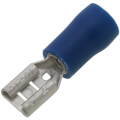
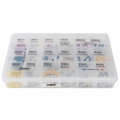
 --%3E %3Csvg version='1.1' id='Half' xmlns='http://www.w3.org/2000/svg' xmlns:xlink='http://www.w3.org/1999/xlink' x='0px' y='0px' viewBox='0 0 100 100' enable-background='new 0 0 100 100' xml:space='preserve'%3E %3Cg%3E %3Cpath fill='%23F15C02' d='M30.05,70.23l3.79-12.01L8.8,39.6l30.73-0.17c0,0,6.98-19.61,10-28.93c0.54,1.36,9.88,29.1,9.88,29.1h1.58 L93.71,7.18c-3.58-3.82-8.66-6.23-14.28-6.23H20.56C9.78,0.95,0.95,9.78,0.95,20.56v58.87c0,5.41,2.22,10.32,5.79,13.88 L30.05,70.23z'/%3E %3C/g%3E %3Cpath fill='%23FBC8B4' d='M93.71,7.18L60.98,39.6H91.2L65.38,58.24l9.38,29.58L49.69,69.78L24.5,87.82l5.55-17.59L6.75,93.32 c3.55,3.54,8.44,5.73,13.82,5.73h58.87c10.79,0,19.61-8.83,19.61-19.61V20.56C99.05,15.4,97.01,10.69,93.71,7.18z'/%3E %3C/svg%3E)
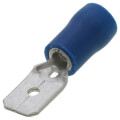

Terminals and crimps are the small connectors electricians and HVAC technicians use to join wire ends to a screw terminal, splice two conductors, or land a wire on a component like a contactor or motor. Ring terminals, spade (fork) terminals, and butt connectors each solve a different connection problem, and picking the wrong style for the job is a common source of a loose or overheating connection down the road. A crimp connector is sized to a specific wire gauge range, so matching the connector to the conductor is the first step to a reliable joint.
Beyond the connector itself, the crimping tool matters just as much. A ratcheting crimper that fully compresses the barrel produces a gas-tight connection that resists corrosion and vibration, while a cheap or worn tool can leave a crimp that looks fine but fails under load. These parts show up constantly in panel wiring, motor hookups, control circuits, and field repairs, which is why most trucks carry an assortment box covering the common wire gauges.
Subcategories
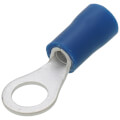
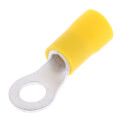
- Ring Terminals: Ring terminals form a closed loop that slides over a screw or stud, so the connection stays put even if the screw loosens slightly. They're the standard choice for grounding connections and any terminal block where vibration is a concern.
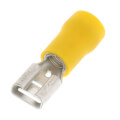
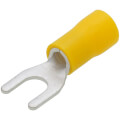
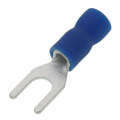
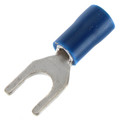
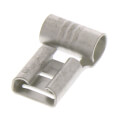
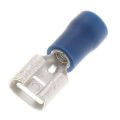
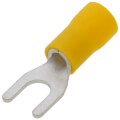
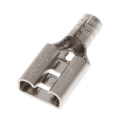
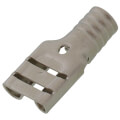
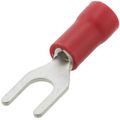
- Spade and Fork Terminals: Spade terminals have an open-ended U-shape that slides under a screw head without removing the screw completely. Technicians favor them on equipment terminal strips where they need to disconnect and reconnect a wire repeatedly for service.
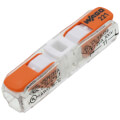
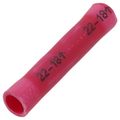
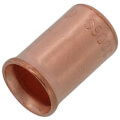
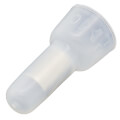
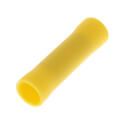
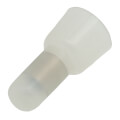
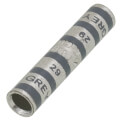
- Butt Connectors: Butt connectors splice two wire ends together end-to-end, typically for extending a wire run or repairing a damaged section. Heat-shrink versions add a sealed, insulated joint that holds up better in damp equipment cabinets or outdoor enclosures.
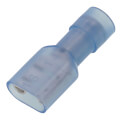
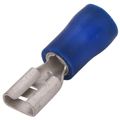
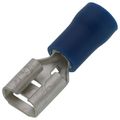
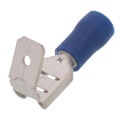
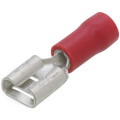
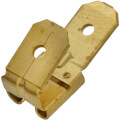
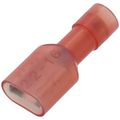
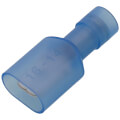
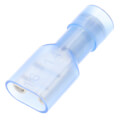
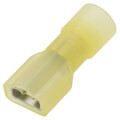
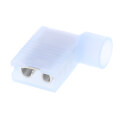
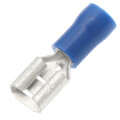
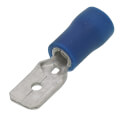
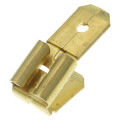
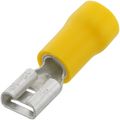
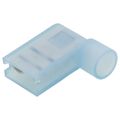
- Disconnects: Quick-disconnect (blade) terminals let a wire snap on and off a matching male tab without tools, which speeds up service on components like blower motors and relays that get swapped out during troubleshooting.
Buying Guide
Match the terminal to the wire gauge first. Every crimp terminal is stamped or color-coded for a specific gauge range, and using one outside that range produces a crimp that's either too loose to grip the strands or so tight it damages the wire. Color coding (commonly red, blue, and yellow across most brands) is a fast visual check when sorting an assortment box.
Decide between insulated and non-insulated terminals based on where the connection lands. Insulated terminals with a plastic or nylon sleeve protect against accidental shorts on a crowded terminal strip, while non-insulated terminals are used where a separate heat-shrink or tape wrap will be added, or where the connector needs to fit into a tighter space than the insulation allows.
Consider the stud or screw size the terminal needs to fit. Ring and spade terminals list a stud size, and using a terminal with the wrong hole size either won't fit the screw or leaves too much play for a secure connection.
For anything exposed to moisture, vibration, or temperature swings, look at heat-shrink butt connectors or marine-grade terminals with adhesive-lined insulation. The extra sealing keeps corrosion from creeping into the crimp over time, which is often what causes an intermittent electrical fault months after installation.
Finally, invest in a quality ratcheting crimp tool sized for the terminal type being used. A ratcheting tool won't release until it reaches full compression, which is the single biggest factor in whether a crimped connection holds up long-term.
Frequently Asked Questions
What's the difference between a ring terminal and a spade terminal?
A ring terminal forms a closed loop around the screw, so it stays connected even if the screw backs out slightly. A spade terminal has an open end that slides under the screw head, making it faster to disconnect for service but less secure under vibration.
Can I reuse a crimp terminal after removing it?
No. Once a terminal has been crimped onto a wire, the barrel is permanently deformed and won't form a reliable gas-tight connection a second time. Cut it off and install a new terminal.
Do I need a special tool to crimp these terminals?
A ratcheting crimp tool sized for the terminal type produces the most consistent, fully-compressed connection. Pliers or an undersized crimper can leave a joint that looks crimped but isn't tight enough to resist pulling loose.
How do I know what wire gauge a terminal fits?
Most terminals are stamped with a gauge range and use a standard color code, commonly red for smaller gauges, blue for mid-range, and yellow for larger gauges. Checking the stamped range avoids a crimp that's too loose or too tight.
Are heat-shrink butt connectors worth the extra cost?
In damp, outdoor, or vibration-prone locations, yes. The heat-shrink sleeve seals out moisture and adds strain relief, which reduces the chance of corrosion or a loose splice developing over time.
