




Filters
SORT
Product Availability –
Brand –
Gauge –
Length (Inches) –
Finish –
Review Score –
 --%3E %3Csvg version='1.1' id='Fill' xmlns='http://www.w3.org/2000/svg' xmlns:xlink='http://www.w3.org/1999/xlink' x='0px' y='0px' viewBox='0 0 100 100' enable-background='new 0 0 100 100' xml:space='preserve'%3E %3Cpath fill='%23F15C02' d='M79.44,0.95H20.56C9.78,0.95,0.95,9.78,0.95,20.56v58.87c0,10.79,8.82,19.61,19.61,19.61h58.87 c10.79,0,19.61-8.83,19.61-19.61V20.56C99.05,9.78,90.22,0.95,79.44,0.95z M65.38,58.24l9.38,29.58L49.69,69.78L24.5,87.82 l9.34-29.6L8.8,39.6l30.73-0.17c0,0,6.98-19.61,10-28.93c0.54,1.36,9.88,29.1,9.88,29.1H91.2L65.38,58.24z'/%3E %3C/svg%3E)
 --%3E %3Csvg version='1.1' id='With-RB' xmlns='http://www.w3.org/2000/svg' xmlns:xlink='http://www.w3.org/1999/xlink' x='0px' y='0px' viewBox='0 0 100 100' enable-background='new 0 0 100 100' xml:space='preserve'%3E %3Cpath fill='%23FBC8B4' d='M79.44,0.95H20.56C9.78,0.95,0.95,9.78,0.95,20.56v58.87c0,10.79,8.82,19.61,19.61,19.61h58.87 c10.79,0,19.61-8.83,19.61-19.61V20.56C99.05,9.78,90.22,0.95,79.44,0.95z M65.38,58.24l9.38,29.58L49.69,69.78L24.5,87.82 l9.34-29.6L8.8,39.6l30.73-0.17c0,0,6.98-19.61,10-28.93c0.54,1.36,9.88,29.1,9.88,29.1H91.2L65.38,58.24z'/%3E %3C/svg%3E)
Price Range –
Tubular Slip Joint Tailpieces

 --%3E %3Csvg version='1.1' id='No-RB' xmlns='http://www.w3.org/2000/svg' xmlns:xlink='http://www.w3.org/1999/xlink' x='0px' y='0px' viewBox='0 0 100 100' enable-background='new 0 0 100 100' xml:space='preserve'%3E %3Cpath fill='%23CECECE' d='M79.44,0.95H20.56C9.78,0.95,0.95,9.78,0.95,20.56v58.87c0,10.79,8.82,19.61,19.61,19.61h58.87 c10.79,0,19.61-8.83,19.61-19.61V20.56C99.05,9.78,90.22,0.95,79.44,0.95z M65.38,58.24l9.38,29.58L49.69,69.78L24.5,87.82 l9.34-29.6L8.8,39.6l30.73-0.17c0,0,6.98-19.61,10-28.93c0.54,1.36,9.88,29.1,9.88,29.1H91.2L65.38,58.24z'/%3E %3C/svg%3E)
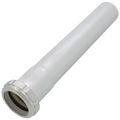

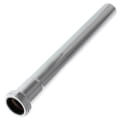
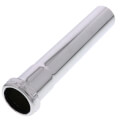
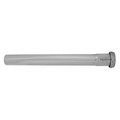
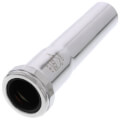
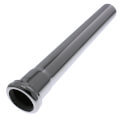
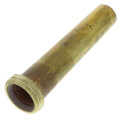
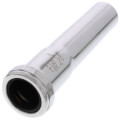
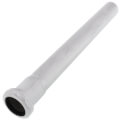
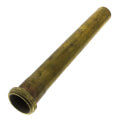
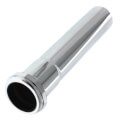
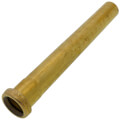
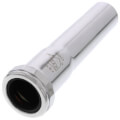
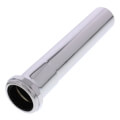
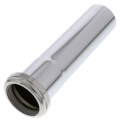
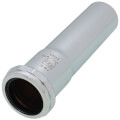


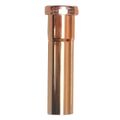
Tubular slip joint tailpieces are the short lengths of tubing that connect a sink drain or fixture outlet down to the trap below, using a slip joint nut and washer rather than a soldered or glued connection. Plumbers use them on nearly every sink installation because the slip joint design allows quick adjustment and disassembly for cleaning out a clog or replacing a trap. Because the connection relies on a compression washer rather than a permanent bond, getting the washer seated correctly matters more than the tubing material itself for stopping leaks. Tailpieces come in different lengths and diameters to match various drain outlets and trap heights, so measuring the existing setup before ordering avoids a return trip. Contractors keep a range of lengths on hand since cutting a tailpiece too short is a common and avoidable mistake on a service call. Getting the fit right the first time keeps a basic drain repair from turning into an extra visit.
Subcategories
- Standard Slip Joint Tailpieces: Standard tailpieces handle the most common sink drain connections, running from the fixture outlet down to the trap with a slip joint nut on each end. Plumbers stock these in a few common lengths since most residential sink installations fall into a narrow range of drain heights. Cutting a tailpiece to length is routine, so most come slightly longer than needed. Matching the diameter to the trap and drain outlet is the main fit consideration.
- Extension Tailpieces: Extension tailpieces add length beyond a standard piece, useful when a trap sits farther below the fixture outlet than a typical installation. Plumbers reach for these on custom vanities, deep sinks, or unusual rough-in heights where a standard length will not reach. Using an extension instead of joining two standard pieces keeps the connection cleaner and reduces the number of joints that could leak. Measuring the actual drop before ordering avoids buying the wrong length.
- Slip Joint Nuts and Washers: Nuts and washers are the wear parts on any slip joint connection, and a leak at a tailpiece connection is often solved by replacing these rather than the tubing itself. Plumbers carry a range of sizes since nut and washer dimensions vary by tailpiece diameter. A washer that has taken a permanent set from years of compression will not reseal properly even after tightening. Replacing both together during a service call is faster than diagnosing which one actually failed.
- Specialty and Flexible Tailpieces: Specialty tailpieces include flexible or offset designs for tight cabinet spaces where a straight standard tailpiece will not line up with the trap. Plumbers use these on retrofits where cabinet layout or plumbing rough-in does not match a straightforward vertical drop. Flexible designs make final alignment easier without cutting or bending rigid tubing. These cost more than a standard tailpiece but save time on an awkward installation.
Buying Guide
Start by measuring the actual drop from the fixture outlet to the trap, since that distance determines whether a standard length tailpiece works or an extension is needed. Guessing at length leads to either an awkward cut or a piece that will not reach, both of which cost time on a service call. Next, confirm the diameter matches both the fixture outlet and the trap connection, since a mismatch there means an adapter or a different tailpiece entirely.
Check the condition of the existing slip joint nuts and washers before assuming the tubing itself needs replacement, since a leak at the connection point is often solved with new washers rather than a full tailpiece swap. When stocking Tubular Slip Joint Tailpieces for service work, keep a mix of standard and extension lengths on hand along with a few flexible options, since cabinet layouts and rough-in heights vary enough that one length will not cover every job. Finally, consider the cabinet space available, since a tight or offset layout may call for a flexible or specialty tailpiece rather than a standard rigid one that will not align properly with the trap.
Frequently Asked Questions
How do I know what length tailpiece I need?
Measure the distance from the fixture outlet down to the trap connection, then choose a tailpiece that reaches that distance with enough extra length to trim if needed. An extension tailpiece covers drops that a standard length will not reach.
Why does a tailpiece connection keep leaking?
A leak at a slip joint connection is usually caused by a worn or improperly seated washer rather than a problem with the tubing itself. Replace the nut and washer before assuming the whole tailpiece needs to be swapped.
Can a tailpiece be cut to length?
Yes, most standard tailpieces come slightly longer than needed and are designed to be trimmed to fit during installation. Cut carefully to avoid leaving a rough edge that could damage the washer seal.
What is the difference between a standard and an extension tailpiece?
A standard tailpiece covers typical drain heights found in most residential installations, while an extension tailpiece adds length for deeper drops such as custom vanities or unusual rough-in heights. Choosing the wrong one usually means joining extra pieces, which adds more potential leak points.
When should a flexible tailpiece be used instead of a rigid one?
Flexible or offset tailpieces work best in tight cabinet spaces or retrofits where a straight rigid piece will not align with the trap. They cost more than a standard tailpiece but simplify installation in awkward layouts.
