




Filters
SORT
Product Availability –
Brand –
Inlet Type –
Includes –
Review Score –
 --%3E %3Csvg version='1.1' id='Fill' xmlns='http://www.w3.org/2000/svg' xmlns:xlink='http://www.w3.org/1999/xlink' x='0px' y='0px' viewBox='0 0 100 100' enable-background='new 0 0 100 100' xml:space='preserve'%3E %3Cpath fill='%23F15C02' d='M79.44,0.95H20.56C9.78,0.95,0.95,9.78,0.95,20.56v58.87c0,10.79,8.82,19.61,19.61,19.61h58.87 c10.79,0,19.61-8.83,19.61-19.61V20.56C99.05,9.78,90.22,0.95,79.44,0.95z M65.38,58.24l9.38,29.58L49.69,69.78L24.5,87.82 l9.34-29.6L8.8,39.6l30.73-0.17c0,0,6.98-19.61,10-28.93c0.54,1.36,9.88,29.1,9.88,29.1H91.2L65.38,58.24z'/%3E %3C/svg%3E)
 --%3E %3Csvg version='1.1' id='With-RB' xmlns='http://www.w3.org/2000/svg' xmlns:xlink='http://www.w3.org/1999/xlink' x='0px' y='0px' viewBox='0 0 100 100' enable-background='new 0 0 100 100' xml:space='preserve'%3E %3Cpath fill='%23FBC8B4' d='M79.44,0.95H20.56C9.78,0.95,0.95,9.78,0.95,20.56v58.87c0,10.79,8.82,19.61,19.61,19.61h58.87 c10.79,0,19.61-8.83,19.61-19.61V20.56C99.05,9.78,90.22,0.95,79.44,0.95z M65.38,58.24l9.38,29.58L49.69,69.78L24.5,87.82 l9.34-29.6L8.8,39.6l30.73-0.17c0,0,6.98-19.61,10-28.93c0.54,1.36,9.88,29.1,9.88,29.1H91.2L65.38,58.24z'/%3E %3C/svg%3E)
Price Range –
Washing Machine Outlet Boxes


 --%3E %3Csvg version='1.1' id='No-RB' xmlns='http://www.w3.org/2000/svg' xmlns:xlink='http://www.w3.org/1999/xlink' x='0px' y='0px' viewBox='0 0 100 100' enable-background='new 0 0 100 100' xml:space='preserve'%3E %3Cpath fill='%23CECECE' d='M79.44,0.95H20.56C9.78,0.95,0.95,9.78,0.95,20.56v58.87c0,10.79,8.82,19.61,19.61,19.61h58.87 c10.79,0,19.61-8.83,19.61-19.61V20.56C99.05,9.78,90.22,0.95,79.44,0.95z M65.38,58.24l9.38,29.58L49.69,69.78L24.5,87.82 l9.34-29.6L8.8,39.6l30.73-0.17c0,0,6.98-19.61,10-28.93c0.54,1.36,9.88,29.1,9.88,29.1H91.2L65.38,58.24z'/%3E %3C/svg%3E)
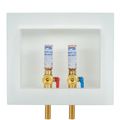
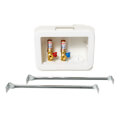
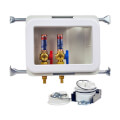
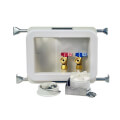
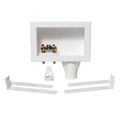
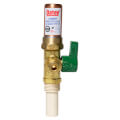
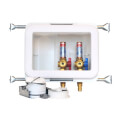


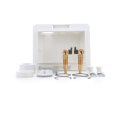

Washing machine outlet boxes are recessed wall fittings that bring the hot and cold supply lines and the drain connection for a washing machine into one enclosed, code-compliant assembly. Instead of running exposed hoses and a standpipe across a finished wall, the box sits between the studs with a cover plate flush to the surface, keeping the connection point protected and out of the way behind the appliance. Most boxes include integrated valves so a plumber can shut off supply to the machine without accessing pipe further back in the wall, and many pair with a water hammer arrestor to absorb the pressure spike created when a washing machine's solenoid valve closes quickly. Because the box gets set during rough-in and then covered by drywall, choosing the right configuration before installation matters more than it does for fittings that stay accessible after the walls are closed.
Subcategories
- Outlet Boxes with Water Hammer Arrestors: These boxes build a water hammer arrestor directly into the assembly, absorbing the pressure spike created when a washing machine's solenoid valve shuts off quickly. Without an arrestor, that pressure spike can travel back through the supply line and cause banging noises or, over time, stress on fittings elsewhere in the system. Contractors often prefer this integrated style because it avoids adding a separate arrestor fitting further up the line. These are a common upgrade choice on new installations and remodels alike.
- Standard Single-Valve and Dual-Valve Boxes: Standard boxes bring the hot and cold supply lines together with individual shutoff valves, letting a plumber isolate water to the machine directly at the wall. Dual-valve configurations are the norm for washing machines, since both hot and cold need independent control, while some boxes add a separate valve arrangement for other configurations. Valve handle style, typically quarter-turn ball valves, affects how quickly the water can be shut off in an emergency. Matching valve count to the specific installation avoids buying more or less than the connection actually requires.
- Boxes by Drain Connection Type: Drain connections on these boxes vary between a standpipe outlet that accepts the washing machine's drain hose directly and a direct-connect fitting that ties into the drain line without an exposed standpipe. The standpipe style is more common in residential installations since it allows the drain hose to simply hook over the pipe. Local plumbing code may dictate standpipe height and trap requirements, so confirming those specifics before rough-in avoids a failed inspection. Multi-family and commercial laundry rooms sometimes favor the direct-connect style for a cleaner finished look.
- Recessed Boxes for Different Wall Depths: Wall depth varies between standard interior partitions and exterior or furred-out walls, and outlet boxes are made in different depths to fit properly without protruding past the finished wall surface or sitting too far recessed to reach with hoses. Installing a box that does not match the actual wall cavity depth can leave the cover plate uneven or the valves difficult to reach. Checking stud depth before ordering saves a return trip once framing is in and drywall is scheduled. Some boxes also offer adjustable mounting brackets to accommodate minor depth variation.
Buying Guide
Start by confirming the wall cavity depth where the box will be installed, since these fittings are made in different depths and one that does not match the framing will either protrude past the finished wall or sit too far back to reach comfortably. Standard interior partition walls typically use a common depth, but furred-out or exterior walls may need a shallower or deeper box, so measuring before ordering avoids a mismatch discovered after rough-in.
Decide early whether the installation needs a water hammer arrestor built into the box. Washing machines use solenoid valves that shut off quickly, and that quick stop can send a pressure spike back through the supply line that causes banging noises and, over time, added stress on nearby fittings. An integrated arrestor addresses this at the connection point itself rather than requiring a separate fitting further up the line, which is often the simpler installation.
Drain connection style matters just as much as supply configuration. A standpipe outlet accepts the washing machine's drain hose directly and is the more common residential choice, while a direct-connect fitting ties into the drain line for a cleaner look in commercial or multi-family settings. Local plumbing code may specify standpipe height and trap requirements, so checking those details before installation prevents a failed inspection.
Valve type and count round out the decision. Most washing machine connections need independent hot and cold shutoffs, and quarter-turn ball valves offer the fastest shutoff in an emergency compared to older gate-style valves. Confirming the box includes the valve configuration the installation actually needs, rather than assuming a generic box will fit every laundry setup, keeps the finished installation both code-compliant and easy to service later.
Frequently Asked Questions
Why use a washing machine outlet box instead of exposed hoses and a standpipe?
An outlet box brings the supply valves and drain connection into one recessed, enclosed assembly behind the finished wall, which keeps the connection point protected and out of the way compared to exposed hoses run across an open wall. It also gives a plumber a single accessible point to shut off water to the machine. Most new construction and remodels favor the enclosed box for both appearance and serviceability.
Is a water hammer arrestor necessary in a washing machine outlet box?
It is not strictly required everywhere, but it is a common and often recommended addition because washing machine solenoid valves shut off quickly enough to send a pressure spike back through the supply line. That spike can cause banging noises and added stress on nearby fittings over time. An outlet box with an integrated arrestor addresses this at the source without needing a separate fitting further up the line.
What wall depth does a standard washing machine outlet box need?
Depth requirements vary by manufacturer and model, since boxes are made in different depths to fit standard interior partitions as well as shallower or deeper wall cavities. Measuring the actual stud depth before ordering is the reliable way to confirm fit, since installing a box that does not match the cavity can leave the cover plate uneven or the valves hard to reach.
What is the difference between a standpipe and a direct-connect drain outlet?
A standpipe outlet lets the washing machine's drain hose hook over an exposed pipe section, which is the more common residential setup. A direct-connect fitting ties into the drain line without an exposed standpipe, giving a cleaner finished look that is more common in commercial or multi-family laundry rooms. Local code may specify standpipe height and trap requirements either way.
Should the shutoff valves on an outlet box be quarter-turn ball valves?
Quarter-turn ball valves are generally preferred because they allow the fastest shutoff in an emergency, closing with a simple quarter turn of the handle rather than multiple turns. Most current outlet boxes ship with this valve style as standard. Confirming valve type before purchase is still worth doing, particularly on older box designs still in inventory.
