




Filters
SORT
Product Availability –
Length (Feet) –
Review Score –
 --%3E %3Csvg version='1.1' id='Fill' xmlns='http://www.w3.org/2000/svg' xmlns:xlink='http://www.w3.org/1999/xlink' x='0px' y='0px' viewBox='0 0 100 100' enable-background='new 0 0 100 100' xml:space='preserve'%3E %3Cpath fill='%23F15C02' d='M79.44,0.95H20.56C9.78,0.95,0.95,9.78,0.95,20.56v58.87c0,10.79,8.82,19.61,19.61,19.61h58.87 c10.79,0,19.61-8.83,19.61-19.61V20.56C99.05,9.78,90.22,0.95,79.44,0.95z M65.38,58.24l9.38,29.58L49.69,69.78L24.5,87.82 l9.34-29.6L8.8,39.6l30.73-0.17c0,0,6.98-19.61,10-28.93c0.54,1.36,9.88,29.1,9.88,29.1H91.2L65.38,58.24z'/%3E %3C/svg%3E)
 --%3E %3Csvg version='1.1' id='With-RB' xmlns='http://www.w3.org/2000/svg' xmlns:xlink='http://www.w3.org/1999/xlink' x='0px' y='0px' viewBox='0 0 100 100' enable-background='new 0 0 100 100' xml:space='preserve'%3E %3Cpath fill='%23FBC8B4' d='M79.44,0.95H20.56C9.78,0.95,0.95,9.78,0.95,20.56v58.87c0,10.79,8.82,19.61,19.61,19.61h58.87 c10.79,0,19.61-8.83,19.61-19.61V20.56C99.05,9.78,90.22,0.95,79.44,0.95z M65.38,58.24l9.38,29.58L49.69,69.78L24.5,87.82 l9.34-29.6L8.8,39.6l30.73-0.17c0,0,6.98-19.61,10-28.93c0.54,1.36,9.88,29.1,9.88,29.1H91.2L65.38,58.24z'/%3E %3C/svg%3E)
Price Range –
Slant/Fin Base/Line 2000 Baseboard Heaters




 --%3E %3Csvg version='1.1' id='Half' xmlns='http://www.w3.org/2000/svg' xmlns:xlink='http://www.w3.org/1999/xlink' x='0px' y='0px' viewBox='0 0 100 100' enable-background='new 0 0 100 100' xml:space='preserve'%3E %3Cg%3E %3Cpath fill='%23F15C02' d='M30.05,70.23l3.79-12.01L8.8,39.6l30.73-0.17c0,0,6.98-19.61,10-28.93c0.54,1.36,9.88,29.1,9.88,29.1h1.58 L93.71,7.18c-3.58-3.82-8.66-6.23-14.28-6.23H20.56C9.78,0.95,0.95,9.78,0.95,20.56v58.87c0,5.41,2.22,10.32,5.79,13.88 L30.05,70.23z'/%3E %3C/g%3E %3Cpath fill='%23FBC8B4' d='M93.71,7.18L60.98,39.6H91.2L65.38,58.24l9.38,29.58L49.69,69.78L24.5,87.82l5.55-17.59L6.75,93.32 c3.55,3.54,8.44,5.73,13.82,5.73h58.87c10.79,0,19.61-8.83,19.61-19.61V20.56C99.05,15.4,97.01,10.69,93.71,7.18z'/%3E %3C/svg%3E)






 --%3E %3Csvg version='1.1' id='No-RB' xmlns='http://www.w3.org/2000/svg' xmlns:xlink='http://www.w3.org/1999/xlink' x='0px' y='0px' viewBox='0 0 100 100' enable-background='new 0 0 100 100' xml:space='preserve'%3E %3Cpath fill='%23CECECE' d='M79.44,0.95H20.56C9.78,0.95,0.95,9.78,0.95,20.56v58.87c0,10.79,8.82,19.61,19.61,19.61h58.87 c10.79,0,19.61-8.83,19.61-19.61V20.56C99.05,9.78,90.22,0.95,79.44,0.95z M65.38,58.24l9.38,29.58L49.69,69.78L24.5,87.82 l9.34-29.6L8.8,39.6l30.73-0.17c0,0,6.98-19.61,10-28.93c0.54,1.36,9.88,29.1,9.88,29.1H91.2L65.38,58.24z'/%3E %3C/svg%3E)

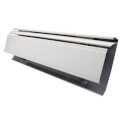


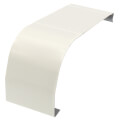
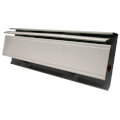
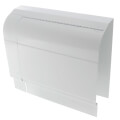


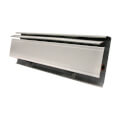
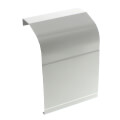
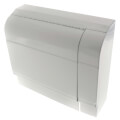
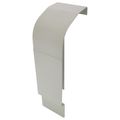
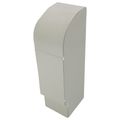
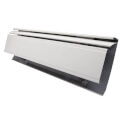


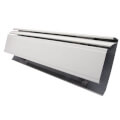
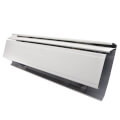
SlantFin Base/Line 2000 Baseboard Heaters are hydronic heating elements installed along the base of exterior walls to distribute heat evenly across a room without the bulk of a radiator or the ductwork of forced air. Contractors specify this line on hot water heating jobs where a low-profile enclosure and quiet operation matter, particularly in additions, finished basements, and older homes being converted from steam to hot water. The enclosure houses a copper tube with aluminum fins that release heat as hot water circulates through it.
Sizing a run of baseboard to a room's heat loss is the main design step, since each linear foot of element only delivers a set amount of heat output at a given water temperature. Contractors typically combine several sections along a wall to reach the total output a room calls for. Because the enclosure sits flush to the floor, it works well in rooms with limited wall space for other heating equipment.
Subcategories
- Baseboard Elements: Baseboard Elements are the copper-and-aluminum-fin heating cores that generate the actual heat output of a baseboard run. Technicians replace individual elements when a section develops a leak or the fins become damaged, rather than swapping the entire enclosure. Element length determines total heat output for that section, so matching the replacement length to the original run keeps the room's heating capacity unchanged. Elements connect to the existing supply and return piping with standard sweat or threaded fittings.
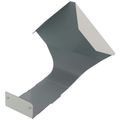
- Enclosure Covers & End Caps: Enclosure Covers & End Caps are the sheet-metal housing pieces that surround the heating element and direct airflow up and out into the room. Covers take the most cosmetic wear over the life of a system, from vacuum cleaners, furniture, and foot traffic, so they're commonly replaced on their own well before the element underneath needs attention. End caps seal the open sides of a run and are ordered to match the enclosure's height and finish. Replacing a damaged cover is usually a quick swap that doesn't require draining the system.
- Dampers & Airflow Controls: Dampers & Airflow Controls are adjustable louvers built into the top of the enclosure that let an occupant manually reduce heat output from a specific baseboard run. Contractors install them in rooms that tend to run warmer than the rest of the house, such as those with more direct sun exposure. Closing the damper doesn't stop water flow through the element, only the amount of air passing over it, so the element stays protected from freezing. These controls mount into the existing cover without modifying the piping.
- Mounting Brackets & Hardware: Mounting Brackets & Hardware secure the baseboard enclosure and element to the wall and floor, keeping the assembly aligned and supported along its full run length. Brackets space the element consistently off the wall so it doesn't contact the enclosure and cause rattling from thermal expansion. Replacement hardware is useful when remodeling work disturbs an existing installation or when an older bracket has corroded. Correct spacing between brackets keeps a long run from sagging over time.
Buying Guide
Matching baseboard length to a room's calculated heat loss is the starting point for any purchase. Underestimating the length needed leaves a room cold in winter, while oversizing wastes wall space and can cause a room to overheat and require frequent damper adjustment. A room-by-room heat loss calculation, not a rule of thumb, gives the most reliable starting point.
Enclosure height and finish should match existing baseboard elsewhere in the home when extending a system rather than replacing it entirely, since mismatched heights and colors stand out along a continuous wall. When SlantFin Base/Line 2000 Baseboard Heaters are being added to a room that previously had none, contractors have more flexibility to choose an enclosure profile that fits the space.
Water temperature and boiler output need to line up with the total baseboard length on a job. A boiler undersized for the connected baseboard runs will struggle to bring rooms up to temperature on the coldest days, while correctly matched equipment heats evenly without excessive cycling.
Replacement parts, covers, end caps, dampers, and mounting hardware are usually available separately from the full element, which keeps repair costs down on an existing system. Checking whether a job is a full new installation or a repair of an existing run determines whether a contractor needs a complete section or just the damaged component.
Frequently Asked Questions
How much wall length of baseboard does a room typically need?
It varies by room size, insulation level, window area, and water temperature, so a heat loss calculation for that specific room is the reliable way to determine total length rather than a general rule of thumb.
Can a damaged baseboard cover be replaced without draining the system?
Yes. The cover and end caps are separate from the water-carrying element, so they can be removed and replaced without opening the piping or draining the loop.
Do baseboard dampers stop water flow through the element?
No. A damper only controls the airflow passing over the element to adjust how much heat reaches the room. Water continues circulating through the element even with the damper closed.
What causes a baseboard enclosure to make ticking or rattling noises?
Ticking usually comes from the metal element expanding and contracting against the enclosure or mounting brackets as hot water flows through it. Proper bracket spacing and clearance between the element and enclosure reduce this noise.
Can new baseboard sections be added to an existing hot water loop?
Yes, as long as the boiler has enough output capacity for the added length and the piping layout supports connecting a new run, additional baseboard sections can extend an existing hydronic system.
