


Filters
SORT
Product Availability –
Used With –
Length (Inches) –
Review Score –
 --%3E %3Csvg version='1.1' id='Fill' xmlns='http://www.w3.org/2000/svg' xmlns:xlink='http://www.w3.org/1999/xlink' x='0px' y='0px' viewBox='0 0 100 100' enable-background='new 0 0 100 100' xml:space='preserve'%3E %3Cpath fill='%23F15C02' d='M79.44,0.95H20.56C9.78,0.95,0.95,9.78,0.95,20.56v58.87c0,10.79,8.82,19.61,19.61,19.61h58.87 c10.79,0,19.61-8.83,19.61-19.61V20.56C99.05,9.78,90.22,0.95,79.44,0.95z M65.38,58.24l9.38,29.58L49.69,69.78L24.5,87.82 l9.34-29.6L8.8,39.6l30.73-0.17c0,0,6.98-19.61,10-28.93c0.54,1.36,9.88,29.1,9.88,29.1H91.2L65.38,58.24z'/%3E %3C/svg%3E)
 --%3E %3Csvg version='1.1' id='With-RB' xmlns='http://www.w3.org/2000/svg' xmlns:xlink='http://www.w3.org/1999/xlink' x='0px' y='0px' viewBox='0 0 100 100' enable-background='new 0 0 100 100' xml:space='preserve'%3E %3Cpath fill='%23FBC8B4' d='M79.44,0.95H20.56C9.78,0.95,0.95,9.78,0.95,20.56v58.87c0,10.79,8.82,19.61,19.61,19.61h58.87 c10.79,0,19.61-8.83,19.61-19.61V20.56C99.05,9.78,90.22,0.95,79.44,0.95z M65.38,58.24l9.38,29.58L49.69,69.78L24.5,87.82 l9.34-29.6L8.8,39.6l30.73-0.17c0,0,6.98-19.61,10-28.93c0.54,1.36,9.88,29.1,9.88,29.1H91.2L65.38,58.24z'/%3E %3C/svg%3E)
Price Range –
Air Tubes


 --%3E %3Csvg version='1.1' id='No-RB' xmlns='http://www.w3.org/2000/svg' xmlns:xlink='http://www.w3.org/1999/xlink' x='0px' y='0px' viewBox='0 0 100 100' enable-background='new 0 0 100 100' xml:space='preserve'%3E %3Cpath fill='%23CECECE' d='M79.44,0.95H20.56C9.78,0.95,0.95,9.78,0.95,20.56v58.87c0,10.79,8.82,19.61,19.61,19.61h58.87 c10.79,0,19.61-8.83,19.61-19.61V20.56C99.05,9.78,90.22,0.95,79.44,0.95z M65.38,58.24l9.38,29.58L49.69,69.78L24.5,87.82 l9.34-29.6L8.8,39.6l30.73-0.17c0,0,6.98-19.61,10-28.93c0.54,1.36,9.88,29.1,9.88,29.1H91.2L65.38,58.24z'/%3E %3C/svg%3E)
 --%3E %3Csvg version='1.1' id='Half' xmlns='http://www.w3.org/2000/svg' xmlns:xlink='http://www.w3.org/1999/xlink' x='0px' y='0px' viewBox='0 0 100 100' enable-background='new 0 0 100 100' xml:space='preserve'%3E %3Cg%3E %3Cpath fill='%23F15C02' d='M30.05,70.23l3.79-12.01L8.8,39.6l30.73-0.17c0,0,6.98-19.61,10-28.93c0.54,1.36,9.88,29.1,9.88,29.1h1.58 L93.71,7.18c-3.58-3.82-8.66-6.23-14.28-6.23H20.56C9.78,0.95,0.95,9.78,0.95,20.56v58.87c0,5.41,2.22,10.32,5.79,13.88 L30.05,70.23z'/%3E %3C/g%3E %3Cpath fill='%23FBC8B4' d='M93.71,7.18L60.98,39.6H91.2L65.38,58.24l9.38,29.58L49.69,69.78L24.5,87.82l5.55-17.59L6.75,93.32 c3.55,3.54,8.44,5.73,13.82,5.73h58.87c10.79,0,19.61-8.83,19.61-19.61V20.56C99.05,15.4,97.01,10.69,93.71,7.18z'/%3E %3C/svg%3E)
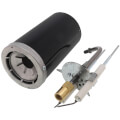
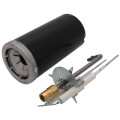
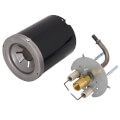
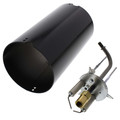
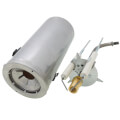
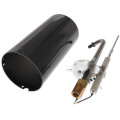
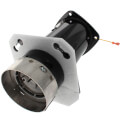

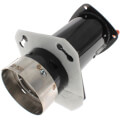

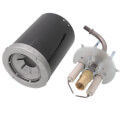
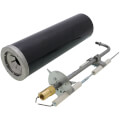
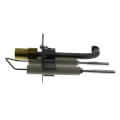


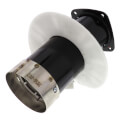
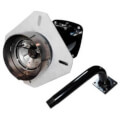
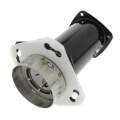

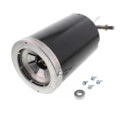

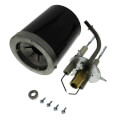
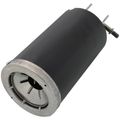
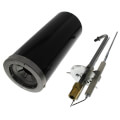
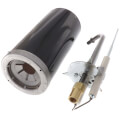
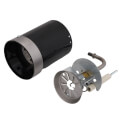
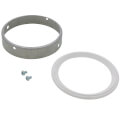
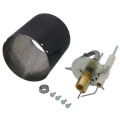
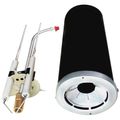
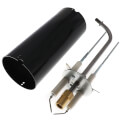
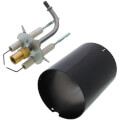
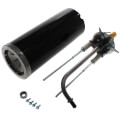
Air tubes are the cylindrical steel combustion chambers that house the nozzle line, electrodes, and retention head assembly in residential and light commercial oil burners, directing airflow from the blower through to the combustion zone. Air tubes for Beckett oil burners, including the AF, AFG, and AFII series, are measured in usable length with the overall tube being 1/2" longer than the stated dimension. Air tube length is encoded in the model designation using a two-digit system: the first digit represents inches and the second represents 1/8" increments, so an AF65 air tube has a usable length of 6-5/8". Selecting the correct air tube length and diameter for the appliance is a code-compliance and combustion performance requirement, as the tube must match the burner chassis and combustion chamber geometry specified by the original equipment manufacturer.
AF and AFG Series Air Tubes
Beckett AF and AFG series air tubes are 4" diameter steel tubes pre-drilled for attachment to the AF or AFG burner chassis and compatible retention heads. Air tube combinations for the AF and AFG series include both the tube and the retention head assembly, with head types designated in the air tube combination (ATC) code. The AFG burner operates across a firing range of 0.40 to 3.00 GPH (56,000 to 420,000 BTU/hr input) per Beckett specifications, and the air tube length must be matched to the appliance OEM specification for correct combustion chamber insertion depth. Beckett's OEM Specification Guide provides air tube combination codes for the AF and AFG series organized by appliance manufacturer and model number.
AFII Series Air Tubes
Beckett AFII series air tubes serve the AFII residential oil burner, which covers a firing rate of 0.40 to 1.50 GPH (56,000 to 210,000 BTU/hr) per Beckett documentation. AFII air tube usable length is specified in the same first digit/second digit coding system as the AF series. AFII air tubes must be matched to the AFII chassis; they are not interchangeable with AF or AFG chassis air tubes due to differences in mounting and electrode geometry. Replacement AFII air tubes are selected based on the original ATC code found on the appliance burner label or in the Beckett OEM Specification Guide.
Stainless Steel Air Tubes
Stainless steel air tubes are specified for applications requiring resistance to the higher corrosion environments found in certain boiler and appliance configurations. Beckett documentation identifies stainless steel air tube requirements using special construction codes in the ATC designation. Stainless steel air tubes are not a universal upgrade; they are specified only when the appliance OEM documentation calls for stainless construction. Using a standard steel tube in an application requiring stainless can result in premature corrosion and flame pattern degradation.
Air Tube Combination Assemblies
Air tube combination assemblies bundle the air tube, retention head, and in some configurations the static plate or end cone into a single purchase to simplify field replacement. Beckett ATC codes specify the full assembly: burner model, air tube length, head type, and static plate dimension. For the AF series, the ATC code structure includes the burner prefix (AF), the tube length code, and the head type suffix (example: AF65XN designates a 6-5/8" usable length tube with an F3-style retention head). Confirming the correct ATC code from the appliance OEM specification guide before ordering avoids mismatched components.
How to Choose Air Tubes for Oil Burners
The correct air tube starts with the appliance OEM specification, not the existing tube dimensions. Beckett's OEM Specification Guide catalogs air tube combination codes by appliance manufacturer and model number. Pulling the ATC code from that guide or from the burner nameplate is the only reliable method for selecting a replacement; estimating from the old tube's length alone can result in incorrect combustion chamber depth and poor flame pattern.
Air tube length is the primary selection variable. Beckett encodes usable length in the model number using a two-number system: the first number is inches, the second is 1/8" increments. An AF65 has a usable length of 6-5/8"; an AF104 has a usable length of 10-1/2". The overall tube is always 1/2" longer than the stated usable dimension.
Burner series compatibility is non-negotiable. AF and AFG series air tubes are not interchangeable with AFII series tubes. The chassis mounting geometry and electrode positioning differ between series. When replacing an air tube, confirm the burner model prefix on the chassis label matches the tube series designation.
Special construction requirements, including stainless steel tube material or positive-pressure wall venting configurations, are identified by suffix codes in the Beckett ATC designation. Any ATC code with special construction codes should be sourced to match exactly, as these configurations reflect appliance-specific engineering decisions rather than general-purpose options.
FAQs
How is Beckett air tube length measured and what do the model numbers mean?
Beckett air tube length is measured as usable length, with the overall tube being 1/2" longer than the stated dimension. The model number encodes length in a two-digit system: the first digit represents inches and the second represents 1/8" increments. An AF65 air tube has a usable length of 6-5/8", and an AF104 has a usable length of 10-1/2", per Beckett OEM Specification Guide documentation.
What is the difference between AF, AFG, and AFII series air tubes?
AF, AFG, and AFII series air tubes differ in chassis mounting geometry, electrode positioning, and compatible retention heads, making them non-interchangeable. AF and AFG tubes are 4" diameter steel tubes designed for the AF and AFG burner chassis. AFII tubes serve the AFII burner series with different dimensional and attachment specifications. Mixing air tubes between series can result in incorrect combustion chamber insertion depth and electrode misalignment.
How do I find the correct air tube combination code for my appliance?
The correct air tube combination (ATC) code for a specific appliance is found in the Beckett OEM Specification Guide, organized by appliance manufacturer and model number, or on the burner chassis nameplate. The ATC code specifies the burner model, air tube length, head type, and static plate dimension as a complete assembly designation. Relying on the existing tube's physical dimensions alone for replacement selection can produce the wrong ATC code if the tube has been previously swapped.
What firing rate range does the Beckett AFG burner air tube assembly cover?
The Beckett AFG series burner operates across a firing rate range of 0.40 to 3.00 GPH, corresponding to 56,000 to 420,000 BTU/hr input, per Beckett product specifications. Air tube selection within the AFG series depends on the appliance OEM specification, not the firing rate range; the same chassis covers the full range with different nozzle and air tube configurations.
When is a stainless steel air tube required instead of a standard steel tube?
A stainless steel air tube is required when the appliance OEM specification or Beckett ATC code includes a stainless steel construction code, typically driven by the specific boiler or furnace combustion environment. Stainless steel air tubes are not a general field upgrade; they are specified only in applications where the original OEM documentation calls for corrosion-resistant tube material. Using standard steel in a stainless-specified application may result in premature tube degradation.
