




Cash Acme Mixing Valves


 --%3E %3Csvg version='1.1' id='No-RB' xmlns='http://www.w3.org/2000/svg' xmlns:xlink='http://www.w3.org/1999/xlink' x='0px' y='0px' viewBox='0 0 100 100' enable-background='new 0 0 100 100' xml:space='preserve'%3E %3Cpath fill='%23CECECE' d='M79.44,0.95H20.56C9.78,0.95,0.95,9.78,0.95,20.56v58.87c0,10.79,8.82,19.61,19.61,19.61h58.87 c10.79,0,19.61-8.83,19.61-19.61V20.56C99.05,9.78,90.22,0.95,79.44,0.95z M65.38,58.24l9.38,29.58L49.69,69.78L24.5,87.82 l9.34-29.6L8.8,39.6l30.73-0.17c0,0,6.98-19.61,10-28.93c0.54,1.36,9.88,29.1,9.88,29.1H91.2L65.38,58.24z'/%3E %3C/svg%3E)

 --%3E %3Csvg version='1.1' id='Fill' xmlns='http://www.w3.org/2000/svg' xmlns:xlink='http://www.w3.org/1999/xlink' x='0px' y='0px' viewBox='0 0 100 100' enable-background='new 0 0 100 100' xml:space='preserve'%3E %3Cpath fill='%23F15C02' d='M79.44,0.95H20.56C9.78,0.95,0.95,9.78,0.95,20.56v58.87c0,10.79,8.82,19.61,19.61,19.61h58.87 c10.79,0,19.61-8.83,19.61-19.61V20.56C99.05,9.78,90.22,0.95,79.44,0.95z M65.38,58.24l9.38,29.58L49.69,69.78L24.5,87.82 l9.34-29.6L8.8,39.6l30.73-0.17c0,0,6.98-19.61,10-28.93c0.54,1.36,9.88,29.1,9.88,29.1H91.2L65.38,58.24z'/%3E %3C/svg%3E)



 --%3E %3Csvg version='1.1' id='With-RB' xmlns='http://www.w3.org/2000/svg' xmlns:xlink='http://www.w3.org/1999/xlink' x='0px' y='0px' viewBox='0 0 100 100' enable-background='new 0 0 100 100' xml:space='preserve'%3E %3Cpath fill='%23FBC8B4' d='M79.44,0.95H20.56C9.78,0.95,0.95,9.78,0.95,20.56v58.87c0,10.79,8.82,19.61,19.61,19.61h58.87 c10.79,0,19.61-8.83,19.61-19.61V20.56C99.05,9.78,90.22,0.95,79.44,0.95z M65.38,58.24l9.38,29.58L49.69,69.78L24.5,87.82 l9.34-29.6L8.8,39.6l30.73-0.17c0,0,6.98-19.61,10-28.93c0.54,1.36,9.88,29.1,9.88,29.1H91.2L65.38,58.24z'/%3E %3C/svg%3E)


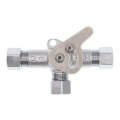


Cash Acme mixing valves are thermostatic and pressure balancing valves that blend hot and cold water to a set temperature for point of use and whole house applications. Plumbers install these valves on water heaters, boiler systems, and fixture supply lines to protect against scald hazards and to extend the life of copper piping downstream of a high temperature source. The lineup covers thermostatic mixing valves for tempering water heater output, pressure balancing valves for shower and tub filler protection, and replacement cartridges and repair parts for valves already in service. Selecting the right valve depends on the flow rate needed for the fixture or system being served, the temperature range required, and whether the application calls for point of use tempering at a single fixture or a master mixing valve serving an entire building. Cash Acme valves are common in multifamily and light commercial plumbing systems where code requires tempered water at fixtures, making familiarity with the brand's model lineup useful for plumbers who regularly service these buildings.
Subcategories
- Thermostatic Mixing Valves: Thermostatic mixing valves blend hot water from a tank or boiler with cold water to deliver a set outlet temperature at the fixture or distribution point. They respond automatically to changes in supply pressure or temperature, holding the mixed output steady even when hot water demand elsewhere in the building changes. Multifamily and commercial buildings use these valves to meet code required tempered water temperatures at point of use.
- Point of Use Mixing Valves: Point of use mixing valves install close to a single fixture, such as a lavatory or shower, rather than at a central mechanical room location. Plumbers choose a point of use valve when only one fixture needs tempered water or when a master valve is not practical for the building layout. Smaller flow ratings on these valves match single fixture demand rather than whole building supply.
- Replacement Cartridges & Repair Parts: Replacement cartridges, springs, and check stops keep an existing Cash Acme valve in service without a full valve replacement. Service techs stock these parts for scheduled maintenance calls on multifamily properties, where periodic cartridge replacement is part of routine mixing valve upkeep. Matching the cartridge to the specific valve model and series is necessary since cartridges are not interchangeable across all Cash Acme valve lines.
- Valve Accessories: Accessories such as strainers, unions, and mounting brackets support installation and long term maintenance of Cash Acme mixing valves. Strainers protect the valve cartridge from debris in the supply lines, which is especially useful on older buildings with aging piping. Unions simplify future service by allowing the valve to be removed without cutting into the surrounding pipe.
Buying Guide
Choosing a Cash Acme mixing valve starts with identifying whether the application needs a point of use valve at a single fixture or a master valve serving multiple fixtures or an entire building. A single bathroom or utility sink typically only needs a small point of use valve, while an apartment building or dormitory usually requires a master valve sized for the building's total hot water demand.
Flow rate is the next factor. A valve sized too small for the fixtures it serves will restrict flow and frustrate occupants, while a valve sized too large may struggle to respond quickly to sudden demand changes. Checking the manufacturer's flow rate rating against the fixture count and expected simultaneous use helps avoid both problems.
Temperature range and adjustability also matter, particularly on jobs where local code sets a maximum tempered water temperature at the fixture. A valve with a wide adjustable range and a locking temperature limit stop gives more flexibility for meeting code across different jurisdictions and building types.
Finally, plan for maintenance from the start. Valves with readily available replacement cartridges and check stops make future service calls faster, since a tech can rebuild the valve on site instead of pulling and replacing the entire unit. Buying a valve model with parts SupplyHouse stocks regularly reduces downtime on repair calls when a cartridge eventually needs replacement.
Frequently Asked Questions
What is the difference between a point of use and a master mixing valve?
A point of use valve serves a single fixture and is sized for that fixture's flow demand, while a master mixing valve serves multiple fixtures or an entire building and is sized for the combined peak flow of everything downstream. Master valves are typically installed in a mechanical room near the water heater or boiler.
How often should a mixing valve cartridge be replaced?
Replacement intervals depend on water quality and usage, but most commercial and multifamily properties schedule cartridge inspection or replacement as part of annual mechanical room maintenance. Buildings with hard water or high mineral content in the supply may need more frequent service.
Can a Cash Acme mixing valve be adjusted after installation?
Most Cash Acme thermostatic and pressure balancing valves include an adjustable temperature setting, often with a locking limit stop so the maximum output temperature can be capped to meet local code. Adjustments are typically made at the valve body without needing to remove it from the line.
What causes a mixing valve to deliver inconsistent water temperature?
Inconsistent output usually points to a worn cartridge, a clogged inlet strainer, or a supply pressure imbalance between the hot and cold lines feeding the valve. Checking the strainer and cartridge condition is the first step before assuming the valve itself has failed.
Do Cash Acme mixing valves require a strainer on the supply lines?
A strainer is not always required by the valve itself, but installing one on each supply line protects the internal cartridge from sediment and debris, which extends the time between service calls. Older buildings with corroding galvanized supply lines benefit the most from strainer protection.
