

CONTACT & SUPPORT
Live Chat: Online Now


0
CART

Pipe Hangers, Clamps & Support Brackets
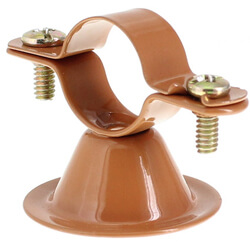
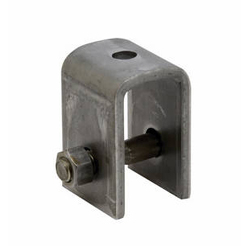
A pipe hanger is a device used to support a pipe or group of pipes from a slab, beam, ceiling, or other structural element. Whether you strap it, hang it, suspend it, hook it, bracket it, or restrain it, do what you need to do to support those pipes!




Resources
FAQs, Manuals & Videos

Videos
Articles
More About Pipe Hangers & Clamps
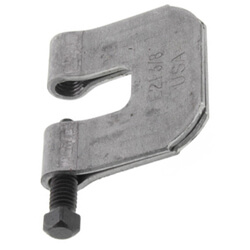
C Clamps named for their C-shaped design, are used to attach I beams, channels, and wide flange beams. Some models include a locking nut to prevent loosening due to vibration. Beam Clamps are designed for roof installations with bar joist type construction. They can also be attached mechanically to the top or bottom flange of steel beams.
Straps & Riser Clamps
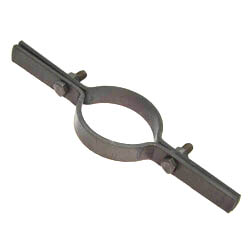
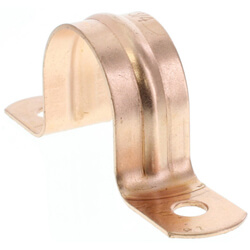
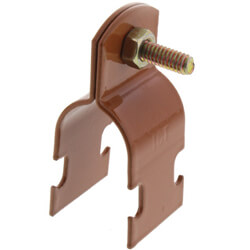
Straps are used to keep tubing flush to the surface in both vertical and horizontal applications. Riser Clamps are used for supporting piping through floors where extreme load conditions exist. Multi Strut Clamps are designed to support stationary pipe and tubing lines from strut channels or on rooftop pipe and equipment supports.
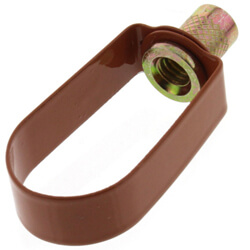
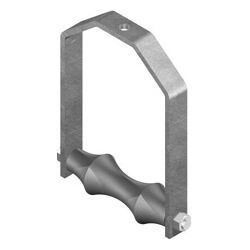
Clevis Hangers are pipe hangers used to suspend non-insulated or insulated stationary pipe. They’re available in copper, carbon steel, and electro-galvanized finishes for non-insulated pipe applications. Insulated-pipe jobs require a unique insulated coupling clevis hanger. These pipe hangers mount directly to strut or suspended hanger rods.
Pipe Support Brackets
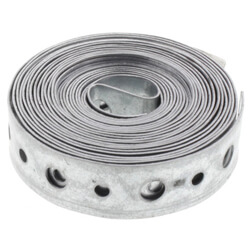
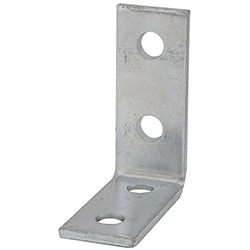
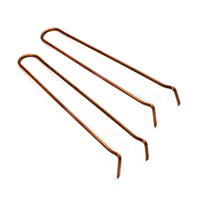
A band iron is a thin metal strap commonly used when a pipe must be hung lower than a J-Hook can reach. These are similar to stud brackets but come coiled and are bendable. Band irons are available in copper or iron. Stub brackets are used for supporting 1/2" to 2" piping and are ideally used in toilets, sinks, lavatories and other residential and commercial applications. DWV hangers are pipe hangers designed to provide an economical and simple way to support non insulated PVC drain, waste, and vent pipe lines. Flush valve brackets are generally used in water closet applications. Milford hangers are used to suspend copper tubing from floor joists in horizontal applications. Overhead pipe brackets are pipe hangers commonly used when piping must be suspended from the ceiling. Pipe on pipe brackets are particularly useful in pre-fab applications when horizontal or vertical pipe support is required.
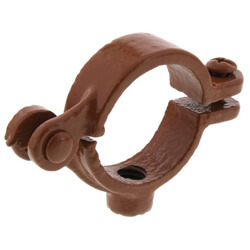
Swivel Rings are used to suspend pipe from joists, steel beams, wooden rafters or walls. They can be used in horizontal or vertical applications. Split Rings are designed to support non-insulated stationary pipe lines. They can suspend pipe from joists, steel beams, wooden rafters, or walls. They can be used in both horizontal and vertical applications.
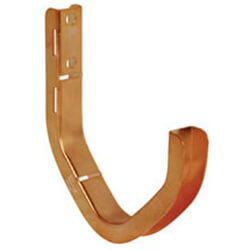
Pipe Hooks are used to hang pipes from floor joists. J Hooks are hangers, in the shape of the letter "J". The "J" shape allows the hook to be fastened to other objects in such a way that it can provide good support and be securely attached.
Van Hangers are designed to mount copper in both vertical and horizontal applications.
No Hub Fitting Restraints are used for overhead pipe support and for restraining hubless cast iron soil pipe joints against separation during high thrust conditions.
We carry a huge selection of Bluefin, and Oatey pipe hangers and supports.
Frequently Asked Questions
What is a pipe clamp?
A pipe clamp is designed to securely hold or support pipes or round workpieces during assembly, gluing, welding, or cutting.
How do I install a pipe clamp?
First, attach the fixed head and adjustable tail slide to a pipe. Position your workpiece between the jaws and slide the tail slide close to the workpiece. Tighten it using the handle on the fixed head until the workpiece is firm, but be careful – over-tightening could lead to damage. If you're gluing, make sure to leave the head in place until the glue sets.
How far apart should pipe hangers be?
It really depends on the size of the pipes and the kind of installation you’re performing. For PVC or other plastic materials, you’ll want the pipe hangers spaced out every 3 feet. For harder materials like stainless steel, you can space the pipe hangers out every 10 feet. Always check local building codes and the pipe manufacturer's recommendations for guidance on your specific job.
Straps & Riser Clamps
Straps are used to keep tubing flush to the surface in both vertical and horizontal applications. Riser Clamps are used for supporting piping through floors where extreme load conditions exist. Multi Strut Clamps are designed to support stationary pipe and tubing lines from strut channels or on rooftop pipe and equipment supports.
Clevis Hangers are pipe hangers used to suspend non-insulated or insulated stationary pipe. They’re available in copper, carbon steel, and electro-galvanized finishes for non-insulated pipe applications. Insulated-pipe jobs require a unique insulated coupling clevis hanger. These pipe hangers mount directly to strut or suspended hanger rods.
Pipe Support Brackets
A band iron is a thin metal strap commonly used when a pipe must be hung lower than a J-Hook can reach. These are similar to stud brackets but come coiled and are bendable. Band irons are available in copper or iron. Stub brackets are used for supporting 1/2" to 2" piping and are ideally used in toilets, sinks, lavatories and other residential and commercial applications. DWV hangers are pipe hangers designed to provide an economical and simple way to support non insulated PVC drain, waste, and vent pipe lines. Flush valve brackets are generally used in water closet applications. Milford hangers are used to suspend copper tubing from floor joists in horizontal applications. Overhead pipe brackets are pipe hangers commonly used when piping must be suspended from the ceiling. Pipe on pipe brackets are particularly useful in pre-fab applications when horizontal or vertical pipe support is required.
Swivel Rings are used to suspend pipe from joists, steel beams, wooden rafters or walls. They can be used in horizontal or vertical applications. Split Rings are designed to support non-insulated stationary pipe lines. They can suspend pipe from joists, steel beams, wooden rafters, or walls. They can be used in both horizontal and vertical applications.
Pipe Hooks are used to hang pipes from floor joists. J Hooks are hangers, in the shape of the letter "J". The "J" shape allows the hook to be fastened to other objects in such a way that it can provide good support and be securely attached.
Van Hangers are designed to mount copper in both vertical and horizontal applications.
No Hub Fitting Restraints are used for overhead pipe support and for restraining hubless cast iron soil pipe joints against separation during high thrust conditions.
We carry a huge selection of Bluefin, and Oatey pipe hangers and supports.
Frequently Asked Questions
What is a pipe clamp?
A pipe clamp is designed to securely hold or support pipes or round workpieces during assembly, gluing, welding, or cutting.
How do I install a pipe clamp?
First, attach the fixed head and adjustable tail slide to a pipe. Position your workpiece between the jaws and slide the tail slide close to the workpiece. Tighten it using the handle on the fixed head until the workpiece is firm, but be careful – over-tightening could lead to damage. If you're gluing, make sure to leave the head in place until the glue sets.
How far apart should pipe hangers be?
It really depends on the size of the pipes and the kind of installation you’re performing. For PVC or other plastic materials, you’ll want the pipe hangers spaced out every 3 feet. For harder materials like stainless steel, you can space the pipe hangers out every 10 feet. Always check local building codes and the pipe manufacturer's recommendations for guidance on your specific job.
Resources
Videos

 --%3E %3C!DOCTYPE svg PUBLIC '-//W3C//DTD SVG 1.1//EN' 'http://www.w3.org/Graphics/SVG/1.1/DTD/svg11.dtd'%3E %3Csvg version='1.1' id='Layer_1' xmlns='http://www.w3.org/2000/svg' xmlns:xlink='http://www.w3.org/1999/xlink' x='0px' y='0px' width='90px' height='90px' viewBox='0 0 90 90' enable-background='new 0 0 90 90' xml:space='preserve'%3E %3Crect x='27' y='23' fill='%23FFFFFF' width='43' height='44'/%3E %3Cg%3E %3Cdefs%3E %3Crect id='SVGID_1_' width='90' height='90'/%3E %3C/defs%3E %3CclipPath id='SVGID_2_'%3E %3Cuse xlink:href='%23SVGID_1_' overflow='visible'/%3E %3C/clipPath%3E %3Cpath clip-path='url(%23SVGID_2_)' fill='%234186AD' d='M45,0C20.1,0,0,20.1,0,45c0,24.9,20.1,45,45,45c24.9,0,45-20.1,45-45 C90,20.1,69.9,0,45,0'/%3E %3C/g%3E %3Cpath fill='%23FFFFFF' d='M60.6,47.4l-22.5,14c-0.5,0.3-1,0.399-1.5,0.399s-0.9-0.1-1.4-0.399c-0.9-0.5-1.4-1.4-1.4-2.5v-28 c0-1,0.6-2,1.4-2.5c0.9-0.5,2-0.5,2.9,0.1l22.5,14.1C61.4,43.1,61.9,44,61.9,45S61.4,46.9,60.6,47.4'/%3E %3C/svg%3E)
How to Measure Pipe and Fittings (Actual vs Nominal Size)
More About Pipe Hangers & Clamps
C Clamps named for their C-shaped design, are used to attach I beams, channels, and wide flange beams. Some models include a locking nut to prevent loosening due to vibration. Beam Clamps are designed for roof installations with bar joist type construction. They can also be attached mechanically to the top or bottom flange of steel beams.
Straps & Riser Clamps
Straps are used to keep tubing flush to the surface in both vertical and horizontal applications. Riser Clamps are used for supporting piping through floors where extreme load conditions exist. Multi Strut Clamps are designed to support stationary pipe and tubing lines from strut channels or on rooftop pipe and equipment supports.
Clevis Hangers are pipe hangers used to suspend non-insulated or insulated stationary pipe. They’re available in copper, carbon steel, and electro-galvanized finishes for non-insulated pipe applications. Insulated-pipe jobs require a unique insulated coupling clevis hanger. These pipe hangers mount directly to strut or suspended hanger rods.
Pipe Support Brackets
A band iron is a thin metal strap commonly used when a pipe must be hung lower than a J-Hook can reach. These are similar to stud brackets but come coiled and are bendable. Band irons are available in copper or iron. Stub brackets are used for supporting 1/2" to 2" piping and are ideally used in toilets, sinks, lavatories and other residential and commercial applications. DWV hangers are pipe hangers designed to provide an economical and simple way to support non insulated PVC drain, waste, and vent pipe lines. Flush valve brackets are generally used in water closet applications. Milford hangers are used to suspend copper tubing from floor joists in horizontal applications. Overhead pipe brackets are pipe hangers commonly used when piping must be suspended from the ceiling. Pipe on pipe brackets are particularly useful in pre-fab applications when horizontal or vertical pipe support is required.
Swivel Rings are used to suspend pipe from joists, steel beams, wooden rafters or walls. They can be used in horizontal or vertical applications. Split Rings are designed to support non-insulated stationary pipe lines. They can suspend pipe from joists, steel beams, wooden rafters, or walls. They can be used in both horizontal and vertical applications.
Pipe Hooks are used to hang pipes from floor joists. J Hooks are hangers, in the shape of the letter "J". The "J" shape allows the hook to be fastened to other objects in such a way that it can provide good support and be securely attached.
Van Hangers are designed to mount copper in both vertical and horizontal applications.
No Hub Fitting Restraints are used for overhead pipe support and for restraining hubless cast iron soil pipe joints against separation during high thrust conditions.
We carry a huge selection of Bluefin, and Oatey pipe hangers and supports.
Frequently Asked Questions
What is a pipe clamp?
A pipe clamp is designed to securely hold or support pipes or round workpieces during assembly, gluing, welding, or cutting.
How do I install a pipe clamp?
First, attach the fixed head and adjustable tail slide to a pipe. Position your workpiece between the jaws and slide the tail slide close to the workpiece. Tighten it using the handle on the fixed head until the workpiece is firm, but be careful – over-tightening could lead to damage. If you're gluing, make sure to leave the head in place until the glue sets.
How far apart should pipe hangers be?
It really depends on the size of the pipes and the kind of installation you’re performing. For PVC or other plastic materials, you’ll want the pipe hangers spaced out every 3 feet. For harder materials like stainless steel, you can space the pipe hangers out every 10 feet. Always check local building codes and the pipe manufacturer's recommendations for guidance on your specific job.
Straps & Riser Clamps
Straps are used to keep tubing flush to the surface in both vertical and horizontal applications. Riser Clamps are used for supporting piping through floors where extreme load conditions exist. Multi Strut Clamps are designed to support stationary pipe and tubing lines from strut channels or on rooftop pipe and equipment supports.
Clevis Hangers are pipe hangers used to suspend non-insulated or insulated stationary pipe. They’re available in copper, carbon steel, and electro-galvanized finishes for non-insulated pipe applications. Insulated-pipe jobs require a unique insulated coupling clevis hanger. These pipe hangers mount directly to strut or suspended hanger rods.
Pipe Support Brackets
A band iron is a thin metal strap commonly used when a pipe must be hung lower than a J-Hook can reach. These are similar to stud brackets but come coiled and are bendable. Band irons are available in copper or iron. Stub brackets are used for supporting 1/2" to 2" piping and are ideally used in toilets, sinks, lavatories and other residential and commercial applications. DWV hangers are pipe hangers designed to provide an economical and simple way to support non insulated PVC drain, waste, and vent pipe lines. Flush valve brackets are generally used in water closet applications. Milford hangers are used to suspend copper tubing from floor joists in horizontal applications. Overhead pipe brackets are pipe hangers commonly used when piping must be suspended from the ceiling. Pipe on pipe brackets are particularly useful in pre-fab applications when horizontal or vertical pipe support is required.
Swivel Rings are used to suspend pipe from joists, steel beams, wooden rafters or walls. They can be used in horizontal or vertical applications. Split Rings are designed to support non-insulated stationary pipe lines. They can suspend pipe from joists, steel beams, wooden rafters, or walls. They can be used in both horizontal and vertical applications.
Pipe Hooks are used to hang pipes from floor joists. J Hooks are hangers, in the shape of the letter "J". The "J" shape allows the hook to be fastened to other objects in such a way that it can provide good support and be securely attached.
Van Hangers are designed to mount copper in both vertical and horizontal applications.
No Hub Fitting Restraints are used for overhead pipe support and for restraining hubless cast iron soil pipe joints against separation during high thrust conditions.
We carry a huge selection of Bluefin, and Oatey pipe hangers and supports.
Frequently Asked Questions
What is a pipe clamp?
A pipe clamp is designed to securely hold or support pipes or round workpieces during assembly, gluing, welding, or cutting.
How do I install a pipe clamp?
First, attach the fixed head and adjustable tail slide to a pipe. Position your workpiece between the jaws and slide the tail slide close to the workpiece. Tighten it using the handle on the fixed head until the workpiece is firm, but be careful – over-tightening could lead to damage. If you're gluing, make sure to leave the head in place until the glue sets.
How far apart should pipe hangers be?
It really depends on the size of the pipes and the kind of installation you’re performing. For PVC or other plastic materials, you’ll want the pipe hangers spaced out every 3 feet. For harder materials like stainless steel, you can space the pipe hangers out every 10 feet. Always check local building codes and the pipe manufacturer's recommendations for guidance on your specific job.