




Filters
SORT
Product Availability –
Tubing Type –
Size –
OD –
Length (Feet) –
Review Score –
 --%3E %3Csvg version='1.1' id='Fill' xmlns='http://www.w3.org/2000/svg' xmlns:xlink='http://www.w3.org/1999/xlink' x='0px' y='0px' viewBox='0 0 100 100' enable-background='new 0 0 100 100' xml:space='preserve'%3E %3Cpath fill='%23F15C02' d='M79.44,0.95H20.56C9.78,0.95,0.95,9.78,0.95,20.56v58.87c0,10.79,8.82,19.61,19.61,19.61h58.87 c10.79,0,19.61-8.83,19.61-19.61V20.56C99.05,9.78,90.22,0.95,79.44,0.95z M65.38,58.24l9.38,29.58L49.69,69.78L24.5,87.82 l9.34-29.6L8.8,39.6l30.73-0.17c0,0,6.98-19.61,10-28.93c0.54,1.36,9.88,29.1,9.88,29.1H91.2L65.38,58.24z'/%3E %3C/svg%3E)
 --%3E %3Csvg version='1.1' id='With-RB' xmlns='http://www.w3.org/2000/svg' xmlns:xlink='http://www.w3.org/1999/xlink' x='0px' y='0px' viewBox='0 0 100 100' enable-background='new 0 0 100 100' xml:space='preserve'%3E %3Cpath fill='%23FBC8B4' d='M79.44,0.95H20.56C9.78,0.95,0.95,9.78,0.95,20.56v58.87c0,10.79,8.82,19.61,19.61,19.61h58.87 c10.79,0,19.61-8.83,19.61-19.61V20.56C99.05,9.78,90.22,0.95,79.44,0.95z M65.38,58.24l9.38,29.58L49.69,69.78L24.5,87.82 l9.34-29.6L8.8,39.6l30.73-0.17c0,0,6.98-19.61,10-28.93c0.54,1.36,9.88,29.1,9.88,29.1H91.2L65.38,58.24z'/%3E %3C/svg%3E)
Price Range –
Coated Copper Tubing Coils

 --%3E %3Csvg version='1.1' id='No-RB' xmlns='http://www.w3.org/2000/svg' xmlns:xlink='http://www.w3.org/1999/xlink' x='0px' y='0px' viewBox='0 0 100 100' enable-background='new 0 0 100 100' xml:space='preserve'%3E %3Cpath fill='%23CECECE' d='M79.44,0.95H20.56C9.78,0.95,0.95,9.78,0.95,20.56v58.87c0,10.79,8.82,19.61,19.61,19.61h58.87 c10.79,0,19.61-8.83,19.61-19.61V20.56C99.05,9.78,90.22,0.95,79.44,0.95z M65.38,58.24l9.38,29.58L49.69,69.78L24.5,87.82 l9.34-29.6L8.8,39.6l30.73-0.17c0,0,6.98-19.61,10-28.93c0.54,1.36,9.88,29.1,9.88,29.1H91.2L65.38,58.24z'/%3E %3C/svg%3E)

 --%3E %3Csvg version='1.1' id='Half' xmlns='http://www.w3.org/2000/svg' xmlns:xlink='http://www.w3.org/1999/xlink' x='0px' y='0px' viewBox='0 0 100 100' enable-background='new 0 0 100 100' xml:space='preserve'%3E %3Cg%3E %3Cpath fill='%23F15C02' d='M30.05,70.23l3.79-12.01L8.8,39.6l30.73-0.17c0,0,6.98-19.61,10-28.93c0.54,1.36,9.88,29.1,9.88,29.1h1.58 L93.71,7.18c-3.58-3.82-8.66-6.23-14.28-6.23H20.56C9.78,0.95,0.95,9.78,0.95,20.56v58.87c0,5.41,2.22,10.32,5.79,13.88 L30.05,70.23z'/%3E %3C/g%3E %3Cpath fill='%23FBC8B4' d='M93.71,7.18L60.98,39.6H91.2L65.38,58.24l9.38,29.58L49.69,69.78L24.5,87.82l5.55-17.59L6.75,93.32 c3.55,3.54,8.44,5.73,13.82,5.73h58.87c10.79,0,19.61-8.83,19.61-19.61V20.56C99.05,15.4,97.01,10.69,93.71,7.18z'/%3E %3C/svg%3E)
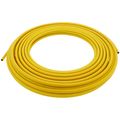
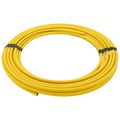
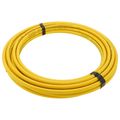
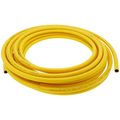
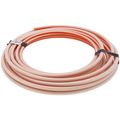
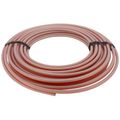
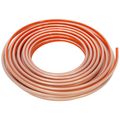
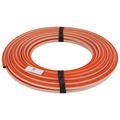
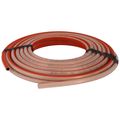
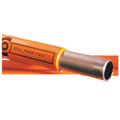

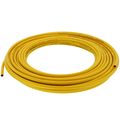
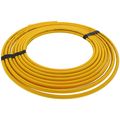
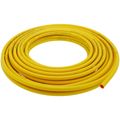
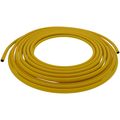
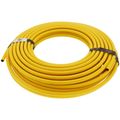
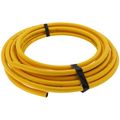
Coated copper tubing coils are seamless soft copper tube used for HVAC and refrigeration line sets, manufactured to ASTM B280 standards for the refrigeration industry. Streamline coils from Mueller are produced from C12200 copper, which runs 99.9 percent pure, and ship in coiled lengths, most commonly 20 feet or 50 feet, that installers can route around obstacles without cutting and brazing multiple joints. A colored protective coating, typically orange or black depending on size, wraps the tube for identification and adds a layer of physical protection during handling and installation. Some coils are also nitrogen-charged at the factory, holding a small positive pressure of nitrogen inside the tube to prevent oxide formation before the coil is cut and brazed into a system. Techs running mini-split lineouts, condensate lines, or refrigeration circuits rely on coil sizing consistency to match the exact OD called for on the equipment's line set specification.
Subcategories
- Standard ACR Coils: Standard ACR coils are manufactured to ASTM B280 and cleaned for refrigeration service, available in common sizes like 3/8 inch OD and 5/8 inch OD in 20 foot and 50 foot lengths. These coils cover the majority of split-system and mini-split line set installations. Sizing to the equipment manufacturer's line set chart is the standard selection method.
- Nitrogen-Charged Coils: Nitrogen-charged coils hold a small positive pressure of nitrogen gas sealed inside the tube at the factory, which displaces oxygen and reduces oxide scale formation when the tube is later cut and brazed. Reduced oxide formation means less contamination circulating through the refrigerant system after startup. Techs cutting into a nitrogen-charged coil notice a brief release of pressure confirming the seal held during shipping and storage.
- Color-Coded Coils: Color-coded coils use a protective coating, commonly orange or black depending on tube size, that both protects the copper during handling and lets installers visually distinguish sizes on the truck or in the warehouse. The coating adds tear resistance when the tube is pulled through tight framing cavities or around rough surfaces. Matching coating color conventions across a crew speeds up size identification on the job.
- Large Diameter Coils: Large diameter coils cover sizes from roughly 3-5/8 inch OD up through 8-1/8 inch OD, typically supplied cleaned and capped rather than coiled tight like smaller line set sizes. These larger sizes serve bigger commercial refrigeration and chiller applications rather than typical residential split systems. Capped ends keep the tube interior clean and free of debris until it's cut for installation.
Buying Guide
Outside diameter is the first thing to confirm when ordering coated copper tubing coils, since equipment manufacturers specify exact line set sizes and a mismatched OD won't fit factory flare fittings or line set adapters without added connectors. Check the equipment's installation manual for both the suction and liquid line sizes, since these two lines almost always differ in diameter on split-system and mini-split installations. Coil length matters next: a 25 foot outdoor unit placement calls for enough coil to route the full distance without a mid-run splice, so ordering a 50 foot coil for a long run avoids an unnecessary brazed joint that becomes a future leak point. For jobs where oxide contamination inside the refrigerant circuit is a concern, a nitrogen-charged coil reduces scale formation during brazing compared to standard coils, which matters most on systems using inverter-driven compressors sensitive to particulate contamination. Coating color mostly serves as a visual size reference rather than a functional difference, so it shouldn't be the deciding factor between two coils of otherwise matching specification. Larger commercial jobs specifying tube beyond typical line set sizes need the cleaned-and-capped large diameter coils rather than standard flexible coils, since those bigger diameters don't coil as tightly and ship differently. Confirming ASTM B280 compliance on the coil itself is a safeguard worth checking on any refrigeration or AC application, since that standard governs the cleaning and manufacturing process the refrigerant system depends on.
Frequently Asked Questions
What does ASTM B280 mean on a copper tubing coil?
ASTM B280 is the manufacturing and cleaning standard for copper tube used in air conditioning and refrigeration applications. Tube meeting this standard is cleaned internally to remove oils and debris that could contaminate a sealed refrigerant system. Confirming ASTM B280 compliance is a basic check before using any coil on a refrigeration circuit.
What's the benefit of a nitrogen-charged copper coil over a standard coil?
Nitrogen-charged coils hold a small positive pressure of nitrogen inside the tube from the factory, which reduces oxide scale formation once the tube is cut and brazed. Less oxide scale means less particulate contamination circulating through the refrigerant system after startup. The pressure release felt when cutting into the coil confirms the factory seal held.
Does the coating color on a copper coil indicate anything besides size?
Coating color, typically orange or black depending on tube size, primarily serves as a quick visual reference for identifying size without measuring every coil on the truck. The coating itself also adds tear resistance during handling and installation through tight spaces. It doesn't indicate a difference in the copper tube's internal cleanliness or pressure rating.
What coil length should be ordered for a long mini-split line set run?
Ordering a single coil long enough to cover the full run without a mid-run splice avoids an unnecessary brazed joint, which is a potential future leak point. Standard coil lengths of 20 feet and 50 feet cover most residential mini-split placements. Measuring the actual routed distance, not just the straight-line distance, gives a more accurate length requirement.
Why do larger diameter copper coils come cleaned and capped instead of coiled tight?
Larger diameter tube, generally above 3-5/8 inch OD, doesn't bend into a tight coil the way smaller line set sizes do, so it ships as cleaned and capped straight or loosely coiled lengths instead. Capping the ends keeps the tube interior free of debris during shipping and storage. These larger sizes typically serve commercial refrigeration and chiller systems rather than residential split systems.
