



'/%3E%3C/svg%3E)
 --%3E %3Csvg version='1.1' id='Fill' xmlns='http://www.w3.org/2000/svg' xmlns:xlink='http://www.w3.org/1999/xlink' x='0px' y='0px' viewBox='0 0 100 100' enable-background='new 0 0 100 100' xml:space='preserve'%3E %3Cpath fill='%23F15C02' d='M79.44,0.95H20.56C9.78,0.95,0.95,9.78,0.95,20.56v58.87c0,10.79,8.82,19.61,19.61,19.61h58.87 c10.79,0,19.61-8.83,19.61-19.61V20.56C99.05,9.78,90.22,0.95,79.44,0.95z M65.38,58.24l9.38,29.58L49.69,69.78L24.5,87.82 l9.34-29.6L8.8,39.6l30.73-0.17c0,0,6.98-19.61,10-28.93c0.54,1.36,9.88,29.1,9.88,29.1H91.2L65.38,58.24z'/%3E %3C/svg%3E)
' fill='%23F15C02' d='M49 0C21.938 0 0 21.938 0 49s21.938 49 49 49 49-21.938 49-49S76.062 0 49 0m0 82.709a7.54 7.54 0 1 1 0-15.08 7.54 7.54 0 0 1 0 15.08m7.54-28.412a7.541 7.541 0 0 1-15.08 0V22.831a7.54 7.54 0 0 1 15.08 0v31.466z'/%3E%3C/svg%3E)
MANUALS (3)
'/%3E%3C/svg%3E)
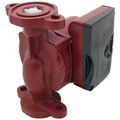

Product Highlights


Description
Trade professionals, join our TradeMaster program to receive discounted prices and free shipping on every order.
Specs
| Material: | Cast Iron |
|---|---|
| Frequency: | 60 Hz |
| Amperage: | 0.74 |
| Application: | Heating |
| Voltage: | 115V |
| Max Pressure (PSI): | 145 |
| Type: | 1-Speed Pump |
| Horse Power: | 1/25 |
| Flow Range (GPM): | 0-17 |
| Max Flow (GPM): | 17 |
| Head Range (ft.): | 0-15 |
| Max Head (Ft): | 15 |
| Hertz: | 60 |
| Phase: | 1 |
| RPM: | 2590 |
| Temperature Range (F): | 36°F - 230°F |
| Connection Size: | 1-1/4" 1-1/2" 3/4" 1" |
| Connection Type: | Flanged x Flanged |

Questions?
Compare Similar Products
You May Also Need
6 Replacement Parts

Need help finding a replacement part?
Product Reviews
Most Liked Positive Review
SUPER FAST SHIPPING
Most Liked Negative Review
 --%3E %3Csvg version='1.1' id='With-RB' xmlns='http://www.w3.org/2000/svg' xmlns:xlink='http://www.w3.org/1999/xlink' x='0px' y='0px' viewBox='0 0 100 100' enable-background='new 0 0 100 100' xml:space='preserve'%3E %3Cpath fill='%23FBC8B4' d='M79.44,0.95H20.56C9.78,0.95,0.95,9.78,0.95,20.56v58.87c0,10.79,8.82,19.61,19.61,19.61h58.87 c10.79,0,19.61-8.83,19.61-19.61V20.56C99.05,9.78,90.22,0.95,79.44,0.95z M65.38,58.24l9.38,29.58L49.69,69.78L24.5,87.82 l9.34-29.6L8.8,39.6l30.73-0.17c0,0,6.98-19.61,10-28.93c0.54,1.36,9.88,29.1,9.88,29.1H91.2L65.38,58.24z'/%3E %3C/svg%3E)
I have now made my second purchase of this item!
I would buy, or sell, this product again.
I would buy this product again

so far so good
I would buy it again, Shipping was really fast !
I would order this again from supplyhouse.
Good Product
I would buy this again.
Great product
Yes
Fast shipping
Product Q&A
35 QuestionsQ: I just received the grundfos pump. My old pump was the late bell and grossett motor/pump combo. My home is approx. 2500 square foot and it is a ranch type home. What I want to know is will the UP-15 42 be sufficient for this application?
Asked by Harv 12 years ago
Add your answer
Verified Reply- SupplyHouse StaffIt depends on the flow and head pressure requirements of the system. These are based heavily on the insulation quality of the house, the piping layout, and the size of system piping. You may want to find the model number of the Bell & Gossett pump in order to compare its pump curve to that of this Grundfos pump. You can also try to calculate the actual flow and head pressure requirements by using the document at the link below. http://s3.supplyhouse.com/manuals/1289252668477/41390_PROD_FILE.pdf
Q: Can this pump be slowed down for the GPM flow? It runs as 17GPM and I'm needing about half that flow rate. Thank you.
Asked by DrewPalmer04 13 years ago
Add your answer
Verified Reply- PexSupply StaffMost circulator pumps operate along a single pump curve. The amount of flow a pump can circulate depends on the head pressure it needs to overcome. Head pressure and flow rate have an inverse relationship. The maximum flow rating assumes that there is virtually no head pressure. Depending on the head pressure in your system, this pump may be able to provide about 8.5 GPM.
Not unless it is a multi speed pump. You could put in a ball valve and slow down the flow.
Q: How to tell where the 12AM is, how to set the pump time?
Asked by Sally 13 years ago
Add your answer
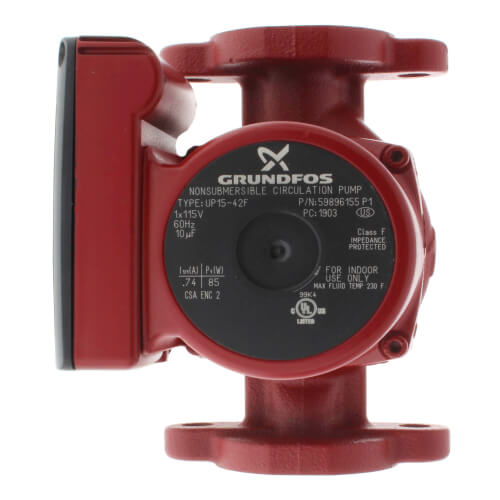
The instructions that come with that pump have very helpful pictures on how to properly install it. However, I can put into words. 1) that pump can be installed vertically or horizontally. 2) Always install this pump so you can face the motor after it it installed.. 3) As you face the motor remove the four alan head screws. MAKE SURE YOU HAVE DRAINED THE WATER OUT BEFORE YOU DO THIS!!! 4) Rotate the pump so you can read the information on the end of the pump. it should say Grundfos and the pump model. The black electrical box should be on the left. 5) tighten up the four alan head screws. Paul Shay A Real Good Plumber,Inc LMP 1307 LMFS 654 B
Q: if this pump is used for winter use for floor heating, can the pump be turned off during the summer months or should the system be run on a regular basis.
Asked by Jay 13 years ago
Add your answer
Yes, this pump may be shut down over the summer months.
Jay, I have two of these running in my heating system and I shut them off every spring and on again in the fall. This is the most dependable part of my heating system. I have been running them for twenty years and have replaced two. Jerry
Circulation pumps are best left running continually. If the pump is left idle for long it will begin to rust and may jam, preventing restart
Go ahead and shut the pump off in the summer time. I shut mine off every spring and it starts up with no problem each fall.
I shut my pump off one spring and the next winter I turned it on and it was making noises/failed. I'm not sure of the age of the pump, nor can I say if I just left the pump run all spring/summer/fall if it would have failed anyway. After replacing my pump I now leave the pump run year round and just shut off the gas to the boiler. I open all my zones so water flows. The basement floor (55 degrees) may warm up a tad in the summer months and maybe (marginally) cool the upstairs zones. Geo-thermal cooling to some degree..
Q: If the pipes on both side of the circulator pump are cold and the pump itself is hot, does that indicate that the pump has failed?
Asked by Chris 13 years ago
Add your answer
could have an air lock in the pipe
Yes there may be blockage of the pump rotor Sent from my iPhone Anthony Smits A-1 Auto Upholstery Inc.
Maybe but not if the pump is circulating cold water. If the source fluid is hot like from a solar system then it would be true. Dan
The hot pump says the motor is probably running. There are 2 other things that may be wrong. 1. the impeller may be worn out or has come loose from the shaft. 2. there may be an air lock in the circulating fluid.
Q: Replacing my UP15-42 pump that runs at 1600 rpm, new pump runs at 2590 rpm. Is this higher rpm OK?
Asked by Art 13 years ago
Add your answer
speed sometimes matters but the up 15-42F also runs at 2590 and not 1600 Paul Shay A Real Good Plumber, Inc
Q: What is the length of the pump to where the flanges attach?
Asked by Patty Mayonaisse 14 years ago
Add your answer
Verified Reply- PexSupply StaffThe unit measures 6-1/2" from flange to flange.
If you mean from flange surface to flange surface, the distance is 6.5 inches.
Q: i want to replace an existing pump installed now but do i have to specify flange sizes. the existing pump is installed and has flanges on the piping side matted to the flange on the pump already installed. I assume all i have to do is buy a new pump and intall it in between the face to face dimensions of the piping.
Asked by david 14 years ago
Add your answer
As a general rule yes. If you have given them the model number of what is there now and they have recommended a replacement pump, that pump will come with replacement gaskets and should fit the existing flanges.
Yes. Just replace it.
Yes, you're correct. All you have to do is replace the existing pump. No need to specify flange sizes. The pump has standard flange-to-flange dimensions that ensure trouble-free retrofitting.
Dave you will need the same size flange on the pipe as the pump
Q: I have this part # pump hooked up to a heating system, but it looks like mine is rotated 180 degrees. I think my pump is frozen as we have power coming in but it does not turn on. I guess I have two questions: A) is this repairable? B) what would be a good replacement part due to the 90 degree difference?
Asked by yash 14 years ago
Add your answer
Verified Reply- PexSupply StaffPart 59896167 is the rotated flange version of this circulator. The cartridge (part G-506171 on our site) can be replaced, but there could also be air in the system that is causing the unit not to work properly.
Yes. It is repairable, you can try changing the cartridge in it or buy a whole pump, it can be turned in any direction. Sent from my iPhone
No, it's not repairable, or rather not worth repairing since the replacement cost is fairly cheap. I had one go bad after 8 years so the life span is worth buying a new one. The bearings had burned out on it so that it would hum quietly but not pump. As far as the direction of flow, just follow the arrow on the casting. Both of the flanges are the same so all you have to do is flip the motor over and it will still work. There should be a valve on either side of the pump that is turned with a large flathead screwdriver, this makes it very easy to replace. Hope this helps. RW
Q: Can Grundfos 59896155 1/25 Horsepower super brute recirculator pump be used on the home water heater?
Asked by Maynard 14 years ago
Add your answer
Verified Reply- PexSupply StaffWe wouldn't recommend it because this circulator pump is cast iron. The oxygen in present in potable water causes cast iron to rust, which can discolor and contaminate drinking water. When dealing with a plumbing system or an open heating system you should always use a bronze or stainless steel circulator.
I don't think you would want a cast iron pump in a potable water system.
For domestic hot water supply you need a bronze circulator not iron.