




Filters
SORT
Product Availability –
Size –
Connection Type –
Length (Inches) –
Review Score –
 --%3E %3Csvg version='1.1' id='Fill' xmlns='http://www.w3.org/2000/svg' xmlns:xlink='http://www.w3.org/1999/xlink' x='0px' y='0px' viewBox='0 0 100 100' enable-background='new 0 0 100 100' xml:space='preserve'%3E %3Cpath fill='%23F15C02' d='M79.44,0.95H20.56C9.78,0.95,0.95,9.78,0.95,20.56v58.87c0,10.79,8.82,19.61,19.61,19.61h58.87 c10.79,0,19.61-8.83,19.61-19.61V20.56C99.05,9.78,90.22,0.95,79.44,0.95z M65.38,58.24l9.38,29.58L49.69,69.78L24.5,87.82 l9.34-29.6L8.8,39.6l30.73-0.17c0,0,6.98-19.61,10-28.93c0.54,1.36,9.88,29.1,9.88,29.1H91.2L65.38,58.24z'/%3E %3C/svg%3E)
 --%3E %3Csvg version='1.1' id='With-RB' xmlns='http://www.w3.org/2000/svg' xmlns:xlink='http://www.w3.org/1999/xlink' x='0px' y='0px' viewBox='0 0 100 100' enable-background='new 0 0 100 100' xml:space='preserve'%3E %3Cpath fill='%23FBC8B4' d='M79.44,0.95H20.56C9.78,0.95,0.95,9.78,0.95,20.56v58.87c0,10.79,8.82,19.61,19.61,19.61h58.87 c10.79,0,19.61-8.83,19.61-19.61V20.56C99.05,9.78,90.22,0.95,79.44,0.95z M65.38,58.24l9.38,29.58L49.69,69.78L24.5,87.82 l9.34-29.6L8.8,39.6l30.73-0.17c0,0,6.98-19.61,10-28.93c0.54,1.36,9.88,29.1,9.88,29.1H91.2L65.38,58.24z'/%3E %3C/svg%3E)
Price Range –
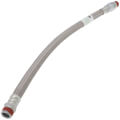
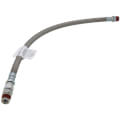
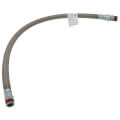
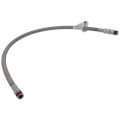
Heat Pump Braided Hoses


 --%3E %3Csvg version='1.1' id='No-RB' xmlns='http://www.w3.org/2000/svg' xmlns:xlink='http://www.w3.org/1999/xlink' x='0px' y='0px' viewBox='0 0 100 100' enable-background='new 0 0 100 100' xml:space='preserve'%3E %3Cpath fill='%23CECECE' d='M79.44,0.95H20.56C9.78,0.95,0.95,9.78,0.95,20.56v58.87c0,10.79,8.82,19.61,19.61,19.61h58.87 c10.79,0,19.61-8.83,19.61-19.61V20.56C99.05,9.78,90.22,0.95,79.44,0.95z M65.38,58.24l9.38,29.58L49.69,69.78L24.5,87.82 l9.34-29.6L8.8,39.6l30.73-0.17c0,0,6.98-19.61,10-28.93c0.54,1.36,9.88,29.1,9.88,29.1H91.2L65.38,58.24z'/%3E %3C/svg%3E)
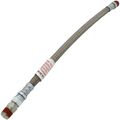
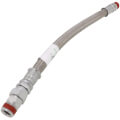
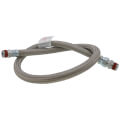
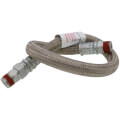
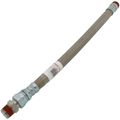
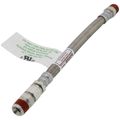
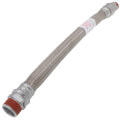
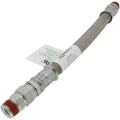
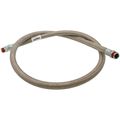
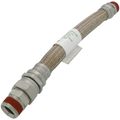
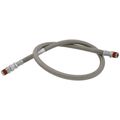
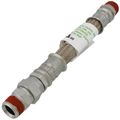
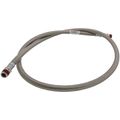
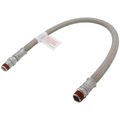
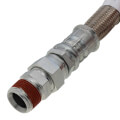
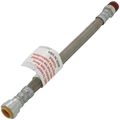
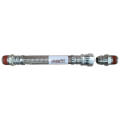
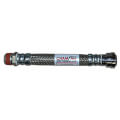
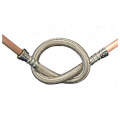

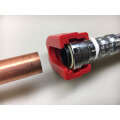

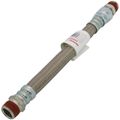
Heat Pump Braided Hoses connect the indoor and outdoor units of a ductless or mini-split heat pump system, carrying refrigerant through a flexible line instead of rigid copper tubing bent to fit the installation path. A braided stainless or reinforced exterior over a flexible refrigerant-rated core lets the hose route around tight corners, through wall penetrations, and around obstacles that would require multiple field-brazed joints with rigid line set. Flare fittings on each end connect to the indoor and outdoor unit's service valves, so hose length and fitting size need to match the specific heat pump model before ordering. Shorter runs typically use a single hose length, while longer or more complex routing between indoor and outdoor units may need couplers or additional hose sections. Choosing a braided hose over rigid line set often comes down to installation speed and the number of bends a particular job requires.
Subcategories
- Pre-Charged Braided Line Sets: Pre-charged braided line sets arrive filled with refrigerant and sealed at both ends, so a technician connects the flare fittings to the indoor and outdoor units without pulling a vacuum or adding refrigerant on smaller jobs. These sets suit single-zone mini-split installations where the line length falls within the pre-charged set's rated distance. Running a line longer than the pre-charged length typically means adding refrigerant afterward to account for the additional line volume. Pre-charged sets speed up installation time on straightforward single-zone jobs compared to field-charged rigid line set.
- Field-Chargeable Braided Hoses: Field-chargeable braided hoses ship empty and require a technician to pull a vacuum and charge the system with refrigerant after connecting the flare fittings, similar to a standard rigid line set installation. These hoses suit longer runs, multi-zone systems, or custom lengths that a pre-charged set would not cover. Because the hose is not pre-filled, technicians can cut or route it more flexibly on site to match irregular wall penetrations or obstacles between indoor and outdoor units. Multi-zone installations, where several indoor heads connect to a single outdoor condenser, commonly use field-chargeable hoses to fit each zone's specific routing needs.
- Hose Couplers and Extension Fittings: Hose couplers and extension fittings join two hose sections together or extend a braided hose's length beyond what a single pre-cut section covers. Couplers need to match the hose's flare size and refrigerant rating to maintain a leak-free connection at the joint. Extension fittings come into play on longer runs between indoor and outdoor units, particularly on multi-story installations or jobs where the outdoor unit sits farther from the building than a standard hose length reaches. A properly torqued flare connection at each coupler is what keeps a spliced hose run holding pressure over time.
Buying Guide
Choosing the right braided hose starts with the distance between the indoor and outdoor units, since pre-charged sets only cover a fixed length before refrigerant needs to be added on site. Jobs that fall within a pre-charged set's rated distance move faster, since there is no need to pull a vacuum or weigh in refrigerant after the flare connections are made. Longer runs, multi-zone systems, or installations with unusual routing typically call for field-chargeable Heat Pump Braided Hoses instead, since these can be cut and routed more freely and charged to match the exact line length used. Flare fitting size needs to match both the hose and the indoor and outdoor unit's service valve connections, so confirming fitting size against the heat pump manufacturer's specifications avoids an incompatible connection at either end. Multi-zone systems, where several indoor heads share one outdoor condenser, often mix pre-charged and field-chargeable hoses depending on each zone's specific distance and routing. Couplers and extension fittings extend a hose run when a single length does not reach, but each additional joint is a potential leak point, so minimizing the number of couplers on a run is worth considering during planning. Routing a braided hose around tight bends is easier than bending rigid copper line set, but the hose still has a minimum bend radius that, if exceeded, can restrict refrigerant flow or damage the line internally.
Frequently Asked Questions
What's the difference between pre-charged and field-chargeable braided hoses?
Pre-charged hoses arrive filled and sealed with refrigerant, so a technician only connects the flare fittings on shorter, single-zone runs. Field-chargeable hoses ship empty and need a vacuum and refrigerant charge after installation, which suits longer runs or multi-zone systems.
Can a braided hose be cut to a custom length?
Field-chargeable hoses can typically be cut and routed to a custom length, since they are charged with refrigerant after installation. Pre-charged sets are sealed at a fixed length and generally are not meant to be cut without adding refrigerant afterward.
Do braided hoses need a minimum bend radius?
Yes. Bending a braided hose tighter than its rated minimum radius can restrict refrigerant flow or damage the internal line, even though the hose is more flexible than rigid copper tubing.
How do multi-zone mini-split systems handle line routing?
Multi-zone systems often mix pre-charged and field-chargeable hoses, matching each zone's line to that zone's specific distance and routing between the indoor head and the shared outdoor condenser.
What happens if a run exceeds a pre-charged hose's rated length?
Refrigerant typically needs to be added to account for the additional line volume beyond the pre-charged set's rated distance. On significantly longer runs, a field-chargeable hose is usually the better fit from the start.
