




Hole Saw Arbors & Pilot Drill Bits


 --%3E %3Csvg version='1.1' id='No-RB' xmlns='http://www.w3.org/2000/svg' xmlns:xlink='http://www.w3.org/1999/xlink' x='0px' y='0px' viewBox='0 0 100 100' enable-background='new 0 0 100 100' xml:space='preserve'%3E %3Cpath fill='%23CECECE' d='M79.44,0.95H20.56C9.78,0.95,0.95,9.78,0.95,20.56v58.87c0,10.79,8.82,19.61,19.61,19.61h58.87 c10.79,0,19.61-8.83,19.61-19.61V20.56C99.05,9.78,90.22,0.95,79.44,0.95z M65.38,58.24l9.38,29.58L49.69,69.78L24.5,87.82 l9.34-29.6L8.8,39.6l30.73-0.17c0,0,6.98-19.61,10-28.93c0.54,1.36,9.88,29.1,9.88,29.1H91.2L65.38,58.24z'/%3E %3C/svg%3E)




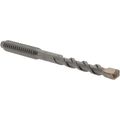


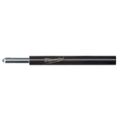


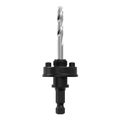





Hole Saw Arbors & Pilot Drill Bits are the drive and guide components that connect a hole saw to a power drill, letting the saw cut a clean, centered hole through wood, metal, or plastic. The arbor threads into the back of the hole saw and chucks into the drill, while the pilot bit passes through the center of the arbor to keep the saw from wandering off the starting point as the cut begins. A quick change arbor such as the 1/2 inch Lenox Snap-Back model lets a tech swap saw sizes without extra adapters mid job. Replacement pilot bits, like the Ideal 36-575 at 4-1/2 inches long and 1/4 inch diameter, wear out or snap well before the hole saw itself, so keeping spares on the truck avoids downtime. Electricians and plumbers rely on this hardware constantly for running cable and pipe through studs, joists, and panel knockouts, and a worn or mismatched pilot bit is one of the most common reasons a hole saw walks off center.
Subcategories
- Pilot Drill Bits: Pilot drill bits mount through the center of a hole saw arbor and start the cut, keeping the saw from skating across the work surface before it bites in. The Ideal 36-575 is a 4-1/2 inch long, 1/4 inch diameter replacement bit built to fit a matching hole saw arbor. Electricians and plumbers replace these more often than the arbor itself, since the pilot bit takes the brunt of the initial contact on every hole. Keeping a spare on hand prevents a stalled job when a bit snaps mid install.
- Quick Change Hole Saw Arbors: Quick change arbors let a tech swap hole saws without unscrewing threads or adding a separate adapter, speeding up jobs that call for multiple hole sizes. The Lenox LXAH9912PBM Snap-Back arbor is a 1/2 inch model that uses a tool-free bit change mechanism and works with threaded hole saws across a wide size range from a single arbor. This style suits electricians running conduit knockouts and plumbers boring pipe penetrations back to back. A collar locks the saw in place during the cut and releases with a simple pull once the hole is finished.
- Hex Shank Quick-Change Arbors: Hex shank arbors chuck directly into an impact driver or drill without a separate collet, using a 3/8 inch hex shank that matches common driver bit holders. The Lenox 1779805 is built from hardened carbon steel and includes a split point pilot drill for faster starts with less walking. Contractors favor this format when switching between an impact driver and other hex shank bits on the same job. The hex shank format also reduces slippage compared to a round shank chucked in a standard drill.
Buying Guide
Start by matching the arbor's thread or shank style to both the hole saw and the drill being used, since a mismatched thread pitch or shank size means the saw will not seat correctly no matter how new the parts are. Quick change arbors save time on jobs that call for several hole sizes in a row, letting a tech swap saws without threading and unthreading each one by hand, while a standard threaded arbor works fine for jobs sticking to one saw size all day. Pilot bit diameter matters as much as the arbor itself, since a pilot that is too small lets the saw wander before it engages the material, and a pilot that is bent or dull causes the same problem even on a new arbor. Hole Saw Arbors & Pilot Drill Bits wear out faster than the hole saws they drive, so stocking a few spare pilot bits alongside the arbor avoids a mid-job trip for a single small part. Shank style is worth checking too. A hex shank arbor chucks straight into an impact driver, which suits electricians and plumbers who already carry one on the belt, while a round shank needs a standard keyed or keyless drill chuck. For metal cutting or thicker material, confirm the arbor and pilot bit are rated for the material and hole saw type being used, since a bit built for wood will dull quickly or snap when pushed through steel or stainless.
Frequently Asked Questions
What is the difference between a hole saw arbor and a pilot drill bit?
The arbor is the piece that threads or locks onto the back of the hole saw and chucks into the drill, transferring the drill's rotation to the saw. The pilot bit passes through the center of the arbor and drives ahead of the saw teeth, centering the cut so the saw does not wander off the starting mark.
How often does a pilot drill bit need to be replaced?
Pilot bits wear out or snap well before the hole saw itself, since they take the initial impact on every hole drilled. Keeping a spare on hand, such as the Ideal 36-575 at 4-1/2 inches long and 1/4 inch diameter, avoids a stalled job when a bit fails mid install.
What is a quick change hole saw arbor?
A quick change arbor, such as the Lenox LXAH9912PBM Snap-Back model, lets a tech swap hole saws without threading and unthreading each one by hand. A locking collar holds the saw in place during the cut and releases with a pull once the hole is finished.
Can a hex shank arbor be used in an impact driver?
Yes, a hex shank arbor, such as the Lenox 1779805 with a 3/8 inch hex shank, chucks directly into an impact driver without a separate collet. This format suits electricians and plumbers who already carry an impact driver for other hex shank bits on the job.
Why does a hole saw wander off center when starting a cut?
A bent, dull, or undersized pilot bit is the most common cause, since it cannot hold the saw steady before the teeth engage the material. Swapping in a fresh pilot bit matched to the arbor usually solves the problem without replacing the arbor itself.
