




Impact Drivers


 --%3E %3Csvg version='1.1' id='No-RB' xmlns='http://www.w3.org/2000/svg' xmlns:xlink='http://www.w3.org/1999/xlink' x='0px' y='0px' viewBox='0 0 100 100' enable-background='new 0 0 100 100' xml:space='preserve'%3E %3Cpath fill='%23CECECE' d='M79.44,0.95H20.56C9.78,0.95,0.95,9.78,0.95,20.56v58.87c0,10.79,8.82,19.61,19.61,19.61h58.87 c10.79,0,19.61-8.83,19.61-19.61V20.56C99.05,9.78,90.22,0.95,79.44,0.95z M65.38,58.24l9.38,29.58L49.69,69.78L24.5,87.82 l9.34-29.6L8.8,39.6l30.73-0.17c0,0,6.98-19.61,10-28.93c0.54,1.36,9.88,29.1,9.88,29.1H91.2L65.38,58.24z'/%3E %3C/svg%3E)



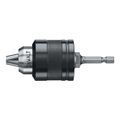
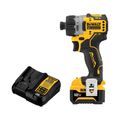
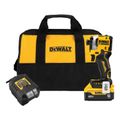
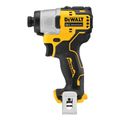


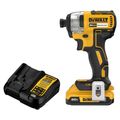

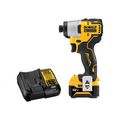


Impact Drivers deliver high rotational torque in short, rapid bursts to drive fasteners fast without stalling or camming out, making them a staple for framing, deck building, and mechanical rough-in work. A professional-grade cordless model can produce up to 2,500 in-lbs of max torque, giving it enough force to sink long lag screws and structural fasteners that would stall a standard drill/driver. Compact size and a 1/4-inch hex chuck let techs swap bits quickly and work in tight mechanical rooms or crawlspaces where a full-size drill won't fit. Most current models use brushless motors, which run cooler and extend runtime compared to older brushed designs. Multiple speed settings let operators dial back power for delicate fastening tasks like self-tapping screws, then switch to full torque for lag bolts or structural screws. For trade professionals running fastener-heavy days, an impact driver cuts fatigue and speeds up repetitive driving tasks that would otherwise wear down a wrist over a full shift.
Subcategories
- Compact Impact Drivers: Compact impact drivers are built for tight access work like cabinet installs, electrical boxes, and mechanical closets where a full-size tool can't maneuver. They still deliver strong driving torque despite the smaller footprint, often in the 1,500 to 2,000 in-lbs range depending on the model. Installers favor them for overhead and one-handed driving where reach and weight matter more than raw output. The shorter body length also helps in stud bays and joist cavities on HVAC and plumbing rough-in jobs.
- High-Torque Impact Drivers: High-torque impact drivers are built for heavier fastening work like structural screws, lag bolts, and large-diameter deck fasteners. Some professional models deliver up to 2,500 in-lbs of max torque, the highest tier currently offered in cordless impact drivers. Framers and remodelers use this class when driving through dense engineered lumber or fastening ledger boards. The added torque comes with a slightly larger body compared to compact models.
- Brushless Impact Drivers: Brushless impact drivers use an electronically commutated motor instead of carbon brushes, which reduces friction, heat buildup, and wear over the tool's life. This design also lets the motor meter power more precisely to the fastener, which can extend runtime on a single battery charge. Most current professional-grade impact drivers use brushless motors as the standard. Trade contractors running daily fastening work benefit from the reduced maintenance and longer service life.
- Multi-Speed Impact Drivers: Multi-speed impact drivers include selectable speed and power settings, typically three modes, that let the operator match torque output to the fastener. Lower speed settings are tuned for self-drilling and self-tapping screws where too much torque can strip material or snap the fastener. Higher settings unlock full torque for structural fasteners like lag screws. Electricians and HVAC techs use the lower settings often when working with sheet metal screws on ductwork.
Buying Guide
Start with the torque range needed for the typical fastening work on the job. Framing, decking, and structural fastener work call for a high-torque model, while trim, electrical box mounting, and general assembly work can run on a mid-range or compact tool. Impact Drivers are rated by max torque in inch-pounds, so comparing that spec across models gives a clear picture of driving power before purchase. Voltage and battery platform matter next, especially for contractors already invested in a specific tool system, since staying on one platform means batteries and chargers carry across tools. Brushless motors are worth prioritizing over brushed models for daily use, since they hold up better under repeated high-torque cycles and typically deliver longer runtime per charge. Speed settings add control for mixed fastening work; a tool with at least two or three modes lets an operator back off torque for delicate screws without switching tools entirely. Chuck type should also match the bit inventory already on the truck, since most impact drivers use a standard 1/4-inch hex quick-connect chuck. Weight and length matter for overhead work or tight mechanical spaces, where a compact body reduces fatigue over a long shift. Balancing torque output against size and weight usually points to the right model for the specific trade and daily workload.
Frequently Asked Questions
What's the difference between an impact driver and a drill?
An impact driver delivers rotational force in rapid bursts specifically for driving fasteners, while a drill provides steady rotational power better suited for drilling holes. Impact drivers generally produce more torque for driving long screws and lag bolts without stalling. Many contractors carry both tools since each handles different tasks more effectively.
How much torque does a professional impact driver produce?
Professional-grade cordless impact drivers can produce up to 2,500 in-lbs of max torque in top-tier models. Torque output varies by brand and model, with compact versions typically producing less than full-size high-torque models. Checking the manufacturer's torque rating helps match the tool to the fastening task.
Are brushless impact drivers worth the extra cost?
Brushless impact drivers run cooler and last longer than brushed models because they don't rely on carbon brushes that wear down over time. They also tend to deliver longer runtime per battery charge since power is metered more efficiently to the motor. For daily professional use, the extra durability and runtime generally offset the higher upfront investment.
What chuck size do impact drivers use?
Most impact drivers use a standard 1/4-inch hex quick-connect chuck, which accepts common impact-rated driver bits. This keeps bit swaps fast on the job without needing a chuck key. Confirming chuck compatibility with existing bit inventory helps avoid buying duplicate accessories.
Do impact drivers have multiple speed settings?
Many professional impact drivers include selectable speed and power modes, often three settings, so the tool can be dialed back for delicate fasteners or opened up for full torque on structural screws. Lower settings help prevent stripping on self-tapping or sheet metal screws. Higher settings deliver maximum driving force for lag bolts and heavy fasteners.
