



Filters
SORT
Product Availability –
Size –
Connection Type –
Review Score –
 --%3E %3Csvg version='1.1' id='Fill' xmlns='http://www.w3.org/2000/svg' xmlns:xlink='http://www.w3.org/1999/xlink' x='0px' y='0px' viewBox='0 0 100 100' enable-background='new 0 0 100 100' xml:space='preserve'%3E %3Cpath fill='%23F15C02' d='M79.44,0.95H20.56C9.78,0.95,0.95,9.78,0.95,20.56v58.87c0,10.79,8.82,19.61,19.61,19.61h58.87 c10.79,0,19.61-8.83,19.61-19.61V20.56C99.05,9.78,90.22,0.95,79.44,0.95z M65.38,58.24l9.38,29.58L49.69,69.78L24.5,87.82 l9.34-29.6L8.8,39.6l30.73-0.17c0,0,6.98-19.61,10-28.93c0.54,1.36,9.88,29.1,9.88,29.1H91.2L65.38,58.24z'/%3E %3C/svg%3E)
 --%3E %3Csvg version='1.1' id='With-RB' xmlns='http://www.w3.org/2000/svg' xmlns:xlink='http://www.w3.org/1999/xlink' x='0px' y='0px' viewBox='0 0 100 100' enable-background='new 0 0 100 100' xml:space='preserve'%3E %3Cpath fill='%23FBC8B4' d='M79.44,0.95H20.56C9.78,0.95,0.95,9.78,0.95,20.56v58.87c0,10.79,8.82,19.61,19.61,19.61h58.87 c10.79,0,19.61-8.83,19.61-19.61V20.56C99.05,9.78,90.22,0.95,79.44,0.95z M65.38,58.24l9.38,29.58L49.69,69.78L24.5,87.82 l9.34-29.6L8.8,39.6l30.73-0.17c0,0,6.98-19.61,10-28.93c0.54,1.36,9.88,29.1,9.88,29.1H91.2L65.38,58.24z'/%3E %3C/svg%3E)
Price Range –
John Guest ProLock Fittings


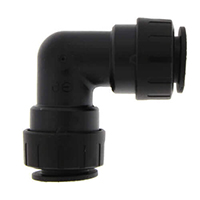
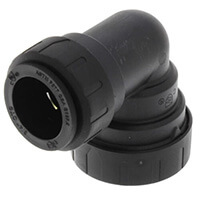
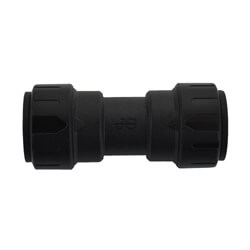
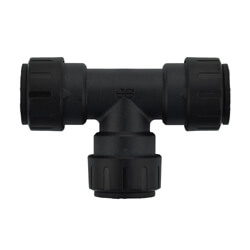
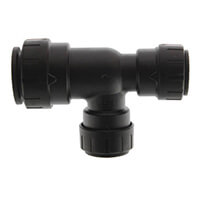


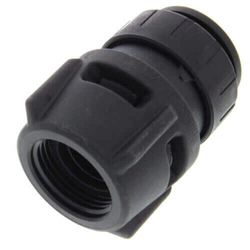
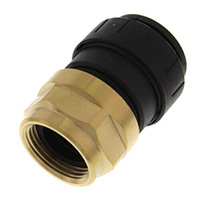

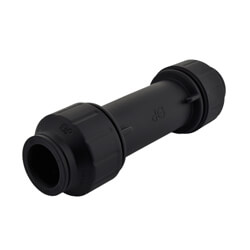
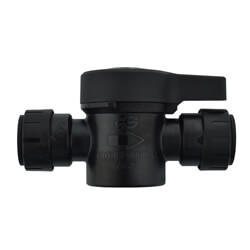


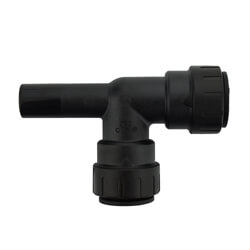

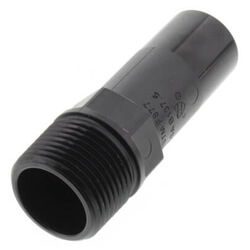
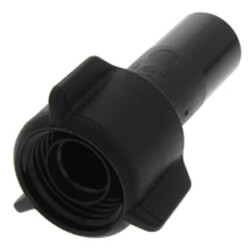
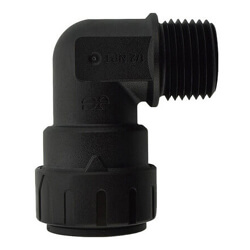
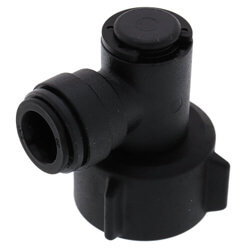
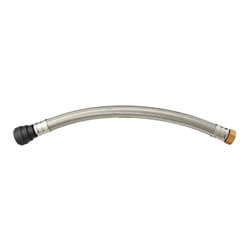
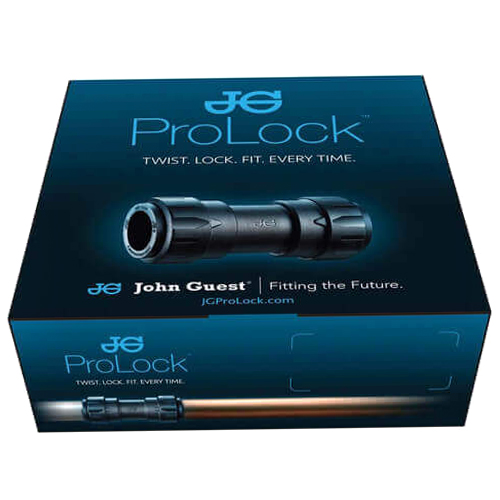

John Guest ProLock fittings are push-to-connect plumbing fittings that join PE-RT, PEX, copper, and CPVC pipe in any combination without soldering, clamping, or gluing. Each fitting uses a collet with stainless steel teeth that grips the pipe once it's fully inserted, backed by an O-ring for a permanent seal, and the connection is code-approved for use behind a finished wall. A visible click and alignment arrows confirm the connection is fully made, which cuts down on the guesswork common to other push-fit systems. Because ProLock fittings work across four different pipe materials with one fitting body, a contractor can transition materials mid-run without stocking a separate reducer or adapter for every combination. That flexibility matters most on repair and remodel work, where the existing pipe material isn't always known until the wall is already open.
Subcategories
- ProLock Couplings: ProLock couplings join two lengths of pipe in a straight run, accepting any combination of PE-RT, PEX, copper, and CPVC on either end. A plumber uses them to extend an existing line or repair a section of damaged pipe without cutting in a soldered or crimped joint. The collet and O-ring design lets the coupling be removed and reused if the connection needs to be broken later. No pipe prep beyond a clean, square cut is required before insertion.
- ProLock Elbows: ProLock elbows change direction in a pipe run at 90 degrees, available in both standard and plug-in styles. They're specified where a rigid soldered elbow would be difficult to install in a tight space, such as inside a wall cavity or behind a fixture. The plug-in variant connects directly to a valve or fixture outlet without an additional fitting. Both styles carry the same stainless steel collet grip as the rest of the ProLock line.
- ProLock Tees: ProLock tees branch a single supply line into two directions, available as standard tees, stackable tees, and reducing tees for a smaller branch line. Contractors use the reducing tee when the branch serves a fixture that doesn't need the full flow of the main line. The stackable design lets multiple tees be ganged together in a tight manifold-style layout. All three styles use the same tool-free collet connection as the rest of the line.
- ProLock Threaded Connectors: Threaded connectors transition a ProLock push-fit connection to NPT male or female threads, letting the system tie into a valve, fixture, or water heater with standard pipe threads. Brass male connectors in this line carry a rated pressure of 160 psi at 73 degrees Fahrenheit, dropping to 100 psi at 180 degrees and 80 psi at 200 degrees. Plumbers use these connectors at the transition point between push-fit distribution piping and threaded appliance or fixture connections. The same click-and-arrow indicator confirms a full connection on the push-fit side.
Buying Guide
Confirm the pipe material on both sides of the connection before selecting a fitting, since one of the advantages of John Guest ProLock Fittings is that a single fitting body accepts PE-RT, PEX, copper, and CPVC in any combination, but the fitting still needs to be rated for the specific outside diameter of the pipe being joined. Choose between the standard and plug-in elbow styles based on whether the connection lands mid-run or ties directly into a fixture or valve outlet, since the plug-in style skips an extra fitting at that transition point. For branch lines that don't need full flow, a reducing tee cuts material cost compared to running a full-size tee with a bushing. Use a threaded connector at every point where the system needs to tie into NPT-threaded equipment, and check the pressure and temperature rating against the application, since the rated pressure drops as operating temperature rises. Because the connection requires no soldering, clamping, or gluing, ProLock fittings are a practical choice for behind-the-wall repairs where an open flame or curing time isn't an option. Keep the pipe end clean and cut square before inserting it into the collet, since a rough or angled cut is the most common cause of a leak at a push-fit joint. Listen and look for the audible click and aligned arrows on every connection before closing up a wall, since that confirmation step is what the system relies on instead of a visual solder joint.
Frequently Asked Questions
Do John Guest ProLock fittings work with both PEX and copper on the same fitting?
Yes, a single ProLock fitting can join PE-RT, PEX, copper, and CPVC in any combination, so one end can be PEX and the other copper without an adapter in between. That flexibility simplifies material transitions during a repair or remodel compared to stocking separate transition fittings.
Are ProLock fittings approved for installation behind a finished wall?
Yes, ProLock fittings are code-approved for behind-the-wall use, which is part of why they're used on remodel jobs where the connection won't be accessible after the wall is closed up.
How can I tell if a ProLock connection is fully made?
The fitting is designed to click audibly and display aligned arrows once the pipe is fully inserted into the collet. Checking both signs before moving on to the next connection is the manufacturer's recommended way to confirm the joint is sealed.
What's the pressure rating on a ProLock brass male connector?
The brass male connector is rated for 160 psi at 73 degrees Fahrenheit, dropping to 100 psi at 180 degrees and 80 psi at 200 degrees. Matching the connector's rating to the system's operating temperature and pressure is important on a hot water or heating application.
Can a ProLock fitting be removed and reused?
Yes, the fitting can be disconnected from the pipe without damaging the tubing, which allows it to be reused elsewhere or the connection to be redone if it needs to be reworked. That's different from a soldered or solvent-welded joint, which can't be undone without cutting out the fitting.
