




Masonry Drill Bits


 --%3E %3Csvg version='1.1' id='No-RB' xmlns='http://www.w3.org/2000/svg' xmlns:xlink='http://www.w3.org/1999/xlink' x='0px' y='0px' viewBox='0 0 100 100' enable-background='new 0 0 100 100' xml:space='preserve'%3E %3Cpath fill='%23CECECE' d='M79.44,0.95H20.56C9.78,0.95,0.95,9.78,0.95,20.56v58.87c0,10.79,8.82,19.61,19.61,19.61h58.87 c10.79,0,19.61-8.83,19.61-19.61V20.56C99.05,9.78,90.22,0.95,79.44,0.95z M65.38,58.24l9.38,29.58L49.69,69.78L24.5,87.82 l9.34-29.6L8.8,39.6l30.73-0.17c0,0,6.98-19.61,10-28.93c0.54,1.36,9.88,29.1,9.88,29.1H91.2L65.38,58.24z'/%3E %3C/svg%3E)
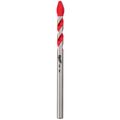






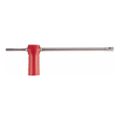


Masonry drill bits are carbide-tipped bits ground to bore through concrete, brick, and stone with either a rotary hammer or a standard hammer drill. Shank styles vary by tool, including SDS-plus for most rotary hammers, SDS-max for heavy-duty applications, and hex or round shank bits for impact drivers and standard chucks. Shank options across that range let the same job move from anchoring a bracket in brick to drilling through reinforced concrete for conduit.
Carbide tip design also affects performance in tougher material: a multi-grind or four-cutter carbide head resists sticking when a bit hits rebar mid-hole. For plumbing, HVAC, and electrical trades running anchors, conduit, or supports through concrete and masonry walls, matching bit shank and tip design to the drill and material on hand keeps holes on schedule and bits from failing mid-job.
Subcategories
- SDS-Plus Bits: SDS-plus bits are the most common rotary hammer bit style, using a spring-loaded shank that allows piston-like hammering action without rotational slipping. Electricians and mechanical trades use them for anchor holes and conduit penetrations in concrete and brick. A carbide tip on these bits stands up to repeated hammer-drilling in stone and concrete.
- SDS-Max Bits: SDS-max bits fit heavier-duty rotary hammers and handle larger diameter holes than SDS-plus in reinforced concrete and hard aggregate. Contractors doing structural anchoring or larger conduit penetrations rely on the larger shank for added torque transfer. A four-cutter carbide head design on some SDS-max bits helps prevent sticking when the bit contacts rebar.
- Hex Shank Bits: Hex shank bits fit standard impact drill/drivers and offer cross-brand compatibility without a specialty chuck. Techs doing lighter masonry work, such as anchoring into brick or lime-sand block, use these when a full rotary hammer isn't warranted for the job. The hex shank style trades some hammering power for tool flexibility on a mixed-task jobsite.
- Round Shank Bits: Round shank bits fit a standard three-jaw chuck on a regular drill or hammer drill, making them the most widely compatible option across tool brands. Bits with this shank suit lighter masonry drilling like anchor pilot holes in brick or block. Carbide tips on round shank bits still handle repeated use in stone and concrete applications.
Buying Guide
Shank type is the first decision, and it's dictated by the tool already on the truck. SDS-plus fits most standard rotary hammers, SDS-max is reserved for heavy-duty hammers drilling larger holes, and hex or round shank bits work with impact drivers and standard drills for lighter masonry tasks. Buying the wrong shank means the bit won't seat in the chuck at all.
Material hardness comes next. Standard concrete and brick call for a standard carbide tip, but reinforced concrete with embedded rebar needs a bit built with a four-cutter or multi-grind carbide head designed to resist sticking when it contacts steel. Masonry drill bits without this reinforced tip design tend to bind or dull quickly when they hit rebar mid-hole, slowing down anchor and conduit work.
Bit diameter and length round out the selection, and both should match the anchor or conduit spec for the job rather than defaulting to whatever's already in the truck. A pilot hole for a small anchor needs a shorter, narrower bit, while a conduit penetration through a thick wall needs both greater diameter and length. Matching shank, tip design, and dimensions to the actual material and fastener spec keeps holes accurate on the first pass.
Frequently Asked Questions
What's the difference between SDS-plus and SDS-max bits?
SDS-plus bits fit most standard rotary hammers and handle typical anchor and conduit holes in concrete and brick. SDS-max bits use a larger shank for heavy-duty rotary hammers drilling bigger diameter holes in reinforced concrete. Picking the wrong shank means the bit won't seat in the tool's chuck.
Can a hex shank masonry bit be used in a standard drill?
Hex shank bits are built for impact drill/drivers, not standard three-jaw chucks, though some adapters bridge the gap. Round shank bits are the better fit for a standard drill or hammer drill chuck. Matching shank type to the tool avoids a bit that slips or won't seat.
Why do masonry bits get stuck when hitting rebar?
A standard carbide tip can bind or dull when it contacts embedded steel rebar in reinforced concrete. Bits with a four-cutter or multi-grind carbide head are designed specifically to resist sticking in this situation. Choosing a reinforced tip design upfront saves time on jobs known to involve rebar.
What size masonry bit is needed for a wall anchor?
Bit diameter should match the anchor manufacturer's specified hole size exactly, since an oversized hole won't hold the anchor properly. Length should clear the wall thickness plus the anchor's embedment depth. Checking the anchor spec sheet before drilling avoids a hole that has to be redone.
Do masonry drill bits work on both brick and concrete?
Carbide-tipped masonry bits are designed to handle concrete, brick, and stone, though harder reinforced concrete calls for a more aggressive tip design than plain brick or block. Standard carbide tips hold up fine for typical brick anchoring work. Reinforced concrete with rebar benefits from a bit built specifically to resist sticking on steel.
