




PEX Products
PEX products include cross-linked polyethylene tubing, fittings, manifolds, tools, and radiant heat components. They are used to build hot and cold water distribution systems and hydronic radiant heating or cooling systems in place of copper, PVC, or CPVC piping.
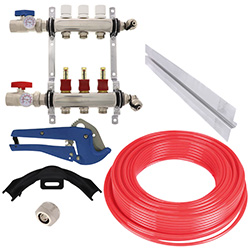
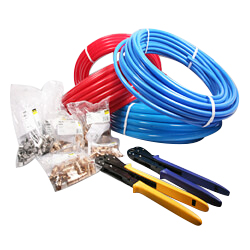
The category splits into two main uses. Domestic water distribution uses PEX tubing, fittings, and manifolds in place of copper supply lines. Radiant heat systems use tubing, manifolds, controls, insulation, and panels to distribute hot water through floor or wall loops. PEX connects using crimp, press, or cold-expansion methods depending on the fitting system chosen. Pre-bundled packages group the core tubing, fittings, and manifolds a plumber needs for a full plumbing or radiant heat installation. This avoids sourcing each part separately.






Subcategories
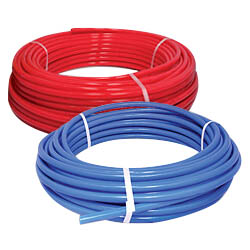
- PEX Tubing: Radiant heat PEX tubing runs through floor or wall loops carrying hot water for space heating and snow melt systems. It is typically installed with an oxygen barrier to protect boiler and pump components from corrosion. Installers choose loop length and tubing size based on the manifold's flow rating and the square footage of the zone being heated.
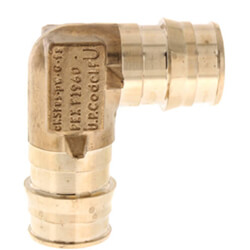
- PEX Fittings: Radiant heat PEX fittings connect tubing to manifolds and make transitions between loop sections. They use crimp, press, or expansion connections depending on the tubing and tool already in use on the job. Fittings rated for hydronic service handle the closed-loop pressures and temperatures typical of a radiant heating system.
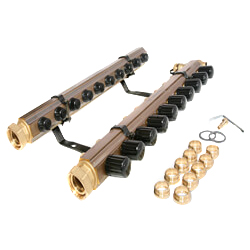
- Radiant Heat Manifolds: Radiant heat manifolds split a single supply line into individually balanced loops, letting an installer isolate and adjust flow to each zone from one central point. Manifolds range from basic isolation valves to preassembled units with flow meters and temperature gauges for zone-by-zone balancing.
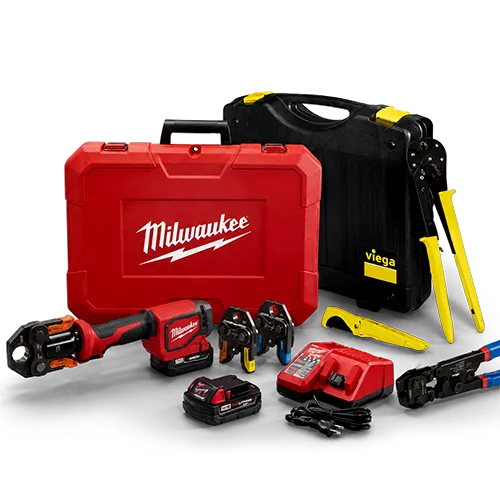
- PEX Tools: PEX tools cover the crimp, press, and expansion equipment needed to make up connections on tubing and fittings. They also include cutters and deburring tools for prepping pipe ends. Choosing a tool that matches the fitting system on the job, crimp, press, or expansion, keeps every connection consistent across the installation.
- Radiant Heat Controls: Radiant heat controls include the thermostats, actuators, and zone valves that manage which loops call for heat and when. They coordinate the manifold and boiler or water heater to keep each zone at its set temperature. Controls range from simple single-zone thermostats to multi-zone panels for larger radiant systems.
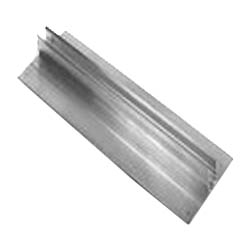
- Radiant Heat Panels: Radiant heat panels are prefabricated subfloor panels with routed channels that hold PEX tubing in a fixed layout. They cut the labor of stapling or clipping tubing to a bare subfloor loop by loop. Panels suit remodel and new construction jobs where consistent tubing spacing matters for even floor heat output.
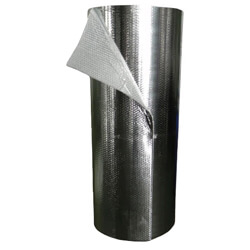
- Radiant Heat Insulation: Radiant heat insulation goes underneath or around PEX tubing to direct heat into the living space instead of the subfloor or ground. This improves the response time and efficiency of the heating zone. Reflective foil-faced foam panels are a common choice under floor-mounted tubing runs.
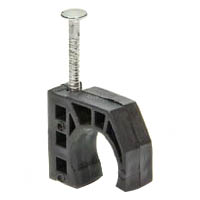
- Radiant Heat Install Parts: Radiant heat install parts cover the brackets, clips, staples, and transition fittings. These hold tubing in place and connect it to the manifold and boiler piping. Smaller components like these round out a radiant system once the tubing, manifold, and insulation are chosen.
- Radiant Heat Packages: Radiant heat packages bundle tubing, a manifold, insulation, and the control components needed for a defined zone or project size into one package. This cuts the time spent sourcing each part separately. Packages suit installers quoting a full radiant zone who want a predictable parts list before starting the job.
- PEX Tubing: Domestic water PEX tubing carries hot and cold potable water from a manifold or trunk line to fixtures throughout a home or building, replacing copper or CPVC supply lines. Tubing size is chosen by fixture count and run length, with larger trunk lines feeding smaller branch lines out to individual fixtures.
- PEX Fittings: Domestic water PEX fittings make the elbows, tees, couplings, and adapters needed to route supply lines around framing. They also connect to fixtures, valves, and manifolds. Fittings are available in crimp, press, and push-to-connect styles to match whichever connection method a plumber already uses on the rest of the job.
- PEX Manifolds: PEX manifolds for domestic plumbing split a main supply line into individual, valved branches feeding each fixture. This gives a plumber a single shutoff for a bathroom, kitchen, or whole floor instead of one valve per fixture. Home-run plumbing layouts rely on a manifold at the mechanical room to feed every fixture on its own dedicated line.
- Installation Parts: Plumbing installation parts cover the brackets, straps, and wall or floor plates that support PEX tubing runs and protect it where it passes through framing. Support brackets and protective plates like these keep tubing secured and away from sharp edges that could damage the pipe over time.
- PEX Plumbing Packages: PEX plumbing packages bundle tubing, fittings, and a manifold sized for a defined number of fixtures into one package. This gives an installer a predictable parts list for a bathroom, kitchen, or whole-house repipe. Packages cut the back-and-forth of sourcing tubing, fittings, and a manifold as three separate purchases.
Buying Guide
The first decision is application. Domestic hot and cold water distribution calls for potable-rated tubing, fittings, and manifolds. Radiant heating or cooling calls for oxygen-barrier tubing paired with hydronic-rated manifolds, controls, and insulation. Mixing the two, using non-barrier tubing in a closed radiant loop with ferrous components, risks corrosion damage over time.
Connection method should get chosen before ordering fittings, since crimp, press, and expansion systems aren't interchangeable on the same fitting. Crews with a crimp tool already on hand should stick with crimp fittings and copper rings. Those set up for press or ProPEX-style expansion should buy fittings built for that system. This keeps every connection on the job consistent.
Manifold layout versus trunk-and-branch plumbing changes how much tubing and how many fittings a job needs. A home-run layout with a manifold feeding every fixture on its own line uses more tubing but fewer fittings and gives each fixture its own shutoff. Trunk-and-branch plumbing uses fewer manifold outlets but more tees and couplings along the run.
Sizing tubing and manifold outlets starts with fixture count and expected flow. Undersized tubing or an undersized manifold outlet restricts flow to a fixture, showing up as weak pressure at a shower or sink. Oversized tubing wastes material and slows hot water delivery time. Matching pipe size to fixture demand keeps both flow and delivery time in a reasonable range.
Packages make sense for a defined, well-scoped job, a single bathroom repipe or a known radiant zone size, since the bundled parts list is sized to that specific project. A la carte tubing, fittings, and manifolds give more flexibility on larger or irregular jobs where a standard package doesn't match the actual layout.
Frequently Asked Questions
What's the difference between PEX for domestic plumbing and PEX for radiant heat?
Domestic plumbing PEX is potable-rated tubing used for hot and cold water distribution to fixtures. Radiant heat PEX typically includes an oxygen barrier to protect boiler and pump components in a closed hydronic loop from corrosion. It isn't intended for direct drinking water contact.
Can PEX-a and PEX-b fittings be used interchangeably?
Crimp and press fitting systems generally work on both PEX-a and PEX-b tubing. Cold-expansion fittings only work reliably with PEX-a, since that method relies on the tubing's shape memory to shrink back around the fitting after expansion. PEX-b doesn't have that same shape memory.
Is a manifold system or trunk-and-branch plumbing better for a new install?
A manifold, or home-run, system gives each fixture its own dedicated line and shutoff at a central manifold. This simplifies future repairs, since one fixture can be isolated without shutting off the whole house. Trunk-and-branch plumbing uses less tubing and fewer manifold outlets, which can lower material use on a straightforward layout.
What tools are needed to work with PEX tubing?
The tools needed depend on the fitting system chosen. Crimp fittings need a calibrated crimp tool and go/no-go gauge. Press fittings need a press tool with the correct jaw. ProPEX-style connections need an expansion tool. A PEX cutter and deburring tool round out the basic kit regardless of fitting system.
Do PEX plumbing packages include everything needed for a full installation?
A PEX plumbing package typically bundles tubing, fittings, and a manifold sized for a set number of fixtures. Installation parts like brackets, straps, and wall plates are usually purchased separately. Checking the package contents against the job's actual fixture count and layout confirms nothing extra needs to be sourced.
Resources
Subcategories
- PEX Tubing: Radiant heat PEX tubing runs through floor or wall loops carrying hot water for space heating and snow melt systems. It is typically installed with an oxygen barrier to protect boiler and pump components from corrosion. Installers choose loop length and tubing size based on the manifold's flow rating and the square footage of the zone being heated.
- PEX Fittings: Radiant heat PEX fittings connect tubing to manifolds and make transitions between loop sections. They use crimp, press, or expansion connections depending on the tubing and tool already in use on the job. Fittings rated for hydronic service handle the closed-loop pressures and temperatures typical of a radiant heating system.
- Radiant Heat Manifolds: Radiant heat manifolds split a single supply line into individually balanced loops, letting an installer isolate and adjust flow to each zone from one central point. Manifolds range from basic isolation valves to preassembled units with flow meters and temperature gauges for zone-by-zone balancing.
- PEX Tools: PEX tools cover the crimp, press, and expansion equipment needed to make up connections on tubing and fittings. They also include cutters and deburring tools for prepping pipe ends. Choosing a tool that matches the fitting system on the job, crimp, press, or expansion, keeps every connection consistent across the installation.
- Radiant Heat Controls: Radiant heat controls include the thermostats, actuators, and zone valves that manage which loops call for heat and when. They coordinate the manifold and boiler or water heater to keep each zone at its set temperature. Controls range from simple single-zone thermostats to multi-zone panels for larger radiant systems.
- Radiant Heat Panels: Radiant heat panels are prefabricated subfloor panels with routed channels that hold PEX tubing in a fixed layout. They cut the labor of stapling or clipping tubing to a bare subfloor loop by loop. Panels suit remodel and new construction jobs where consistent tubing spacing matters for even floor heat output.
- Radiant Heat Insulation: Radiant heat insulation goes underneath or around PEX tubing to direct heat into the living space instead of the subfloor or ground. This improves the response time and efficiency of the heating zone. Reflective foil-faced foam panels are a common choice under floor-mounted tubing runs.
- Radiant Heat Install Parts: Radiant heat install parts cover the brackets, clips, staples, and transition fittings. These hold tubing in place and connect it to the manifold and boiler piping. Smaller components like these round out a radiant system once the tubing, manifold, and insulation are chosen.
- Radiant Heat Packages: Radiant heat packages bundle tubing, a manifold, insulation, and the control components needed for a defined zone or project size into one package. This cuts the time spent sourcing each part separately. Packages suit installers quoting a full radiant zone who want a predictable parts list before starting the job.
- PEX Tubing: Domestic water PEX tubing carries hot and cold potable water from a manifold or trunk line to fixtures throughout a home or building, replacing copper or CPVC supply lines. Tubing size is chosen by fixture count and run length, with larger trunk lines feeding smaller branch lines out to individual fixtures.
- PEX Fittings: Domestic water PEX fittings make the elbows, tees, couplings, and adapters needed to route supply lines around framing. They also connect to fixtures, valves, and manifolds. Fittings are available in crimp, press, and push-to-connect styles to match whichever connection method a plumber already uses on the rest of the job.
- PEX Manifolds: PEX manifolds for domestic plumbing split a main supply line into individual, valved branches feeding each fixture. This gives a plumber a single shutoff for a bathroom, kitchen, or whole floor instead of one valve per fixture. Home-run plumbing layouts rely on a manifold at the mechanical room to feed every fixture on its own dedicated line.
- Installation Parts: Plumbing installation parts cover the brackets, straps, and wall or floor plates that support PEX tubing runs and protect it where it passes through framing. Support brackets and protective plates like these keep tubing secured and away from sharp edges that could damage the pipe over time.
- PEX Plumbing Packages: PEX plumbing packages bundle tubing, fittings, and a manifold sized for a defined number of fixtures into one package. This gives an installer a predictable parts list for a bathroom, kitchen, or whole-house repipe. Packages cut the back-and-forth of sourcing tubing, fittings, and a manifold as three separate purchases.
Buying Guide
The first decision is application. Domestic hot and cold water distribution calls for potable-rated tubing, fittings, and manifolds. Radiant heating or cooling calls for oxygen-barrier tubing paired with hydronic-rated manifolds, controls, and insulation. Mixing the two, using non-barrier tubing in a closed radiant loop with ferrous components, risks corrosion damage over time.
Connection method should get chosen before ordering fittings, since crimp, press, and expansion systems aren't interchangeable on the same fitting. Crews with a crimp tool already on hand should stick with crimp fittings and copper rings. Those set up for press or ProPEX-style expansion should buy fittings built for that system. This keeps every connection on the job consistent.
Manifold layout versus trunk-and-branch plumbing changes how much tubing and how many fittings a job needs. A home-run layout with a manifold feeding every fixture on its own line uses more tubing but fewer fittings and gives each fixture its own shutoff. Trunk-and-branch plumbing uses fewer manifold outlets but more tees and couplings along the run.
Sizing tubing and manifold outlets starts with fixture count and expected flow. Undersized tubing or an undersized manifold outlet restricts flow to a fixture, showing up as weak pressure at a shower or sink. Oversized tubing wastes material and slows hot water delivery time. Matching pipe size to fixture demand keeps both flow and delivery time in a reasonable range.
Packages make sense for a defined, well-scoped job, a single bathroom repipe or a known radiant zone size, since the bundled parts list is sized to that specific project. A la carte tubing, fittings, and manifolds give more flexibility on larger or irregular jobs where a standard package doesn't match the actual layout.
Frequently Asked Questions
What's the difference between PEX for domestic plumbing and PEX for radiant heat?
Domestic plumbing PEX is potable-rated tubing used for hot and cold water distribution to fixtures. Radiant heat PEX typically includes an oxygen barrier to protect boiler and pump components in a closed hydronic loop from corrosion. It isn't intended for direct drinking water contact.
Can PEX-a and PEX-b fittings be used interchangeably?
Crimp and press fitting systems generally work on both PEX-a and PEX-b tubing. Cold-expansion fittings only work reliably with PEX-a, since that method relies on the tubing's shape memory to shrink back around the fitting after expansion. PEX-b doesn't have that same shape memory.
Is a manifold system or trunk-and-branch plumbing better for a new install?
A manifold, or home-run, system gives each fixture its own dedicated line and shutoff at a central manifold. This simplifies future repairs, since one fixture can be isolated without shutting off the whole house. Trunk-and-branch plumbing uses less tubing and fewer manifold outlets, which can lower material use on a straightforward layout.
What tools are needed to work with PEX tubing?
The tools needed depend on the fitting system chosen. Crimp fittings need a calibrated crimp tool and go/no-go gauge. Press fittings need a press tool with the correct jaw. ProPEX-style connections need an expansion tool. A PEX cutter and deburring tool round out the basic kit regardless of fitting system.
Do PEX plumbing packages include everything needed for a full installation?
A PEX plumbing package typically bundles tubing, fittings, and a manifold sized for a set number of fixtures. Installation parts like brackets, straps, and wall plates are usually purchased separately. Checking the package contents against the job's actual fixture count and layout confirms nothing extra needs to be sourced.