




Filters
SORT
Product Availability –
Brand –
PEX Size –
Review Score –
 --%3E %3Csvg version='1.1' id='Fill' xmlns='http://www.w3.org/2000/svg' xmlns:xlink='http://www.w3.org/1999/xlink' x='0px' y='0px' viewBox='0 0 100 100' enable-background='new 0 0 100 100' xml:space='preserve'%3E %3Cpath fill='%23F15C02' d='M79.44,0.95H20.56C9.78,0.95,0.95,9.78,0.95,20.56v58.87c0,10.79,8.82,19.61,19.61,19.61h58.87 c10.79,0,19.61-8.83,19.61-19.61V20.56C99.05,9.78,90.22,0.95,79.44,0.95z M65.38,58.24l9.38,29.58L49.69,69.78L24.5,87.82 l9.34-29.6L8.8,39.6l30.73-0.17c0,0,6.98-19.61,10-28.93c0.54,1.36,9.88,29.1,9.88,29.1H91.2L65.38,58.24z'/%3E %3C/svg%3E)
PEX-Al-PEX Compression Fitting Assemblies

 --%3E %3Csvg version='1.1' id='Half' xmlns='http://www.w3.org/2000/svg' xmlns:xlink='http://www.w3.org/1999/xlink' x='0px' y='0px' viewBox='0 0 100 100' enable-background='new 0 0 100 100' xml:space='preserve'%3E %3Cg%3E %3Cpath fill='%23F15C02' d='M30.05,70.23l3.79-12.01L8.8,39.6l30.73-0.17c0,0,6.98-19.61,10-28.93c0.54,1.36,9.88,29.1,9.88,29.1h1.58 L93.71,7.18c-3.58-3.82-8.66-6.23-14.28-6.23H20.56C9.78,0.95,0.95,9.78,0.95,20.56v58.87c0,5.41,2.22,10.32,5.79,13.88 L30.05,70.23z'/%3E %3C/g%3E %3Cpath fill='%23FBC8B4' d='M93.71,7.18L60.98,39.6H91.2L65.38,58.24l9.38,29.58L49.69,69.78L24.5,87.82l5.55-17.59L6.75,93.32 c3.55,3.54,8.44,5.73,13.82,5.73h58.87c10.79,0,19.61-8.83,19.61-19.61V20.56C99.05,15.4,97.01,10.69,93.71,7.18z'/%3E %3C/svg%3E)


 --%3E %3Csvg version='1.1' id='No-RB' xmlns='http://www.w3.org/2000/svg' xmlns:xlink='http://www.w3.org/1999/xlink' x='0px' y='0px' viewBox='0 0 100 100' enable-background='new 0 0 100 100' xml:space='preserve'%3E %3Cpath fill='%23CECECE' d='M79.44,0.95H20.56C9.78,0.95,0.95,9.78,0.95,20.56v58.87c0,10.79,8.82,19.61,19.61,19.61h58.87 c10.79,0,19.61-8.83,19.61-19.61V20.56C99.05,9.78,90.22,0.95,79.44,0.95z M65.38,58.24l9.38,29.58L49.69,69.78L24.5,87.82 l9.34-29.6L8.8,39.6l30.73-0.17c0,0,6.98-19.61,10-28.93c0.54,1.36,9.88,29.1,9.88,29.1H91.2L65.38,58.24z'/%3E %3C/svg%3E)
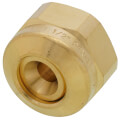
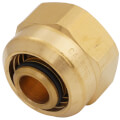
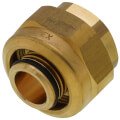

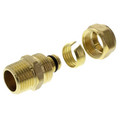
PEX-Al-PEX compression fitting assemblies join sections of PEX-aluminum-PEX composite tubing, a multi-layer tubing construction with an aluminum layer sandwiched between two PEX layers that resists the oxygen permeation and thermal expansion issues found in standard PEX. The compression design uses a nut, sleeve, and body that clamp mechanically onto the tubing rather than relying on a crimped or expanded connection, which lets a plumber assemble or disassemble the joint with hand tools alone. Radiant heat installers and hydronic contractors favor this tubing and fitting combination because the aluminum layer holds its shape better than plain PEX during installation, reducing the memory effect that causes standard PEX to spring back after being bent around a manifold or floor loop. Matching the fitting's size exactly to the tubing's outer diameter is what keeps the compression seal watertight under system pressure.
Subcategories
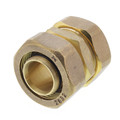
- PEX-Al-PEX Compression Couplings: Straight couplings join two lengths of PEX-Al-PEX tubing in-line, commonly used to extend a run or repair a damaged section without replacing the entire loop. A plumber tightens the compression nut against the sleeve to create the seal, and over-tightening can deform the tubing just as easily as under-tightening can leave it loose. Checking the joint for a proper seal after pressurizing the system is standard practice before closing up a wall or floor covering. Couplings need to match the exact tubing diameter in use on the job.
- PEX-Al-PEX Compression Elbows and Tees: Elbows and tees allow a PEX-Al-PEX run to change direction or branch off to serve an additional zone or fixture without relying on the tubing's own bend radius. Because the aluminum layer holds a bend shape well but doesn't tolerate a tight radius as gracefully as plain PEX in some cases, a fitting is often the more reliable choice at sharp direction changes near manifolds. Assembly follows the same compression method as straight couplings, with the nut and sleeve creating the seal against the fitting body. Confirming the fitting's branch size matches the connecting tubing avoids a flow restriction at the joint.
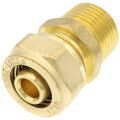
- PEX-Al-PEX Compression Manifold Adapters: Manifold adapters connect PEX-Al-PEX tubing directly to a radiant heat or hydronic manifold, translating the compression fitting's mechanical seal into the manifold's port connection. These adapters see repeated thermal cycling as the system heats and cools, which makes a properly torqued compression joint especially important at this connection point. A loose adapter at the manifold is a common source of a slow weep leak that's easy to miss until water staining shows up on a ceiling or subfloor below. Matching the adapter's thread pattern to the specific manifold brand in use is necessary for a proper connection.
Buying Guide
Specifying PEX-Al-PEX compression fitting assemblies starts with confirming the exact outer diameter and wall thickness of the tubing in use, since the compression nut and sleeve are sized precisely to a given tubing dimension and a mismatch prevents the joint from sealing properly under pressure. System type matters too: radiant floor heating, baseboard hydronic loops, and domestic hot water distribution all use PEX-Al-PEX tubing, but the fitting configuration needed, whether straight couplings, elbows, tees, or manifold adapters, depends on the specific layout being installed. Because the aluminum layer in this tubing resists the memory effect that causes plain PEX to spring back after bending, installers doing tight radius turns near manifolds sometimes still prefer a fitting over a forced bend, since it avoids stressing the tubing at a sharp angle. Thread pattern compatibility is an important detail when connecting PEX-Al-PEX Compression Fitting Assemblies to a manifold, since different manifold manufacturers use different port threading and an adapter that doesn't match won't seal regardless of how well the compression joint itself is assembled. Pressure testing every joint after assembly and before closing up walls, ceilings, or floor coverings is standard practice, since a compression fitting that looks properly tightened can still leak slowly if the sleeve wasn't seated evenly against the tubing. For repair work on an existing system, matching the replacement fitting to the original tubing's exact specifications, rather than assuming compatibility across different tubing brands, protects against a joint failure down the line.
Frequently Asked Questions
What makes PEX-Al-PEX tubing different from standard PEX?
PEX-Al-PEX has an aluminum layer sandwiched between two PEX layers, which resists oxygen permeation and holds its shape better after bending compared to plain PEX tubing.
How is a PEX-Al-PEX compression fitting assembled?
A nut and sleeve clamp mechanically onto the tubing against the fitting body, creating a watertight seal using hand tools rather than a crimping or expansion tool.
What commonly causes a compression fitting to leak?
An uneven or improperly seated sleeve is a frequent cause, along with over-tightening or under-tightening the compression nut relative to the tubing's exact diameter.
Can fittings from one manifold brand be used with another brand's adapters?
Not reliably. Manifold manufacturers often use different port thread patterns, so the adapter's threading needs to match the specific manifold in use.
Should every joint be pressure tested before closing up a wall or floor?
Yes. Testing every compression joint after assembly is standard practice, since a fitting that looks properly tightened can still develop a slow leak if the sleeve wasn't seated evenly.
