




Filters
SORT
Product Availability –
Size –
Review Score –
 --%3E %3Csvg version='1.1' id='Fill' xmlns='http://www.w3.org/2000/svg' xmlns:xlink='http://www.w3.org/1999/xlink' x='0px' y='0px' viewBox='0 0 100 100' enable-background='new 0 0 100 100' xml:space='preserve'%3E %3Cpath fill='%23F15C02' d='M79.44,0.95H20.56C9.78,0.95,0.95,9.78,0.95,20.56v58.87c0,10.79,8.82,19.61,19.61,19.61h58.87 c10.79,0,19.61-8.83,19.61-19.61V20.56C99.05,9.78,90.22,0.95,79.44,0.95z M65.38,58.24l9.38,29.58L49.69,69.78L24.5,87.82 l9.34-29.6L8.8,39.6l30.73-0.17c0,0,6.98-19.61,10-28.93c0.54,1.36,9.88,29.1,9.88,29.1H91.2L65.38,58.24z'/%3E %3C/svg%3E)
 --%3E %3Csvg version='1.1' id='With-RB' xmlns='http://www.w3.org/2000/svg' xmlns:xlink='http://www.w3.org/1999/xlink' x='0px' y='0px' viewBox='0 0 100 100' enable-background='new 0 0 100 100' xml:space='preserve'%3E %3Cpath fill='%23FBC8B4' d='M79.44,0.95H20.56C9.78,0.95,0.95,9.78,0.95,20.56v58.87c0,10.79,8.82,19.61,19.61,19.61h58.87 c10.79,0,19.61-8.83,19.61-19.61V20.56C99.05,9.78,90.22,0.95,79.44,0.95z M65.38,58.24l9.38,29.58L49.69,69.78L24.5,87.82 l9.34-29.6L8.8,39.6l30.73-0.17c0,0,6.98-19.61,10-28.93c0.54,1.36,9.88,29.1,9.88,29.1H91.2L65.38,58.24z'/%3E %3C/svg%3E)
Price Range –
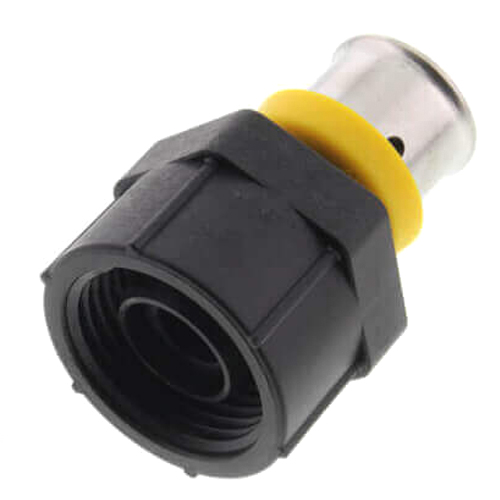
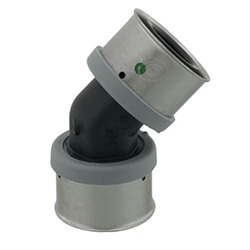
PEX Press Polymer Fittings





 --%3E %3Csvg version='1.1' id='No-RB' xmlns='http://www.w3.org/2000/svg' xmlns:xlink='http://www.w3.org/1999/xlink' x='0px' y='0px' viewBox='0 0 100 100' enable-background='new 0 0 100 100' xml:space='preserve'%3E %3Cpath fill='%23CECECE' d='M79.44,0.95H20.56C9.78,0.95,0.95,9.78,0.95,20.56v58.87c0,10.79,8.82,19.61,19.61,19.61h58.87 c10.79,0,19.61-8.83,19.61-19.61V20.56C99.05,9.78,90.22,0.95,79.44,0.95z M65.38,58.24l9.38,29.58L49.69,69.78L24.5,87.82 l9.34-29.6L8.8,39.6l30.73-0.17c0,0,6.98-19.61,10-28.93c0.54,1.36,9.88,29.1,9.88,29.1H91.2L65.38,58.24z'/%3E %3C/svg%3E)

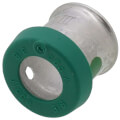
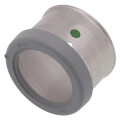
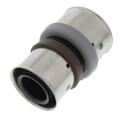
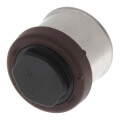
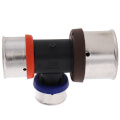

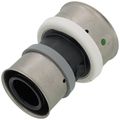

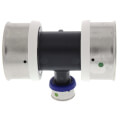
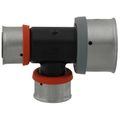


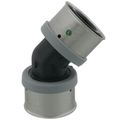
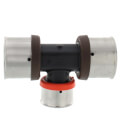
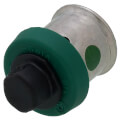


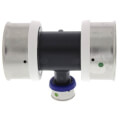
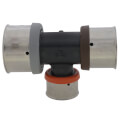
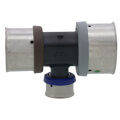
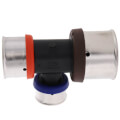
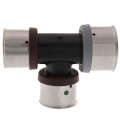
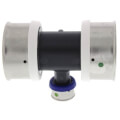
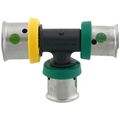
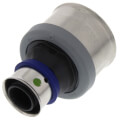


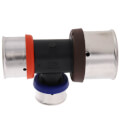
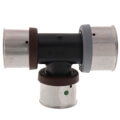
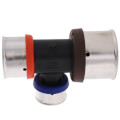


PEX press polymer fittings connect PEX tubing using a press tool and a stainless steel ring instead of crimp rings or solvent cement, giving contractors a fast, repeatable connection for potable water and radiant heating jobs. Polymer-bodied fittings offer a lighter, corrosion-resistant alternative to bronze press fittings at a similar installed cost, which matters on large residential or light commercial jobs where crew time adds up fast across dozens of connections. Systems like Viega's PureFlow line pair polymer fittings with the same press tool used for metal and copper transition fittings, so a contractor already equipped for ProPress work does not need a second tool for PEX runs. Connections can typically be pressure tested with air or water immediately after pressing, letting a crew move to the next room without waiting on a cure time. For plumbers working mixed copper and PEX systems, that tool compatibility often matters more than the fitting material itself.
Subcategories
- Straight Couplings: Straight couplings join two lengths of PEX tubing in the same size, commonly used for repairs or extending a run without cutting back to a fitting. They press in seconds with a compatible jaw, making them a common stock item on service trucks.
- Elbows and Tees: Elbows and tees route PEX around framing and branch off to fixtures without needing a soldered joint. Polymer bodies resist mineral buildup well in hard water areas. Sizes typically match common residential PEX diameters.
- Transition Fittings: Transition fittings connect PEX runs to copper, CPVC, or threaded pipe, a common need when tying new PEX work into an existing copper system. Some systems support pressing both sides of the transition with the same tool, cutting down on the number of connection types a plumber needs to solder or thread.
- Valves: Press-style ball valves and shutoffs let contractors add isolation points directly into a PEX run without a separate solder or threaded connection. They are commonly placed near fixtures and manifolds where a technician may need to isolate a single branch for repair.
Buying Guide
Selecting PEX press polymer fittings starts with confirming tool compatibility, since press fittings require a jaw sized to the fitting's diameter and, in some cases, brand-specific jaws. Contractors already equipped with a press tool for copper ProPress work should check whether that same tool accepts PEX jaws before buying a second tool for polymer fittings.
Polymer fittings are generally a lower-cost alternative to bronze press fittings, which matters on large residential developments or multi-unit buildings where hundreds of connections are made on a single job. Bronze fittings remain the more common choice in exposed or high-traffic mechanical rooms where added durability is worth the higher material cost.
PEX press polymer fittings suit both potable water distribution and radiant heating loops, so contractors should confirm the fitting's rated application matches the job, since not every fitting in a given line is rated for both uses. Checking the tubing type, whether PEX-A, PEX-B, or PEX-C, against the fitting's compatibility is also worth confirming before a large material order, since press systems are not universally interchangeable across tubing types.
For crews running mixed copper and PEX systems, standardizing on one press tool brand across both material types often saves more labor time than choosing fittings based on unit cost alone.
Frequently Asked Questions
Can PEX press polymer fittings use the same tool as copper press fittings?
Many systems, including Viega's PureFlow line, use the same press tool across PEX, copper, and transition fittings with a jaw sized to the fitting. Contractors should confirm jaw compatibility with their specific tool model before mixing fitting brands on a job.
Are polymer fittings rated for radiant heating systems?
Some PEX press polymer fitting systems are rated for radiant heating and snowmelt applications in addition to potable water. Contractors should check the specific product line's rated uses before specifying it for a radiant loop.
Do PEX press connections need to cure before pressure testing?
No, properly pressed connections in systems like Viega's PureFlow can typically be tested with air or water immediately after pressing. That lets a crew move on to the next section of a job without a waiting period.
What is the advantage of polymer fittings over bronze press fittings?
Polymer fittings are generally lighter and lower cost than bronze press fittings while covering many of the same applications. Bronze fittings still tend to be preferred in exposed mechanical rooms or high-traffic areas where added durability is a priority.
Do all PEX tubing types work with the same press fittings?
Not always. PEX-A, PEX-B, and PEX-C tubing can have different compatibility requirements depending on the fitting system, so contractors should confirm tubing type against the fitting manufacturer's specifications before ordering.
