



'/%3E%3C/svg%3E)
Hover image to zoom
 --%3E %3Csvg version='1.1' id='Fill' xmlns='http://www.w3.org/2000/svg' xmlns:xlink='http://www.w3.org/1999/xlink' x='0px' y='0px' viewBox='0 0 100 100' enable-background='new 0 0 100 100' xml:space='preserve'%3E %3Cpath fill='%23F15C02' d='M79.44,0.95H20.56C9.78,0.95,0.95,9.78,0.95,20.56v58.87c0,10.79,8.82,19.61,19.61,19.61h58.87 c10.79,0,19.61-8.83,19.61-19.61V20.56C99.05,9.78,90.22,0.95,79.44,0.95z M65.38,58.24l9.38,29.58L49.69,69.78L24.5,87.82 l9.34-29.6L8.8,39.6l30.73-0.17c0,0,6.98-19.61,10-28.93c0.54,1.36,9.88,29.1,9.88,29.1H91.2L65.38,58.24z'/%3E %3C/svg%3E)
Hover image to zoom
$10.75 each
BOX UP & SAVE 7%
$80.40 box of 8
$10.05 each

In Stock
Get 47 Mon, Jun 15

Order by today, receive Monday
Free Shipping On orders over $99
Easy Returns No restocking fee for 90 days
Description
–
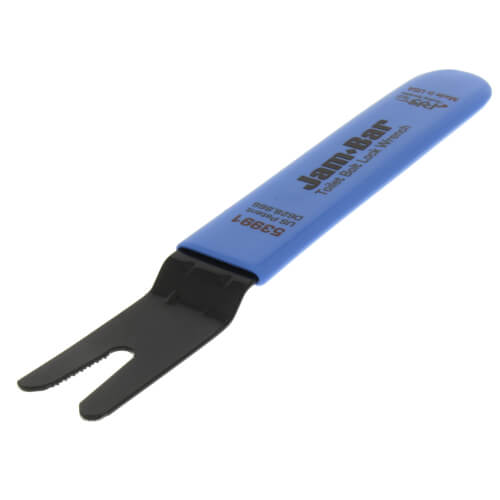
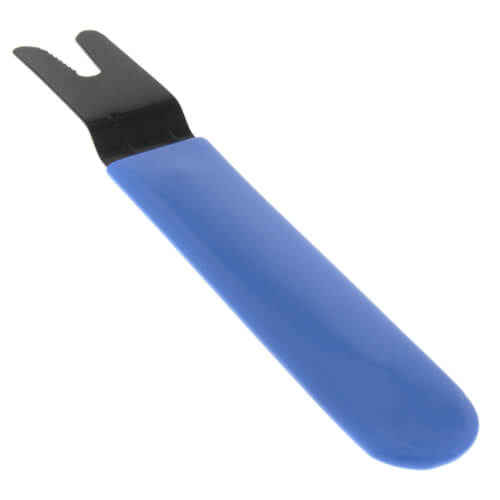
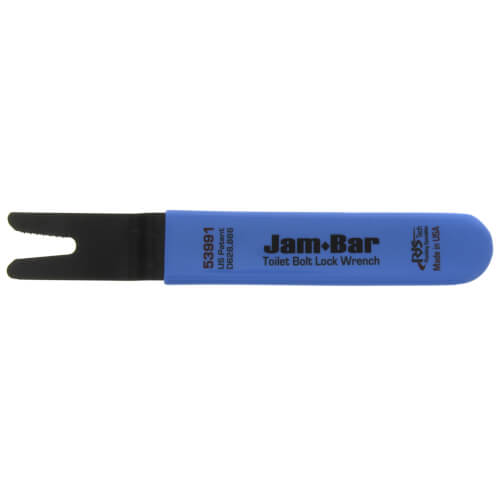
RJS Tech 53991 Jam-Bar Toilet Bolt Lock Wrench
A thin-blade specialty wrench used during toilet (and tank) removal to hold closet bolts in place so the nut can be removed without the bolt spinning.
Key Features:
Compatibility & Applications:
Installation & Operation Notes:
Maintenance & Troubleshooting:
User Reviews & Q&A Summary:
A thin-blade specialty wrench used during toilet (and tank) removal to hold closet bolts in place so the nut can be removed without the bolt spinning.
Key Features:
- Thin, flat blade designed to slip into narrow/tight spaces below the nut (manufacturer documentation)
- Patented "V" / Micro Tooth blade designed to lock onto the bolt and resist spinning (manufacturer documentation)
- Grips both 1/4" and 5/16" threaded toilet bolts (manufacturer documentation)
- Designed so the more the bolt tries to spin, the tighter the teeth grip (manufacturer documentation)
- High quality tool steel with an easy-grip handle (manufacturer documentation)
- Described as simplifying toilet and tank removal (manufacturer documentation)
Compatibility & Applications:
- Intended for use on toilet closet bolts in the 1/4" and 5/16" size range (manufacturer documentation)
- Must only be used where the manufacturer specifies this exact part number: 53991
Installation & Operation Notes:
- Intended for use by installers familiar with toilet removal and reset practices.
- Manufacturer use concept: insert the Jam-Bar below the nut so the teeth lock onto the bolt, then use a box wrench or similar tool to work the nut off while the bolt is held from spinning (manufacturer documentation).
- Refer to the toilet manufacturer's installation/service guidance for proper shutoff, draining, and safe removal/reset steps.
Maintenance & Troubleshooting:
- This is a service tool typically used when toilet bolt nuts are difficult to remove because bolts are corroded, damaged, or tend to spin in place (manufacturer documentation).
- If the nut still cannot be removed, follow standard plumbing service practices for seized hardware to avoid damaging the bowl, tank, or mounting surfaces (no additional diagnostic guidance is provided in the supplied sources).
User Reviews & Q&A Summary:
- Reviews commonly describe it as helpful for preventing bolt spin and making toilet removal easier in tight spaces.
- Many users mention it being especially useful when bolts are rusted/corroded or when bolt threads are damaged and a normal hold-back method is difficult.
- Critical feedback trends toward job-to-job variability - when access is extremely limited or hardware is severely seized, some users still report needing additional methods alongside the tool.
Specs
–
| Product Type: | Wrench |
|---|

Questions?
Speak with a real person who will go out of the way to help!
Call or text 888-757-4774
Monday – Thursday
8am–7:45pm
Friday
9am–7:45pm
Saturday – Sunday
9am–5:45pm
You May Also Need
Product Reviews
4.88 out of 17 reviews
100% would recommend this product
5 star
94%
4 star
0%
3 star
6%
2 star
0%
1 star
0%
Most Liked Positive Review
When you need it…
…you'll want to have it. I don't get to use this tool very often, but when I do, it really saves from having to cut off toilet bolts that just spin. No more risking hitting porcelain with a sawzall or trying to cut with a mini saw and pliers. Even ordered one for a friend to use.
VS
Most Liked Negative Review
 --%3E %3Csvg version='1.1' id='With-RB' xmlns='http://www.w3.org/2000/svg' xmlns:xlink='http://www.w3.org/1999/xlink' x='0px' y='0px' viewBox='0 0 100 100' enable-background='new 0 0 100 100' xml:space='preserve'%3E %3Cpath fill='%23FBC8B4' d='M79.44,0.95H20.56C9.78,0.95,0.95,9.78,0.95,20.56v58.87c0,10.79,8.82,19.61,19.61,19.61h58.87 c10.79,0,19.61-8.83,19.61-19.61V20.56C99.05,9.78,90.22,0.95,79.44,0.95z M65.38,58.24l9.38,29.58L49.69,69.78L24.5,87.82 l9.34-29.6L8.8,39.6l30.73-0.17c0,0,6.98-19.61,10-28.93c0.54,1.36,9.88,29.1,9.88,29.1H91.2L65.38,58.24z'/%3E %3C/svg%3E)
Helpful
This works well on brass but it will wear out with steel closet bolts
Showing 1-10 of 17 reviews
Great
Great gives you leverage too get stubborn bolts off toilet flange
Poop cleaner
Michigan
2 years ago
Verified Buyer
Was this review helpful to you?
Helpful
This works well on brass but it will wear out with steel closet bolts
Hodges
NJ
2 years ago
Was this review helpful to you?
Great tool!
I've got a couple of these and so does all my guys! Great item to have!!
Bubba
Oxford Ohio
2 years ago
Verified Buyer
Was this review helpful to you?
I would buy this again
Great tool to get the job done!
Lou
Boston ma
2 years ago
Verified Buyer
Was this review helpful to you?
Jam Bar!
Jam bar to the rescue, definitely need one of these in your tool bag!
Bubba
Ohio
3 years ago
Verified Buyer
Was this review helpful to you?
Must have tool for any plumber
WORKS GREAT. MUST HAVE TOOL FOR PLUMBERS
Ms plumbing
Pittsburgh pa
3 years ago
Verified Buyer
Was this review helpful to you?
When you need it…
…you'll want to have it. I don't get to use this tool very often, but when I do, it really saves from having to cut off toilet bolts that just spin. No more risking hitting porcelain with a sawzall or trying to cut with a mini saw and pliers. Even ordered one for a friend to use.
Daniel Smith
South Carolina
3 years ago
Verified Buyer
Was this review helpful to you?
I would definitely recommend this tool.
I was given this tool by my Supply House to, "try out". It works fantastic.. I've used it many times.
Kohler P&H
Sound Beach, N.Y.
4 years ago
Was this review helpful to you?
Better than pliers
This little tool comes I. Handy trying to remove the floor bolts on toilets. Works much better than using a pair of needle nose pliers.
Devoe056
South Carolina
4 years ago
Verified Buyer
Was this review helpful to you?
Yes I would
Great tool and a great price
Shaffer
Pickerington ohio
4 years ago
Verified Buyer
Was this review helpful to you?
Free Shipping
On orders over $99
We offer flexible shipping and scheduling options, up-to-date delivery estimates, and free ground shipping on any order over $99 to make sure your order gets to you on-time, for less.
Shipping PolicyEasy Returns
Returning items is as simple as 1-2-3
Ordered the wrong product? Item damaged in transit? Our 3-step process makes returning products easy – even up to a year after purchase – with no restocking fees on returns made within 90 days.
Return Policy