




Residential ERV Series


 --%3E %3Csvg version='1.1' id='No-RB' xmlns='http://www.w3.org/2000/svg' xmlns:xlink='http://www.w3.org/1999/xlink' x='0px' y='0px' viewBox='0 0 100 100' enable-background='new 0 0 100 100' xml:space='preserve'%3E %3Cpath fill='%23CECECE' d='M79.44,0.95H20.56C9.78,0.95,0.95,9.78,0.95,20.56v58.87c0,10.79,8.82,19.61,19.61,19.61h58.87 c10.79,0,19.61-8.83,19.61-19.61V20.56C99.05,9.78,90.22,0.95,79.44,0.95z M65.38,58.24l9.38,29.58L49.69,69.78L24.5,87.82 l9.34-29.6L8.8,39.6l30.73-0.17c0,0,6.98-19.61,10-28.93c0.54,1.36,9.88,29.1,9.88,29.1H91.2L65.38,58.24z'/%3E %3C/svg%3E)




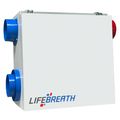
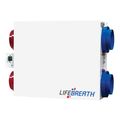
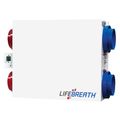




Residential ERV series units are energy recovery ventilators built to bring controlled fresh air into single-family and multifamily homes without wasting the heating or cooling energy already in the house. An ERV pulls in outdoor air and expels stale indoor air through a core that transfers both heat and humidity between the two streams, so incoming air arrives closer to indoor conditions than raw outside air would. That balanced exchange matters most in tightly sealed modern construction, where natural air leakage no longer clears out moisture, odors, and indoor pollutants on its own.
Contractors spec residential ERVs on new builds and retrofits alike to meet ventilation code requirements while keeping utility bills predictable. Homeowners notice the difference in reduced stuffiness, more consistent humidity levels, and fewer complaints about stale air in bedrooms and home offices. Because the equipment runs continuously at low airflow rather than cycling like a furnace fan, it plays a supporting role alongside the primary HVAC system rather than replacing it.
Subcategories
- Wall-Mounted ERVs: Wall-mounted ERVs install through an exterior wall and serve a single room or small addition without any ductwork. Installers favor them for bedroom additions, home offices, and renovations where running ducts back to a central unit isn't practical. Airflow on most residential wall units tops out in the range of a few hundred CFM, enough for one or two rooms rather than a whole house. They're a common fix when a homeowner complains about one specific room feeling stale or humid.
- Ducted ERVs: Ducted ERVs tie into a home's existing duct system or a dedicated fresh-air duct run, distributing balanced ventilation to multiple rooms from one central unit. Whole-house builds and larger retrofits rely on this style because a single unit can serve the entire conditioned space. Installers typically size these off total square footage and occupant count rather than a single room. They mount in an attic, basement, or mechanical closet, similar to a furnace or air handler.
- Compact and Point-of-Use ERVs: Compact ERVs are the smallest units in the lineup, sized for apartments, mobile homes, or single-room retrofits where space is tight. They mount in a ceiling cavity or small closet and move noticeably less air than full ducted systems. Property managers and multifamily contractors use them to meet per-unit ventilation requirements without a large mechanical footprint. Maintenance access is usually simpler since the unit sits close to the space it serves.
- ERV Controls and Accessories: Controls and accessories cover the wall switches, timers, humidity sensors, and remote controllers that let occupants or a building automation system adjust ventilation rates. Many residential ERVs support a boost mode that temporarily increases airflow during cooking, showering, or a full house of guests. Filters and duct accessories in this group keep incoming air clean and protect the core from debris. Choosing compatible controls up front avoids a mismatched retrofit later.
Buying Guide
Start sizing a residential ERV by square footage and occupant count, not by matching the tonnage of the existing furnace or air conditioner. Most ventilation codes calculate a required continuous airflow rate based on floor area plus a per-bedroom allowance, and that number should drive unit selection before any other factor. Oversizing wastes energy moving more air than the code or the home actually needs, while undersizing leaves the home under-ventilated even though the equipment is running.
Decide between a wall-mounted, ducted, or compact unit based on the scope of the project. A single problem room calls for a wall-mounted unit installed directly through the exterior wall. A whole-house new build or major renovation is a better fit for a ducted system tied into central ductwork, since it can balance airflow across every room from one location.
Climate matters for core selection and defrost strategy. Homes in cold climates need a unit with a defrost cycle or frost control feature to keep the core from icing over during sustained sub-freezing weather, which would otherwise choke off airflow and trip a fault code. Warmer, humid climates put more emphasis on the moisture transfer performance of the core itself.
Factor in filter access and maintenance before finalizing a location. An ERV mounted somewhere hard to reach discourages the regular filter changes and periodic core cleaning that keep airflow and energy recovery performance where they should be. Placing the unit near an attic hatch, basement stair, or accessible mechanical closet pays off over years of ownership.
Finally, confirm the unit's controls match how the household or building actually wants to operate it. A simple on/off wall switch suits a small addition, while a whole-house system benefits from a timer or humidity-based control that automatically boosts ventilation when it's needed and backs off overnight.
Frequently Asked Questions
What's the difference between an ERV and an HRV?
An ERV transfers both heat and moisture between incoming and outgoing air streams, while an HRV transfers heat only. That moisture transfer makes ERVs the more common choice in climates with humid summers or dry winters, since they help keep indoor humidity in a comfortable range instead of just managing temperature.
How is a residential ERV sized for a home?
Sizing starts with a ventilation calculation based on square footage and number of bedrooms, following the airflow rate required by the applicable ventilation code. That target CFM, not the tonnage of the furnace or air conditioner, determines which ERV model fits the home.
Do ERVs work in cold climates?
Yes, but the unit needs a defrost cycle or frost control feature designed for sustained sub-freezing temperatures. Without it, the core can ice over and restrict airflow, so cold-climate installations should always confirm the defrost strategy before purchase.
How often should ERV filters be changed?
Most residential ERVs call for a filter check every one to three months, with the exact interval depending on the model and local air quality. Homes near construction, wildfire smoke, or heavy pollen should check filters on the shorter end of that range.
Can an ERV be added to a home that already has central heating and cooling?
Yes, a ducted ERV can tie into existing ductwork or run its own dedicated fresh-air ducts alongside the current system. The ERV handles ventilation independently, so it works alongside the furnace or air handler rather than replacing any part of it.
