




Filters
SORT
Product Availability –
Product Type –
Width (Inches) –
Finish –
Wattage –
BTU –
Review Score –
 --%3E %3Csvg version='1.1' id='Fill' xmlns='http://www.w3.org/2000/svg' xmlns:xlink='http://www.w3.org/1999/xlink' x='0px' y='0px' viewBox='0 0 100 100' enable-background='new 0 0 100 100' xml:space='preserve'%3E %3Cpath fill='%23F15C02' d='M79.44,0.95H20.56C9.78,0.95,0.95,9.78,0.95,20.56v58.87c0,10.79,8.82,19.61,19.61,19.61h58.87 c10.79,0,19.61-8.83,19.61-19.61V20.56C99.05,9.78,90.22,0.95,79.44,0.95z M65.38,58.24l9.38,29.58L49.69,69.78L24.5,87.82 l9.34-29.6L8.8,39.6l30.73-0.17c0,0,6.98-19.61,10-28.93c0.54,1.36,9.88,29.1,9.88,29.1H91.2L65.38,58.24z'/%3E %3C/svg%3E)
 --%3E %3Csvg version='1.1' id='With-RB' xmlns='http://www.w3.org/2000/svg' xmlns:xlink='http://www.w3.org/1999/xlink' x='0px' y='0px' viewBox='0 0 100 100' enable-background='new 0 0 100 100' xml:space='preserve'%3E %3Cpath fill='%23FBC8B4' d='M79.44,0.95H20.56C9.78,0.95,0.95,9.78,0.95,20.56v58.87c0,10.79,8.82,19.61,19.61,19.61h58.87 c10.79,0,19.61-8.83,19.61-19.61V20.56C99.05,9.78,90.22,0.95,79.44,0.95z M65.38,58.24l9.38,29.58L49.69,69.78L24.5,87.82 l9.34-29.6L8.8,39.6l30.73-0.17c0,0,6.98-19.61,10-28.93c0.54,1.36,9.88,29.1,9.88,29.1H91.2L65.38,58.24z'/%3E %3C/svg%3E)
Price Range –
Runtal Towel Radiators

 --%3E %3Csvg version='1.1' id='No-RB' xmlns='http://www.w3.org/2000/svg' xmlns:xlink='http://www.w3.org/1999/xlink' x='0px' y='0px' viewBox='0 0 100 100' enable-background='new 0 0 100 100' xml:space='preserve'%3E %3Cpath fill='%23CECECE' d='M79.44,0.95H20.56C9.78,0.95,0.95,9.78,0.95,20.56v58.87c0,10.79,8.82,19.61,19.61,19.61h58.87 c10.79,0,19.61-8.83,19.61-19.61V20.56C99.05,9.78,90.22,0.95,79.44,0.95z M65.38,58.24l9.38,29.58L49.69,69.78L24.5,87.82 l9.34-29.6L8.8,39.6l30.73-0.17c0,0,6.98-19.61,10-28.93c0.54,1.36,9.88,29.1,9.88,29.1H91.2L65.38,58.24z'/%3E %3C/svg%3E)

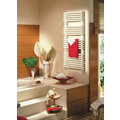



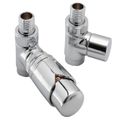






Runtal towel radiators are hydronic and electric heating fixtures designed to warm a bathroom while also drying and warming towels hung on their integrated bars or rungs. Runtal builds its towel radiators from steel, and the line is available in a hydronic configuration that ties into a home's existing hot water heating system, as well as an electric configuration that operates as a standalone unit without a boiler connection. Because a towel radiator serves both a comfort heating function and a towel-drying function, sizing and placement typically account for the bathroom's total heat loss as well as convenient reach for hanging towels near a shower or tub. Finish options across the line allow a towel radiator to match existing bathroom fixtures, and hydronic models can typically be piped into a system running off the same boiler that serves the rest of the home's heating.
Subcategories
- Hydronic Runtal Towel Radiators: Hydronic units connect to an existing hot water heating system and heat using the home's boiler. They suit a bathroom with nearby supply and return piping already in place.
- Electric Runtal Towel Radiators: Electric units operate as standalone fixtures that plug in or hardwire without needing a boiler connection. They suit a bathroom or addition without nearby hydronic piping.
- Valves and Accessories: Valves, connectors, and mounting hardware complete the installation and give control over a Runtal towel radiator's water flow or output. Confirming mounting dimensions against the bathroom layout avoids a fit issue during installation.
Buying Guide
Choosing between a hydronic and an electric Runtal towel radiator starts with what is already available in the bathroom. A home with an existing hot water heating system and nearby supply and return piping is generally well suited to a hydronic towel radiator, since it can tie into the boiler already heating the rest of the house. A bathroom without nearby hydronic piping, or a room on a separate zone such as an addition, often works better with an electric unit that only needs an appropriate electrical circuit.
Sizing follows next, based on the bathroom's heat loss and the desired towel-warming capacity. A larger bathroom or one with significant window area generally needs a Runtal towel radiator with more output than a small, well-insulated powder room, and undersizing the unit leaves the room feeling cool even while it warms towels adequately.
Finish and mounting style round out the decision. Runtal offers its towel radiators in multiple finishes to coordinate with existing fixtures, and confirming the mounting dimensions and wall bracket requirements against the specific bathroom layout before purchase avoids a fit issue during installation.
Frequently Asked Questions
What is the difference between a hydronic and an electric Runtal towel radiator?
A hydronic Runtal towel radiator connects to an existing hot water heating system and uses the home's boiler as its heat source, while an electric unit operates independently and only needs an appropriate electrical circuit. Choosing between the two typically comes down to what piping or wiring is already available in the bathroom.
How do I size a Runtal towel radiator for a bathroom?
Sizing depends on the bathroom's overall heat loss, which is influenced by square footage, window area, and insulation, as well as the desired towel-warming capacity. A larger or less insulated bathroom generally needs a unit with more heat output than a small, well-insulated space.
Can a hydronic Runtal towel radiator be added to an existing heating system?
Yes, a hydronic Runtal towel radiator can typically be piped into an existing hot water heating system as long as the system has adequate capacity and accessible supply and return piping nearby. Confirming the system's available capacity before adding a radiator helps avoid reducing performance elsewhere in the home.
Do electric Runtal towel radiators need a dedicated circuit?
Electrical requirements vary by model, so checking the specific unit's voltage and amperage draw against local electrical code and the bathroom's existing circuit capacity is a necessary step before installation. A dedicated circuit is common for a larger unit, while a smaller one may share an existing circuit if code and capacity allow.
What finish options are available for Runtal towel radiators?
Runtal offers its towel radiators in multiple finish options intended to coordinate with existing bathroom fixtures and hardware. Reviewing the available finishes against the bathroom's existing fixtures before ordering helps keep the finished look consistent.
