




Filters
SORT
Product Availability –
Connection Size –
Connection Type –
Used With –
Review Score –
 --%3E %3Csvg version='1.1' id='Fill' xmlns='http://www.w3.org/2000/svg' xmlns:xlink='http://www.w3.org/1999/xlink' x='0px' y='0px' viewBox='0 0 100 100' enable-background='new 0 0 100 100' xml:space='preserve'%3E %3Cpath fill='%23F15C02' d='M79.44,0.95H20.56C9.78,0.95,0.95,9.78,0.95,20.56v58.87c0,10.79,8.82,19.61,19.61,19.61h58.87 c10.79,0,19.61-8.83,19.61-19.61V20.56C99.05,9.78,90.22,0.95,79.44,0.95z M65.38,58.24l9.38,29.58L49.69,69.78L24.5,87.82 l9.34-29.6L8.8,39.6l30.73-0.17c0,0,6.98-19.61,10-28.93c0.54,1.36,9.88,29.1,9.88,29.1H91.2L65.38,58.24z'/%3E %3C/svg%3E)
Price Range –
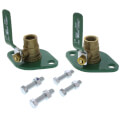
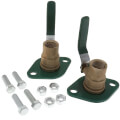
Taco Shut-Off Freedom Swivel Isolation Valve Flanges



 --%3E %3Csvg version='1.1' id='Half' xmlns='http://www.w3.org/2000/svg' xmlns:xlink='http://www.w3.org/1999/xlink' x='0px' y='0px' viewBox='0 0 100 100' enable-background='new 0 0 100 100' xml:space='preserve'%3E %3Cg%3E %3Cpath fill='%23F15C02' d='M30.05,70.23l3.79-12.01L8.8,39.6l30.73-0.17c0,0,6.98-19.61,10-28.93c0.54,1.36,9.88,29.1,9.88,29.1h1.58 L93.71,7.18c-3.58-3.82-8.66-6.23-14.28-6.23H20.56C9.78,0.95,0.95,9.78,0.95,20.56v58.87c0,5.41,2.22,10.32,5.79,13.88 L30.05,70.23z'/%3E %3C/g%3E %3Cpath fill='%23FBC8B4' d='M93.71,7.18L60.98,39.6H91.2L65.38,58.24l9.38,29.58L49.69,69.78L24.5,87.82l5.55-17.59L6.75,93.32 c3.55,3.54,8.44,5.73,13.82,5.73h58.87c10.79,0,19.61-8.83,19.61-19.61V20.56C99.05,15.4,97.01,10.69,93.71,7.18z'/%3E %3C/svg%3E)




 --%3E %3Csvg version='1.1' id='No-RB' xmlns='http://www.w3.org/2000/svg' xmlns:xlink='http://www.w3.org/1999/xlink' x='0px' y='0px' viewBox='0 0 100 100' enable-background='new 0 0 100 100' xml:space='preserve'%3E %3Cpath fill='%23CECECE' d='M79.44,0.95H20.56C9.78,0.95,0.95,9.78,0.95,20.56v58.87c0,10.79,8.82,19.61,19.61,19.61h58.87 c10.79,0,19.61-8.83,19.61-19.61V20.56C99.05,9.78,90.22,0.95,79.44,0.95z M65.38,58.24l9.38,29.58L49.69,69.78L24.5,87.82 l9.34-29.6L8.8,39.6l30.73-0.17c0,0,6.98-19.61,10-28.93c0.54,1.36,9.88,29.1,9.88,29.1H91.2L65.38,58.24z'/%3E %3C/svg%3E)
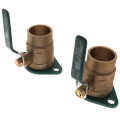


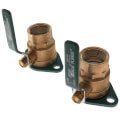
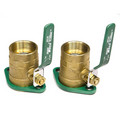
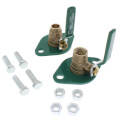
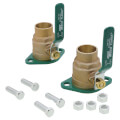
Taco Shut-Off Freedom Swivel Isolation Valve Flanges let a technician isolate a circulator pump for service without draining the rest of the hydronic system, combining a full-port shut-off ball valve with a companion flange in a single fitting. Installers mount one on each side of a circulator during initial installation, even when the pump is brand new and working fine, specifically so a future service call does not turn into a full system drain-down. A single quarter-turn of the lever handle shuts off flow on that branch, and the swivel design lets the flange rotate into an accessible position regardless of how tight the piping layout is around the pump. These flanges fit Taco's "00" series circulators and carry a rating up to 150 psi and 240 degrees Fahrenheit, which covers the working conditions of most residential and light commercial hydronic systems. Contractors who skip this fitting on a new pump install are the ones who end up draining a whole zone just to swap a failed circulator years later.
Subcategories
- Bronze Freedom Flanges: Bronze construction gives the flange strong resistance to corrosion in systems using standard water-based heating fluid, which is why it remains a common material choice for residential hydronic installations. Technicians favor bronze where the piping system itself is also bronze or brass, keeping the metals compatible and reducing the risk of galvanic corrosion at the joint. The material holds up under the pressure and temperature rating typical of this flange style across long service life. It is a standard default choice absent a specific reason to select cast iron or stainless steel instead.
- Cast Iron Freedom Flanges: Cast iron flanges are typically selected to match an existing cast iron piping system or circulator housing, keeping consistent materials across the connection point. They see common use in older hydronic systems where the rest of the near-boiler piping is already cast iron. Technicians should confirm the circulator's flange pattern matches before ordering, since not every pump variant accepts every material option. This option is common on boiler replacement jobs where surrounding cast iron piping remains in place.
- Stainless Steel Freedom Flanges: Stainless steel flanges offer the strongest corrosion resistance of the standard material options, making them a common choice in systems using glycol or other additives that can be harder on softer metals over time. Technicians installing a flange in a mechanical room with high humidity or where the piping will not be easily accessible for years also lean toward stainless for its longevity. The material carries a higher cost than bronze or cast iron alternatives. It is most often specified where water chemistry or environmental conditions call for the extra durability.
- Press and Sweat Connection Options: Freedom flanges are available in press, sweat, and threaded NPT connection styles, letting a contractor match the fitting to whichever joining method the rest of the job already uses. Press connections speed up installation since they avoid an open flame near finished spaces, which matters on occupied-building retrofits. Sweat connections remain the traditional choice on new construction where torch work is already part of the routine. Threaded NPT connections give the most straightforward field replacement option when swapping into existing threaded piping.
Buying Guide
Specifying the right isolation flange for a circulator starts with confirming the pump model, since Taco Shut-Off Freedom Swivel Isolation Valve Flanges are sized and configured to fit specific circulator series, most commonly the "00" line, and an incompatible flange simply will not seat against the pump housing. Material selection comes next: bronze is the standard default for residential systems running plain water-based heating fluid, cast iron makes sense when matching existing cast iron near-boiler piping, and stainless steel is worth the added cost in systems using glycol or in mechanical rooms where long-term corrosion resistance outweighs upfront price. Connection type should match how the rest of the job is being run, with press fittings speeding up installation on occupied-building retrofits where open flame is a concern, sweat connections fitting naturally into new-construction jobs already using torch work, and threaded NPT connections offering the simplest swap into existing threaded piping. Pressure and temperature ratings, up to 150 psi and 240 degrees Fahrenheit on the standard flange line, cover the operating conditions of nearly every residential and light commercial hydronic system, so rating is rarely the deciding factor compared to material and connection type. Contractors installing a new circulator should treat the isolation flange as a standard line item on every job rather than an optional upgrade, since the labor saved on the first future service call typically outweighs the small added cost at installation.
Frequently Asked Questions
What does a Freedom Flange actually do?
It combines a full-port shut-off ball valve with a companion flange so a technician can isolate a circulator pump and remove it for service without draining the rest of the system. A single quarter-turn of the lever handle shuts off flow to that branch. It is typically installed in pairs, one on each side of the pump.
Which circulators are Taco Freedom Flanges compatible with?
The standard Freedom Flange line fits Taco's "00" series circulators. Technicians should confirm the specific pump model and flange pattern before ordering to make sure the flange seats correctly against the pump housing. Not every circulator variant uses the same flange pattern.
What is the pressure and temperature rating on these flanges?
The standard Freedom Flange is rated up to 150 psi and 240 degrees Fahrenheit, covering the operating range of most residential and light commercial hydronic heating systems. Contractors working on a system outside that range should confirm the specific flange rating before installation. Ratings can vary slightly across material and connection variants.
Should a Freedom Flange be installed even if the circulator is new?
Yes, installing the flange at the same time as a new circulator means a future service call will not require draining the system to remove the pump. Retrofitting a flange after the fact on an already-installed pump takes more labor than including it during the original installation. Many contractors treat it as a standard part of any circulator installation rather than an optional add-on.
What is the difference between press, sweat, and threaded connection options?
Press connections join without an open flame, useful on occupied-building retrofits. Sweat connections use standard torch and solder work common on new construction. Threaded NPT connections thread directly onto existing threaded piping, often the simplest option for a straight swap.
