



Filters
SORT
Product Availability –
Size –
Port Type –
Review Score –
 --%3E %3Csvg version='1.1' id='Fill' xmlns='http://www.w3.org/2000/svg' xmlns:xlink='http://www.w3.org/1999/xlink' x='0px' y='0px' viewBox='0 0 100 100' enable-background='new 0 0 100 100' xml:space='preserve'%3E %3Cpath fill='%23F15C02' d='M79.44,0.95H20.56C9.78,0.95,0.95,9.78,0.95,20.56v58.87c0,10.79,8.82,19.61,19.61,19.61h58.87 c10.79,0,19.61-8.83,19.61-19.61V20.56C99.05,9.78,90.22,0.95,79.44,0.95z M65.38,58.24l9.38,29.58L49.69,69.78L24.5,87.82 l9.34-29.6L8.8,39.6l30.73-0.17c0,0,6.98-19.61,10-28.93c0.54,1.36,9.88,29.1,9.88,29.1H91.2L65.38,58.24z'/%3E %3C/svg%3E)
Price Range –
Viega ProPress Ball Valves

 --%3E %3Csvg version='1.1' id='No-RB' xmlns='http://www.w3.org/2000/svg' xmlns:xlink='http://www.w3.org/1999/xlink' x='0px' y='0px' viewBox='0 0 100 100' enable-background='new 0 0 100 100' xml:space='preserve'%3E %3Cpath fill='%23CECECE' d='M79.44,0.95H20.56C9.78,0.95,0.95,9.78,0.95,20.56v58.87c0,10.79,8.82,19.61,19.61,19.61h58.87 c10.79,0,19.61-8.83,19.61-19.61V20.56C99.05,9.78,90.22,0.95,79.44,0.95z M65.38,58.24l9.38,29.58L49.69,69.78L24.5,87.82 l9.34-29.6L8.8,39.6l30.73-0.17c0,0,6.98-19.61,10-28.93c0.54,1.36,9.88,29.1,9.88,29.1H91.2L65.38,58.24z'/%3E %3C/svg%3E)


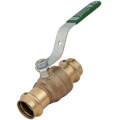

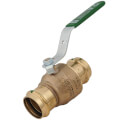
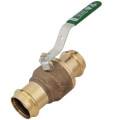
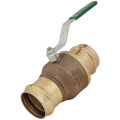
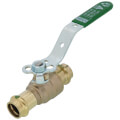
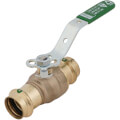
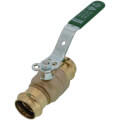


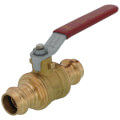
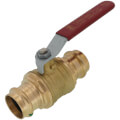
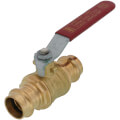
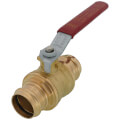

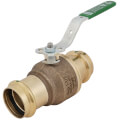
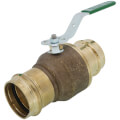
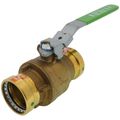

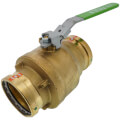



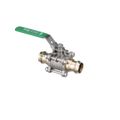
Viega ProPress ball valves are full-port shutoff valves designed to join with copper tubing through a cold press connection rather than soldering or threading. A pressing tool compresses the fitting's stainless steel grip ring and EPDM or FKM sealing element around the tube, creating a leak-tight joint without a torch, flux, or open flame. Installers favor the method on job sites where hot work permits are restrictive or where nearby materials make soldering risky. A visual indicator built into the valve, Viega's Smart Connect feature, reveals whether a joint was pressed, helping installers and inspectors catch unpressed connections before a system is pressurized. Contractors specify these valves for potable water, hydronic heating, and other closed-loop copper systems where a reliable, repeatable seal matters as much as speed. Because the valve body and connection ends share the same press profile as other ProPress fittings, they connect directly into an existing ProPress piping run without adapters.
Subcategories
- Standard Port Ball Valves: Standard full-port ProPress ball valves handle routine shutoff duty on copper water and hydronic lines, giving the same inside diameter as the connected tubing so flow is not restricted at the valve. Plumbers use them at fixture shutoffs, zone isolation points, and anywhere a line needs a dedicated on/off point without reducing pressure. The press ends on both sides let installers set the valve in line with the same tool used for the surrounding fittings. A quarter-turn handle gives a clear visual cue of open or closed position from across a mechanical room.
- Ball Valves with Drain/Waste Ports: Ball valves with an integral drain port let contractors isolate and empty a section of piping in a single fitting, which is useful ahead of seasonal shutdowns or before cutting into a line for repair. A small hose-thread outlet on the valve body accepts a standard drain hose or cap. Hydronic heating installers rely on this style at boiler feed and return points where periodic draining is part of routine service. Having the drain built into the valve avoids adding a separate tee and fitting to the joint.
- Ball Valves with Sweat or Threaded Tail Pieces: Transition-style ProPress ball valves pair one press end with a threaded or sweat connection, giving installers a bridge between a pressed copper run and equipment or fittings that use another connection method. Mechanical contractors use them where a valve lands next to a water heater, pump, or piece of equipment with a threaded port. The threaded end still requires standard pipe dope or tape, while the press end goes together with the same tool and technique as the rest of the run. The mixed-connection design cuts down on the number of separate adapters needed at a transition point.
- Large Diameter ProPress Ball Valves: Larger ProPress ball valves extend the same press-connection method to bigger copper mains, serving commercial risers, mechanical room headers, and other higher-flow applications. Contractors on multi-family and light commercial jobs use them to keep a full press system running from the main all the way to individual branch lines. Installing a large valve still uses a pressing tool, though bigger jaws are needed to match the increased diameter. Keeping the same connection method across pipe sizes lets a crew standardize on one pressing tool for both small branch lines and larger mains.
Buying Guide
Choosing the right valve from Viega's ProPress ball valve lineup starts with matching the port style to the job. A straightforward isolation point on a water or hydronic line calls for a standard full-port valve, while a boiler feed, chiller loop, or any location needing periodic draining benefits from a valve with a built-in drain port instead of adding a separate fitting. Jobs that transition from pressed copper to threaded equipment connections, such as a water heater or pump, need a valve with one press end and one threaded or sweat tail piece rather than a straight two-port valve.
Pipe size drives the next decision. Viega ProPress Ball Valves are available across a range of diameters, so a residential branch line and a commercial riser call for different valve sizes even though the connection method stays the same. Confirming the pressing tool and jaw set on hand match the valve's press profile before ordering avoids a mismatched tool trip back to the supply house.
Material compatibility also matters: EPDM sealing elements suit most potable water and hydronic systems, while FKM elements handle a wider range of chemicals and higher temperatures found in some commercial and process piping. Reviewing the application, whether domestic water, hydronic heat, or a specialty fluid line, before selecting the sealing element helps avoid a callback for a valve that degrades under the wrong chemistry.
Frequently Asked Questions
Do Viega ProPress ball valves need a special tool to install?
Yes. Installers press these valves with the same battery-powered pressing tool and jaw set used for other ProPress copper fittings, sized to match the valve's diameter. No torch, solder, or flux is needed to make the connection. Confirming jaw compatibility before starting a job avoids delays mid-installation.
Can a ProPress ball valve be disassembled for service after installation?
The valve body itself is not designed to be taken apart for field service once pressed in place. Because the valve is pressed permanently onto the pipe, any internal issue typically means cutting the valve out and pressing in a replacement rather than repairing it in place. Routine operation, such as opening and closing the handle, does not require disassembly.
How is a pressed connection different from a soldered one?
A pressed joint relies on a mechanical crimp around a stainless steel grip ring and an elastomer seal, while a soldered joint relies on melted solder filling the gap between pipe and fitting. Pressing requires no open flame, which shortens installation time and reduces fire-watch requirements on some job sites. Both methods are used throughout copper piping systems, often on the same job depending on location and code requirements.
What is the Smart Connect feature on these valves?
Smart Connect is Viega's visual indicator built into the valve and fitting line that shows whether a joint has actually been pressed. An unpressed connection leaks or shows a visible gap when the system is pressurized, helping installers and inspectors catch a missed press before startup. It functions as a built-in quality check during rough-in and inspection.
Are these valves suitable for both potable water and hydronic heating systems?
Yes, depending on the sealing element selected. EPDM-sealed valves are commonly used in potable water and standard hydronic heating applications, while FKM-sealed versions handle a broader range of fluids and higher temperatures. Confirming the sealing material matches the system's fluid and temperature range before installation is a standard part of specifying the correct valve.
