




Filters
SORT
Product Availability –
Used With –
Review Score –
 --%3E %3Csvg version='1.1' id='Fill' xmlns='http://www.w3.org/2000/svg' xmlns:xlink='http://www.w3.org/1999/xlink' x='0px' y='0px' viewBox='0 0 100 100' enable-background='new 0 0 100 100' xml:space='preserve'%3E %3Cpath fill='%23F15C02' d='M79.44,0.95H20.56C9.78,0.95,0.95,9.78,0.95,20.56v58.87c0,10.79,8.82,19.61,19.61,19.61h58.87 c10.79,0,19.61-8.83,19.61-19.61V20.56C99.05,9.78,90.22,0.95,79.44,0.95z M65.38,58.24l9.38,29.58L49.69,69.78L24.5,87.82 l9.34-29.6L8.8,39.6l30.73-0.17c0,0,6.98-19.61,10-28.93c0.54,1.36,9.88,29.1,9.88,29.1H91.2L65.38,58.24z'/%3E %3C/svg%3E)
 --%3E %3Csvg version='1.1' id='With-RB' xmlns='http://www.w3.org/2000/svg' xmlns:xlink='http://www.w3.org/1999/xlink' x='0px' y='0px' viewBox='0 0 100 100' enable-background='new 0 0 100 100' xml:space='preserve'%3E %3Cpath fill='%23FBC8B4' d='M79.44,0.95H20.56C9.78,0.95,0.95,9.78,0.95,20.56v58.87c0,10.79,8.82,19.61,19.61,19.61h58.87 c10.79,0,19.61-8.83,19.61-19.61V20.56C99.05,9.78,90.22,0.95,79.44,0.95z M65.38,58.24l9.38,29.58L49.69,69.78L24.5,87.82 l9.34-29.6L8.8,39.6l30.73-0.17c0,0,6.98-19.61,10-28.93c0.54,1.36,9.88,29.1,9.88,29.1H91.2L65.38,58.24z'/%3E %3C/svg%3E)
Price Range –
Weil McLain EG Boiler Parts



 --%3E %3Csvg version='1.1' id='Half' xmlns='http://www.w3.org/2000/svg' xmlns:xlink='http://www.w3.org/1999/xlink' x='0px' y='0px' viewBox='0 0 100 100' enable-background='new 0 0 100 100' xml:space='preserve'%3E %3Cg%3E %3Cpath fill='%23F15C02' d='M30.05,70.23l3.79-12.01L8.8,39.6l30.73-0.17c0,0,6.98-19.61,10-28.93c0.54,1.36,9.88,29.1,9.88,29.1h1.58 L93.71,7.18c-3.58-3.82-8.66-6.23-14.28-6.23H20.56C9.78,0.95,0.95,9.78,0.95,20.56v58.87c0,5.41,2.22,10.32,5.79,13.88 L30.05,70.23z'/%3E %3C/g%3E %3Cpath fill='%23FBC8B4' d='M93.71,7.18L60.98,39.6H91.2L65.38,58.24l9.38,29.58L49.69,69.78L24.5,87.82l5.55-17.59L6.75,93.32 c3.55,3.54,8.44,5.73,13.82,5.73h58.87c10.79,0,19.61-8.83,19.61-19.61V20.56C99.05,15.4,97.01,10.69,93.71,7.18z'/%3E %3C/svg%3E)





 --%3E %3Csvg version='1.1' id='No-RB' xmlns='http://www.w3.org/2000/svg' xmlns:xlink='http://www.w3.org/1999/xlink' x='0px' y='0px' viewBox='0 0 100 100' enable-background='new 0 0 100 100' xml:space='preserve'%3E %3Cpath fill='%23CECECE' d='M79.44,0.95H20.56C9.78,0.95,0.95,9.78,0.95,20.56v58.87c0,10.79,8.82,19.61,19.61,19.61h58.87 c10.79,0,19.61-8.83,19.61-19.61V20.56C99.05,9.78,90.22,0.95,79.44,0.95z M65.38,58.24l9.38,29.58L49.69,69.78L24.5,87.82 l9.34-29.6L8.8,39.6l30.73-0.17c0,0,6.98-19.61,10-28.93c0.54,1.36,9.88,29.1,9.88,29.1H91.2L65.38,58.24z'/%3E %3C/svg%3E)

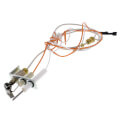

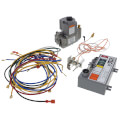





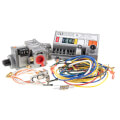


Weil McLain EG Boiler Parts cover the replacement components used to service and maintain Weil-McLain's EG series cast iron boilers, a line widely installed in residential and light commercial hydronic heating systems. Included parts range across burners, heat exchanger sections, gaskets, controls, and flue components sized specifically for the EG boiler's cast iron block design. Contractors turn to this category when repairing an aging boiler rather than replacing the entire unit, since cast iron sections can often be rebuilt with new gaskets and burner assemblies instead of a full system swap. Matching the correct part to the exact EG model and section count keeps a repair reliable and avoids leaks or combustion problems down the line. Because Weil-McLain has produced several EG variants over the years, verifying the boiler's model and serial number before ordering helps confirm the replacement burner, gasket, or control fits without modification. Stocking these parts locally shortens downtime for heating calls during colder months when hydronic systems see the heaviest use.
Subcategories
- Burners & Burner Parts: Service technicians replace burner assemblies and individual burner components when an EG boiler's combustion pattern becomes uneven or a burner shows physical wear. Cast iron burners sit beneath the boiler's heat exchanger sections and mix fuel and air for combustion. Replacing a full burner tray or just the orifices and igniter components depends on the extent of wear the technician finds during inspection. Correct burner alignment keeps combustion efficient and reduces soot buildup inside the sections.
- Sections & Section Kits: Cast iron sections form the core heat exchanger of an EG boiler, and contractors replace individual cracked or corroded sections rather than the entire boiler when the rest of the block remains sound. Section kits include the gaskets and tie rods needed to reassemble the block after a section swap. Technicians match section count and boiler model carefully, since sections from a different EG size will not seal properly. A section-level repair like this can add years of service life without a full boiler replacement.
- Gaskets & Seals: Gaskets seal the joints between cast iron sections and around access covers, and they wear out faster than the metal components they seal. Contractors replace section gaskets, header gaskets, and cleanout gaskets whenever they disassemble a boiler for section work or annual maintenance. High-temperature graphite or fiber gasket material handles the boiler's operating temperatures without breaking down. Skipping gasket replacement during a rebuild is a common cause of repeat service calls.
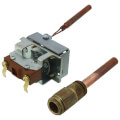
- Controls & Limits: Aquastats, limit switches, and low-water cutoffs on an EG boiler regulate water temperature and shut the burner down if the system runs outside safe operating conditions. Technicians replace these controls when a boiler short-cycles, fails to reach setpoint, or trips a safety lockout repeatedly. Because these components protect against overheating and dry-firing, contractors treat them as safety-critical rather than optional upgrades. Matching the control type to the boiler's original wiring keeps the safety circuit intact.
- Flue & Draft Components: Flue collectors, draft hoods, and barometric dampers manage how combustion gases exit an EG boiler and vent safely to the outdoors. Contractors inspect and replace these parts when corrosion, poor draft, or spillage at the draft hood shows up during a combustion safety check. Proper draft keeps combustion gases moving out of the mechanical room instead of backing up. Flue pipe hardware sized to the boiler's outlet falls under this category as well.
Buying Guide
Ordering the right Weil McLain EG Boiler Parts starts with confirming the exact model and section count stamped on the boiler's rating plate, since Weil-McLain has produced several EG configurations with different burner and section specifications. A mismatched section or burner assembly will not seal correctly and can create a combustion or leak problem that shows up months after the repair. Contractors doing a full rebuild should plan to replace all section gaskets and the header gasket together rather than reusing old ones, since disturbing the joint during disassembly weakens the existing seal. When only one section has failed, a partial rebuild that isolates and replaces the damaged section is usually the more practical repair, provided the remaining sections show no other cracks or corrosion. For control replacements, matching the original aquastat or limit switch type keeps the wiring straightforward and avoids re-configuring the boiler's safety circuit. Buyers replacing burner components should inspect the pilot and ignition system at the same time, since a worn burner often points to broader wear elsewhere in the combustion assembly. Keeping a small stock of common gaskets and igniters on hand reduces downtime on emergency heating calls, particularly during the winter months when EG boiler repairs are most frequent. For unfamiliar failures, comparing the part number on the failed component against the boiler's documentation confirms fit before ordering a Weil McLain EG Boiler Parts replacement.
Frequently Asked Questions
How do I know which Weil McLain EG Boiler Parts fit my boiler?
Check the model and serial number on the boiler's rating plate, then match that number against Weil-McLain's parts documentation for the exact section count and burner configuration. Ordering by boiler model rather than by part appearance alone helps avoid a return.
Can I replace one cracked boiler section without replacing the whole block?
Yes, in most cases a single damaged section can be isolated and replaced with a section kit, provided the remaining cast iron sections show no other cracks or heavy corrosion. A full inspection during disassembly confirms whether a partial rebuild is still practical.
How often should I replace the gaskets on an EG boiler?
Replace section and header gaskets whenever the boiler is disassembled for a rebuild, rather than reusing gaskets that have already been compressed and heat-cycled. Annual maintenance visits are also a good time to inspect smaller gaskets like cleanout covers for early wear.
What causes an EG boiler to short-cycle?
Short-cycling often traces back to a faulty aquastat, limit switch, or low-water cutoff that is misreading temperature or water level. Testing and replacing the specific control causing the fault usually resolves the issue faster than replacing multiple components at once.
Do I need to inspect the flue when replacing burner parts?
Yes, checking the flue collector and draft hood at the same time as a burner service catches corrosion or draft problems that can affect combustion safety. A combustion analyzer reading after the repair confirms the system is venting and burning properly.
