



Filters
SORT
Product Availability –
Category –
Review Score –
 --%3E %3Csvg version='1.1' id='Fill' xmlns='http://www.w3.org/2000/svg' xmlns:xlink='http://www.w3.org/1999/xlink' x='0px' y='0px' viewBox='0 0 100 100' enable-background='new 0 0 100 100' xml:space='preserve'%3E %3Cpath fill='%23F15C02' d='M79.44,0.95H20.56C9.78,0.95,0.95,9.78,0.95,20.56v58.87c0,10.79,8.82,19.61,19.61,19.61h58.87 c10.79,0,19.61-8.83,19.61-19.61V20.56C99.05,9.78,90.22,0.95,79.44,0.95z M65.38,58.24l9.38,29.58L49.69,69.78L24.5,87.82 l9.34-29.6L8.8,39.6l30.73-0.17c0,0,6.98-19.61,10-28.93c0.54,1.36,9.88,29.1,9.88,29.1H91.2L65.38,58.24z'/%3E %3C/svg%3E)
 --%3E %3Csvg version='1.1' id='With-RB' xmlns='http://www.w3.org/2000/svg' xmlns:xlink='http://www.w3.org/1999/xlink' x='0px' y='0px' viewBox='0 0 100 100' enable-background='new 0 0 100 100' xml:space='preserve'%3E %3Cpath fill='%23FBC8B4' d='M79.44,0.95H20.56C9.78,0.95,0.95,9.78,0.95,20.56v58.87c0,10.79,8.82,19.61,19.61,19.61h58.87 c10.79,0,19.61-8.83,19.61-19.61V20.56C99.05,9.78,90.22,0.95,79.44,0.95z M65.38,58.24l9.38,29.58L49.69,69.78L24.5,87.82 l9.34-29.6L8.8,39.6l30.73-0.17c0,0,6.98-19.61,10-28.93c0.54,1.36,9.88,29.1,9.88,29.1H91.2L65.38,58.24z'/%3E %3C/svg%3E)
Price Range –
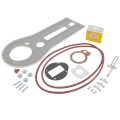
Weil McLain Boiler Parts





 --%3E %3Csvg version='1.1' id='Half' xmlns='http://www.w3.org/2000/svg' xmlns:xlink='http://www.w3.org/1999/xlink' x='0px' y='0px' viewBox='0 0 100 100' enable-background='new 0 0 100 100' xml:space='preserve'%3E %3Cg%3E %3Cpath fill='%23F15C02' d='M30.05,70.23l3.79-12.01L8.8,39.6l30.73-0.17c0,0,6.98-19.61,10-28.93c0.54,1.36,9.88,29.1,9.88,29.1h1.58 L93.71,7.18c-3.58-3.82-8.66-6.23-14.28-6.23H20.56C9.78,0.95,0.95,9.78,0.95,20.56v58.87c0,5.41,2.22,10.32,5.79,13.88 L30.05,70.23z'/%3E %3C/g%3E %3Cpath fill='%23FBC8B4' d='M93.71,7.18L60.98,39.6H91.2L65.38,58.24l9.38,29.58L49.69,69.78L24.5,87.82l5.55-17.59L6.75,93.32 c3.55,3.54,8.44,5.73,13.82,5.73h58.87c10.79,0,19.61-8.83,19.61-19.61V20.56C99.05,15.4,97.01,10.69,93.71,7.18z'/%3E %3C/svg%3E)









 --%3E %3Csvg version='1.1' id='No-RB' xmlns='http://www.w3.org/2000/svg' xmlns:xlink='http://www.w3.org/1999/xlink' x='0px' y='0px' viewBox='0 0 100 100' enable-background='new 0 0 100 100' xml:space='preserve'%3E %3Cpath fill='%23CECECE' d='M79.44,0.95H20.56C9.78,0.95,0.95,9.78,0.95,20.56v58.87c0,10.79,8.82,19.61,19.61,19.61h58.87 c10.79,0,19.61-8.83,19.61-19.61V20.56C99.05,9.78,90.22,0.95,79.44,0.95z M65.38,58.24l9.38,29.58L49.69,69.78L24.5,87.82 l9.34-29.6L8.8,39.6l30.73-0.17c0,0,6.98-19.61,10-28.93c0.54,1.36,9.88,29.1,9.88,29.1H91.2L65.38,58.24z'/%3E %3C/svg%3E)

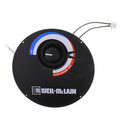
Weil-McLain Boiler Parts cover the components that keep Weil-McLain's cast iron and stainless steel boilers running across the company's residential and commercial product lines. Weil-McLain, headquartered in Burr Ridge, Illinois, describes itself as a leading North American manufacturer of hydronic heating systems, with a lineup spanning residential gas boilers like the CGa and CGi series and Ultra models to commercial units including the SVF stainless vertical firetube line.
Replacement parts for these boilers range from ignition components and control boards to heat exchanger sections and circulator parts, since a cast iron boiler built to last decades often needs individual components replaced well before the boiler itself reaches the end of its service life. Technicians servicing a mixed fleet of Weil-McLain equipment typically stock parts across several model generations, since older cast iron boilers remain in service alongside newer high efficiency models.
Subcategories
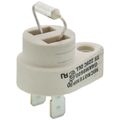
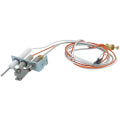
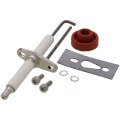
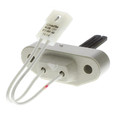
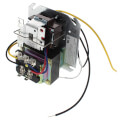
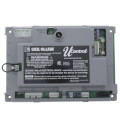
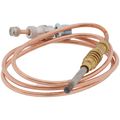
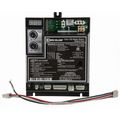
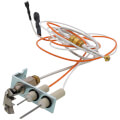
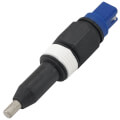
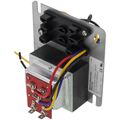
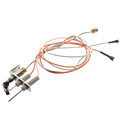
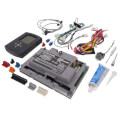
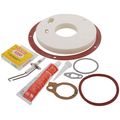
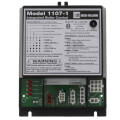
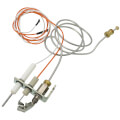
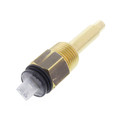
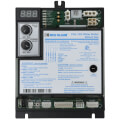
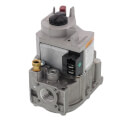
- Ignition and Control Components: Ignition and control components include igniters, flame sensors, and control boards that manage the boiler's start sequence and safety shutoffs. A boiler that fails to light or locks out repeatedly often traces back to one of these parts rather than a larger mechanical failure.
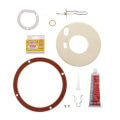
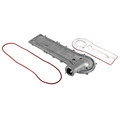
- Heat Exchanger Parts: Heat exchanger parts cover the sections, gaskets, and seals specific to a cast iron sectional boiler or the tubes and headers used in stainless models like the SVF series. Replacing a cracked section or a failing gasket restores efficient heat transfer without requiring a full boiler replacement.
- Circulator and Pump Parts: Circulator and pump parts keep hot water moving between the boiler and the building's heating zones, and they see more wear than most other boiler components due to constant operation through the heating season. Technicians commonly stock cartridges, flanges, and seals for the circulator models paired most often with Weil-McLain boilers.
- Venting and Flue Parts: Venting and flue parts route combustion byproducts safely outside the building, and the specific components depend on whether the boiler uses atmospheric, power vented, or direct vent design. Corroded or damaged venting on an older cast iron boiler needs prompt replacement to keep combustion venting safely.
Buying Guide
Identifying the correct part starts with the boiler's model and series information, typically found on a nameplate attached to the jacket or control panel. Weil-McLain has produced multiple boiler generations over the years, from older cast iron sectional units still running in many buildings to newer high efficiency models like the Evergreen Pro and ECO Tec, and parts are rarely interchangeable across generations.
Cast iron boilers often stay in service for decades, so a technician working on an older unit needs to confirm whether a specific section, gasket, or control component is still produced for that model before promising a repair timeline. Newer boiler generations typically carry a broader current parts inventory, since they remain in active production.
Weil-McLain Boiler Parts split broadly between components shared across a product family, like circulator cartridges and certain control boards, and components specific to a single model, like cast iron sections sized to one boiler's output rating. Confirming which category a needed part falls into before ordering avoids delays from a part that will not fit the installed unit.
Commercial boilers, including the SVF stainless vertical firetube line, generally use different parts than residential cast iron models due to their different construction and larger output range. Technicians who service both residential and commercial Weil-McLain equipment typically maintain separate parts references for each product family to avoid confusion between similar sounding components.
Frequently Asked Questions
How can a technician identify the correct part for an older Weil-McLain boiler?
The model and series information on the boiler's nameplate identifies which parts fit, and checking that information against current parts availability confirms whether an older model's components are still produced. Cast iron boilers especially can span several design generations that are not interchangeable.
Are parts interchangeable between residential and commercial Weil-McLain boilers?
Residential cast iron models and commercial units like the SVF stainless vertical firetube series generally use different parts due to their different construction and output ranges. Checking parts documentation specific to the boiler's product family avoids ordering a component built for the wrong line.
What commonly fails first on an aging cast iron boiler?
Ignition components, control boards, and circulator parts tend to wear out well before the cast iron sections themselves, since those parts see more electrical and mechanical cycling through each heating season. A boiler that locks out repeatedly or loses circulation often points to one of these components rather than the boiler body.
Does Weil-McLain still produce parts for older discontinued boiler models?
Parts availability for discontinued models varies by how long ago a boiler generation was phased out of production, with newer generations generally carrying broader current stock. Confirming availability for a specific older model before committing to a repair timeline helps set accurate expectations.
What venting components need checking during a boiler service call?
Venting and flue components need inspection for corrosion or damage, since the specific parts depend on whether the boiler uses atmospheric, power vented, or direct vent design. A corroded flue on an older cast iron boiler needs prompt replacement to keep combustion venting safely outside the building.
