




Filters
SORT
Product Availability –
Brand –
Product Type –
Size –
Connection Type –
Review Score –
 --%3E %3Csvg version='1.1' id='Fill' xmlns='http://www.w3.org/2000/svg' xmlns:xlink='http://www.w3.org/1999/xlink' x='0px' y='0px' viewBox='0 0 100 100' enable-background='new 0 0 100 100' xml:space='preserve'%3E %3Cpath fill='%23F15C02' d='M79.44,0.95H20.56C9.78,0.95,0.95,9.78,0.95,20.56v58.87c0,10.79,8.82,19.61,19.61,19.61h58.87 c10.79,0,19.61-8.83,19.61-19.61V20.56C99.05,9.78,90.22,0.95,79.44,0.95z M65.38,58.24l9.38,29.58L49.69,69.78L24.5,87.82 l9.34-29.6L8.8,39.6l30.73-0.17c0,0,6.98-19.61,10-28.93c0.54,1.36,9.88,29.1,9.88,29.1H91.2L65.38,58.24z'/%3E %3C/svg%3E)
 --%3E %3Csvg version='1.1' id='With-RB' xmlns='http://www.w3.org/2000/svg' xmlns:xlink='http://www.w3.org/1999/xlink' x='0px' y='0px' viewBox='0 0 100 100' enable-background='new 0 0 100 100' xml:space='preserve'%3E %3Cpath fill='%23FBC8B4' d='M79.44,0.95H20.56C9.78,0.95,0.95,9.78,0.95,20.56v58.87c0,10.79,8.82,19.61,19.61,19.61h58.87 c10.79,0,19.61-8.83,19.61-19.61V20.56C99.05,9.78,90.22,0.95,79.44,0.95z M65.38,58.24l9.38,29.58L49.69,69.78L24.5,87.82 l9.34-29.6L8.8,39.6l30.73-0.17c0,0,6.98-19.61,10-28.93c0.54,1.36,9.88,29.1,9.88,29.1H91.2L65.38,58.24z'/%3E %3C/svg%3E)
Price Range –
Adapters and Couplings

 --%3E %3Csvg version='1.1' id='No-RB' xmlns='http://www.w3.org/2000/svg' xmlns:xlink='http://www.w3.org/1999/xlink' x='0px' y='0px' viewBox='0 0 100 100' enable-background='new 0 0 100 100' xml:space='preserve'%3E %3Cpath fill='%23CECECE' d='M79.44,0.95H20.56C9.78,0.95,0.95,9.78,0.95,20.56v58.87c0,10.79,8.82,19.61,19.61,19.61h58.87 c10.79,0,19.61-8.83,19.61-19.61V20.56C99.05,9.78,90.22,0.95,79.44,0.95z M65.38,58.24l9.38,29.58L49.69,69.78L24.5,87.82 l9.34-29.6L8.8,39.6l30.73-0.17c0,0,6.98-19.61,10-28.93c0.54,1.36,9.88,29.1,9.88,29.1H91.2L65.38,58.24z'/%3E %3C/svg%3E)





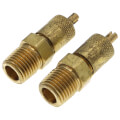

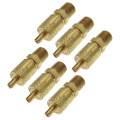

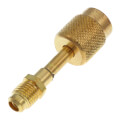


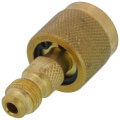
Adapters and Couplings are pipe fittings that join two sections of pipe, tubing, or equipment connections, letting plumbers and mechanical contractors transition between different materials, thread types, or diameters within a single run. A coupling typically joins two pieces of the same pipe type and size in a straight line, while an adapter bridges different connection types, such as threaded to sweat, or one pipe material to another. Contractors reach for these fittings constantly on repair jobs, since matching an old section of pipe to new material or a different fixture connection almost always requires a transition fitting rather than a straight run of matching pipe. Reducing couplings step a line down to a smaller diameter without needing a separate fitting and a length of reducer pipe. Because these fittings show up in nearly every rough-in and repair scenario, keeping a range of sizes and material combinations on the truck saves a return trip for a part that would otherwise stall a job mid-installation. Choosing the correct adapter or coupling for the pressure rating and material of the connected pipes keeps the joint from becoming a callback.
Subcategories
- Threaded Adapters: Threaded adapters connect pipe with male or female NPT threads to a different connection type, such as a sweat or push-fit fitting. Plumbers use them at transition points between older threaded galvanized or black pipe and newer copper or PEX runs. They come in male-to-female and reducing configurations to handle both thread-type and size changes at the same joint. Correct thread engagement and sealant application at installation prevent the slow leaks that threaded transitions are prone to over time.
- Reducing Couplings: Reducing couplings join two straight pipe sections of the same material but different diameters, letting a line step down in size without a separate reducer fitting. Contractors use them most often when tying a smaller branch line into a larger main run. They're available in the same material families as the pipe they connect, including copper, PVC, and CPVC, to keep the joint chemically and thermally compatible. Sizing the coupling to match both pipe diameters exactly is what keeps the transition watertight.
- Dielectric Unions and Adapters: Dielectric unions and adapters separate dissimilar metals, most commonly copper and steel, to stop the galvanic corrosion that occurs when two different metals are in direct contact with water present. Installers place them at water heater connections and anywhere copper piping meets a steel or iron fitting. The internal isolating gasket or lining is what breaks the electrical path between the two metals. Skipping a dielectric fitting at a metal transition is a common cause of premature pipe failure near water heaters.
- Push-Fit Adapters and Couplings: Push-fit adapters and couplings join pipe without soldering, threading, or solvent welding, using an internal O-ring and grip ring that seal and hold the pipe once it's inserted. Service techs favor them for repair work in tight spaces or on occupied properties where a torch isn't practical. They work across copper, PEX, and CPVC pipe within the same fitting body in many cases, cutting down on the number of adapters needed for a mixed-material repair. A quick tug test after installation confirms the pipe is fully seated and gripped.
Buying Guide
Selecting the right adapter or coupling starts with identifying both pipe materials and connection types on either side of the joint, since a mismatch in thread pitch, pipe outside diameter, or material compatibility is the most common cause of a leaking transition. Contractors should confirm whether the application calls for a permanent joint, such as a soldered or solvent-welded coupling, or a serviceable connection like a union or push-fit fitting that may need to come apart later for maintenance.
Material compatibility matters as much as size. Joining copper directly to steel without a dielectric fitting sets up galvanic corrosion at the joint, while mixing incompatible plastics can weaken a solvent-welded connection over time. When a job calls for Adapters and Couplings across multiple pipe materials, sorting by connection type first, then by size, speeds up finding the right part instead of hunting through single-material listings.
Pressure and temperature rating should match the higher-demand side of the connection, particularly on hydronic heating or hot water lines where a fitting rated for lower temperatures can fail under normal operating conditions. For repair work on older systems, checking current pipe outside diameter against the original spec is worth the extra minute, since older pipe can vary slightly from today's standard sizing. Stocking a core set of reducing couplings, dielectric unions, and push-fit adapters in common sizes covers the majority of transition and repair calls without a special trip for a single fitting.
Frequently Asked Questions
What's the difference between an adapter and a coupling?
A coupling generally joins two pieces of the same pipe material and connection type in a straight run, sometimes stepping the size up or down. An adapter bridges two different connection types or materials, such as threaded to sweat or copper to steel. The terms overlap in casual use, so checking the specific connection types on both ends of the fitting is the reliable way to pick the right part.
When is a dielectric union required instead of a standard coupling?
A dielectric union or adapter is needed whenever copper piping connects directly to steel or iron, most commonly at water heater inlet and outlet connections. Skipping the dielectric fitting allows galvanic corrosion to develop at the joint, which can shorten the life of the connection significantly. Local plumbing code often requires this transition at water heaters specifically.
Can push-fit couplings be used on any pipe material?
Many push-fit couplings are rated for copper, CPVC, and PEX within the same fitting body, but not every push-fit product covers all three, so checking the manufacturer's compatibility listing before installing is important. Some push-fit fittings are designed for a single pipe material only. Confirming pipe outside diameter matches the fitting's rated range is also necessary for a secure seal.
How do I match thread sizes on a threaded adapter?
Most residential and light commercial plumbing uses standard NPT (National Pipe Thread) sizing, so measuring the outside diameter of the existing pipe and comparing it against a thread gauge or sizing chart identifies the correct adapter. Older piping systems occasionally use different thread standards, so test-fitting before final assembly avoids a mismatched joint. A properly sized adapter should thread on smoothly without excessive force.
Do reducing couplings affect water pressure?
Stepping a line down to a smaller diameter through a reducing coupling does increase flow velocity through the smaller section, which can slightly affect pressure depending on the length of reduced pipe and overall system demand. For short transitions feeding a single fixture, the effect is generally minor. Sizing branch lines correctly at the design stage avoids relying on an undersized reducing coupling to compensate for an oversized main line.
