




Air Handlers


 --%3E %3Csvg version='1.1' id='No-RB' xmlns='http://www.w3.org/2000/svg' xmlns:xlink='http://www.w3.org/1999/xlink' x='0px' y='0px' viewBox='0 0 100 100' enable-background='new 0 0 100 100' xml:space='preserve'%3E %3Cpath fill='%23CECECE' d='M79.44,0.95H20.56C9.78,0.95,0.95,9.78,0.95,20.56v58.87c0,10.79,8.82,19.61,19.61,19.61h58.87 c10.79,0,19.61-8.83,19.61-19.61V20.56C99.05,9.78,90.22,0.95,79.44,0.95z M65.38,58.24l9.38,29.58L49.69,69.78L24.5,87.82 l9.34-29.6L8.8,39.6l30.73-0.17c0,0,6.98-19.61,10-28.93c0.54,1.36,9.88,29.1,9.88,29.1H91.2L65.38,58.24z'/%3E %3C/svg%3E)





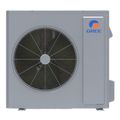


Air Handlers are the indoor component of a split heating and cooling system, moving air across a coil and through ductwork without producing heat or cooling on their own. Sizing runs from 2 to 5 tons in Rheem's residential lineup, covering everything from smaller homes to larger single-family properties. Efficiency ratings on matched systems reach up to 16 SEER2 on Rheem's RF2TZ models, though the achievable rating depends on which condenser the air handler pairs with. Blower motor type is one of the biggest differences between models: PSC motors run at a fixed speed, Constant CFM motors hold airflow steady against changing duct static pressure, and Constant Torque ECM motors add two-stage or modulating airflow control. Because the air handler pairs directly with an outdoor condenser or heat pump, matching tonnage, refrigerant type, and electrical characteristics between the two pieces of equipment is necessary for the system to perform at its rated efficiency.
Subcategories
- PSC Motor Air Handlers: PSC motor air handlers use a permanent split capacitor motor that runs at a fixed speed rather than adjusting output to compensate for duct static pressure changes. Rheem's RF1PY and RF1PZ models fall into this category, with efficiency ratings reaching 13.4 to 15.2 SEER2 depending on the matched outdoor unit. Installers reach for this type on straightforward replacements where matching an existing single-speed system is the priority over higher efficiency. Because the motor does not adjust for airflow resistance, keeping ductwork clean and properly sized matters more with a PSC motor than with a variable-speed alternative.
- Constant CFM Motor Air Handlers: Constant CFM motor air handlers hold airflow steady across a range of duct static pressure conditions, which keeps heat transfer at the coil more consistent than a fixed-speed PSC motor. Rheem's RH2VY and RH2VZ models use this motor type, with SEER2 ratings around 14.3 to 14.4 depending on the pairing. Technicians select this category for installs with longer or more restrictive duct runs where airflow needs to stay consistent despite pressure changes. Because the motor compensates automatically, less field adjustment is needed during commissioning compared to a fixed-speed unit.
- Constant Torque (ECM) Air Handlers: Constant Torque ECM air handlers add electronically commutated motor technology with two-stage or modulating airflow options, giving more control over comfort and humidity than a single-speed motor. Rheem's RH2TZ, RF2TY, and RF2TZ models fall into this category, reaching efficiency ratings up to 16 SEER2 when paired with a matched condenser. Installers select this tier for higher-efficiency system replacements or new installs where two-stage or modulating comfort control is part of the specification. Because ECM motors draw less standby power than PSC motors, this category also factors into overall system efficiency beyond the SEER2 rating on the nameplate.
Buying Guide
Start sizing an air handler around the home's cooling and heating load rather than matching the tonnage of the equipment being replaced, since a previous system may have been sized incorrectly to begin with. Rheem's residential lineup covers 2 to 5 tons, so confirming a Manual J load calculation, or at minimum square footage and insulation levels, narrows the tonnage before selecting a specific model. Motor type is the next major decision: PSC motors on models like the RF1PY keep costs down for straightforward replacements, Constant CFM motors on the RH2VY and RH2VZ hold airflow steady through more restrictive duct runs, and Constant Torque ECM motors on the RF2TZ add two-stage or modulating control for higher comfort and efficiency. Efficiency itself depends on pairing, not on the air handler alone, since the SEER2 rating on the nameplate assumes a specific matched outdoor condenser or heat pump, and swapping in a different one changes the achievable rating. Air Handlers also need to match refrigerant type with the outdoor unit, particularly as the industry shifts toward R-454B systems, since mismatched refrigerant types are not a viable field fix. Cabinet configuration, whether the return is on the front or the bottom, needs to match the mechanical closet or attic space available, since retrofitting ductwork to fit the wrong configuration adds labor and cost to a straightforward swap. Working through load, motor type, matched efficiency, refrigerant compatibility, and cabinet configuration in that order narrows the field to a handful of viable models.
Frequently Asked Questions
How many tons of air handler do I need?
Tonnage should follow a proper load calculation rather than simply matching the size of the equipment being replaced, since older systems are sometimes sized incorrectly from the start. Rheem's residential air handlers cover a 2 to 5 ton range, giving enough options to match most single-family homes once square footage, insulation, and climate are factored in. Undersizing leads to a system that runs constantly without reaching temperature, while oversizing causes short cycling and poor humidity control.
What's the difference between PSC, Constant CFM, and Constant Torque ECM motors?
A PSC motor runs at a single fixed speed regardless of duct conditions, found on models like Rheem's RF1PY. A Constant CFM motor adjusts to hold steady airflow against changing duct static pressure, as seen on the RH2VY and RH2VZ. A Constant Torque ECM motor goes further with two-stage or modulating airflow control, found on the RF2TZ, and typically reaches the highest efficiency ratings in the lineup, up to 16 SEER2.
Does the air handler alone determine the system's SEER2 rating?
The air handler's motor and coil contribute to overall efficiency, but the SEER2 rating on the nameplate reflects a specific matched pairing with an outdoor condenser or heat pump. Swapping in a different outdoor unit than the one used for the rating changes the achievable efficiency. Confirming the matched pairing during selection, rather than assuming any air handler and condenser combination will hit the rated SEER2, avoids a performance shortfall.
What refrigerant do current air handlers use?
Refrigerant type depends on the specific model and coil, with the industry shifting toward R-454B on newer Rheem air handlers. Refrigerant type has to match between the air handler's coil and the outdoor condenser or heat pump, since mismatched refrigerants are not a field-serviceable fix. Checking refrigerant compatibility before ordering prevents an install that cannot be commissioned.
Does it matter if the air handler has a front or bottom return?
Return configuration needs to match the mechanical closet or attic space where the unit will sit, since retrofitting ductwork to fit the wrong configuration adds labor to what should be a straightforward swap. Rheem offers both front and bottom return configurations across its air handler lineup. Confirming return orientation against the existing duct layout before ordering avoids a mismatch discovered during installation.
