




Caleffi RPZ Assemblies

 --%3E %3Csvg version='1.1' id='No-RB' xmlns='http://www.w3.org/2000/svg' xmlns:xlink='http://www.w3.org/1999/xlink' x='0px' y='0px' viewBox='0 0 100 100' enable-background='new 0 0 100 100' xml:space='preserve'%3E %3Cpath fill='%23CECECE' d='M79.44,0.95H20.56C9.78,0.95,0.95,9.78,0.95,20.56v58.87c0,10.79,8.82,19.61,19.61,19.61h58.87 c10.79,0,19.61-8.83,19.61-19.61V20.56C99.05,9.78,90.22,0.95,79.44,0.95z M65.38,58.24l9.38,29.58L49.69,69.78L24.5,87.82 l9.34-29.6L8.8,39.6l30.73-0.17c0,0,6.98-19.61,10-28.93c0.54,1.36,9.88,29.1,9.88,29.1H91.2L65.38,58.24z'/%3E %3C/svg%3E)

 --%3E %3Csvg version='1.1' id='Fill' xmlns='http://www.w3.org/2000/svg' xmlns:xlink='http://www.w3.org/1999/xlink' x='0px' y='0px' viewBox='0 0 100 100' enable-background='new 0 0 100 100' xml:space='preserve'%3E %3Cpath fill='%23F15C02' d='M79.44,0.95H20.56C9.78,0.95,0.95,9.78,0.95,20.56v58.87c0,10.79,8.82,19.61,19.61,19.61h58.87 c10.79,0,19.61-8.83,19.61-19.61V20.56C99.05,9.78,90.22,0.95,79.44,0.95z M65.38,58.24l9.38,29.58L49.69,69.78L24.5,87.82 l9.34-29.6L8.8,39.6l30.73-0.17c0,0,6.98-19.61,10-28.93c0.54,1.36,9.88,29.1,9.88,29.1H91.2L65.38,58.24z'/%3E %3C/svg%3E)
 --%3E %3Csvg version='1.1' id='Half' xmlns='http://www.w3.org/2000/svg' xmlns:xlink='http://www.w3.org/1999/xlink' x='0px' y='0px' viewBox='0 0 100 100' enable-background='new 0 0 100 100' xml:space='preserve'%3E %3Cg%3E %3Cpath fill='%23F15C02' d='M30.05,70.23l3.79-12.01L8.8,39.6l30.73-0.17c0,0,6.98-19.61,10-28.93c0.54,1.36,9.88,29.1,9.88,29.1h1.58 L93.71,7.18c-3.58-3.82-8.66-6.23-14.28-6.23H20.56C9.78,0.95,0.95,9.78,0.95,20.56v58.87c0,5.41,2.22,10.32,5.79,13.88 L30.05,70.23z'/%3E %3C/g%3E %3Cpath fill='%23FBC8B4' d='M93.71,7.18L60.98,39.6H91.2L65.38,58.24l9.38,29.58L49.69,69.78L24.5,87.82l5.55-17.59L6.75,93.32 c3.55,3.54,8.44,5.73,13.82,5.73h58.87c10.79,0,19.61-8.83,19.61-19.61V20.56C99.05,15.4,97.01,10.69,93.71,7.18z'/%3E %3C/svg%3E)
 --%3E %3Csvg version='1.1' id='With-RB' xmlns='http://www.w3.org/2000/svg' xmlns:xlink='http://www.w3.org/1999/xlink' x='0px' y='0px' viewBox='0 0 100 100' enable-background='new 0 0 100 100' xml:space='preserve'%3E %3Cpath fill='%23FBC8B4' d='M79.44,0.95H20.56C9.78,0.95,0.95,9.78,0.95,20.56v58.87c0,10.79,8.82,19.61,19.61,19.61h58.87 c10.79,0,19.61-8.83,19.61-19.61V20.56C99.05,9.78,90.22,0.95,79.44,0.95z M65.38,58.24l9.38,29.58L49.69,69.78L24.5,87.82 l9.34-29.6L8.8,39.6l30.73-0.17c0,0,6.98-19.61,10-28.93c0.54,1.36,9.88,29.1,9.88,29.1H91.2L65.38,58.24z'/%3E %3C/svg%3E)
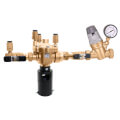
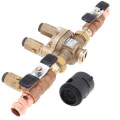
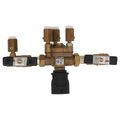
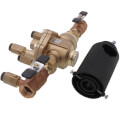
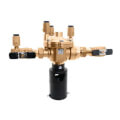
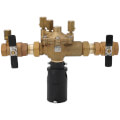
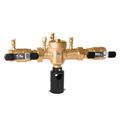
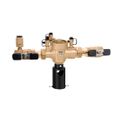
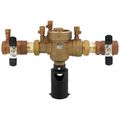
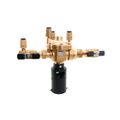

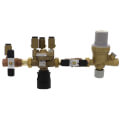
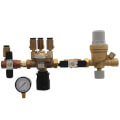
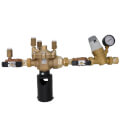
Caleffi RPZ assemblies are reduced pressure zone backflow preventers that stop contaminated water from being siphoned or forced back into a building's potable water supply from a connected system such as irrigation, fire suppression, or a boiler feed. A reduced pressure zone design uses two independently acting check valves along with a relief valve between them, so if either check valve fails to seal, the relief valve opens and discharges water rather than allowing contaminated water to reach the potable side. Many water authorities require an RPZ assembly, rather than a simpler backflow device, on connections considered a higher health hazard, since it provides more protection than the other common backflow prevention types. Plumbers and mechanical contractors install these assemblies with a drain positioned to handle the relief valve's discharge, since that discharge is a normal part of the assembly's function rather than a sign of failure. Annual testing by a certified backflow tester is typically required to confirm the assembly is still functioning correctly.
Subcategories
- RPZ Assemblies for Irrigation Systems: RPZ assemblies used on irrigation systems protect the potable water supply from fertilizers, pesticides, and standing water that could otherwise be drawn back through the irrigation line during a pressure drop. Irrigation connections are commonly classified as a higher health hazard by local water authorities because of the chemicals involved, which is why many jurisdictions require an RPZ assembly rather than a simpler backflow device on these connections. Contractors typically size the assembly to the irrigation system's flow demand rather than the building's overall water service size. Outdoor installations need a way to route the relief valve's discharge away from the assembly and any nearby structure or electrical equipment.
- RPZ Assemblies for Fire Protection Systems: RPZ assemblies protecting fire protection systems isolate the potable water supply from water sitting in a sprinkler or standpipe system, which can pick up contaminants from pipe materials, additives, or stagnation over time. Fire protection connections often need to maintain a minimum flow and pressure even during a fire event, so contractors size these assemblies carefully to avoid restricting the flow the fire system needs when called on. Some jurisdictions specify particular assembly models or configurations for fire line service separate from domestic or irrigation use. Coordinating assembly selection with the local fire marshal and water authority is a standard part of specifying backflow protection on a fire protection connection.
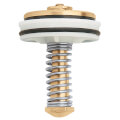
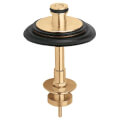
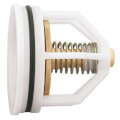
- RPZ Assembly Repair Kits and Test Kits: Repair kits contain the internal check valve and relief valve components needed to service an existing RPZ assembly during required maintenance or after a failed annual test. Certified backflow testers use test kits with pressure gauges to measure differential pressure across each check valve and confirm the relief valve opens at the correct point, which is how a failing assembly is identified before it's returned to service. Contractors keep repair kits matched to the specific assembly model on hand, since a failed annual test often needs same-day repair to keep a facility's water service or irrigation system in compliance. Rebuilding an assembly with a matched kit typically avoids the expense of a full assembly replacement.
- RPZ Assembly Enclosures: Enclosures protect an RPZ assembly installed outdoors or in an unheated space from freezing, physical damage, and tampering. Backflow assemblies installed above grade in a location exposed to freezing temperatures need either an insulated, heated enclosure or another method of freeze protection, since a frozen check valve or relief valve can crack and fail. Insulated enclosures are common in colder climates where an assembly can't be located in a heated mechanical room. Contractors should also confirm local code requirements for enclosure type and clearance around the assembly, since inspectors typically need clear access for annual testing.
Buying Guide
Selecting the right RPZ assembly starts with identifying the hazard level and application it will protect, since irrigation, fire protection, and boiler feed connections each carry different contamination risks and may fall under different local code requirements. Flow demand is the next major factor: an assembly sized for a building's domestic water service is usually the wrong size for a dedicated irrigation or fire line, each of which has its own flow and pressure requirements that the assembly needs to accommodate without excessive pressure loss. Caleffi RPZ assemblies are available in a range of sizes and configurations, so matching size to the specific connection, rather than defaulting to the building's main water service size, avoids under- or oversizing the assembly. Installation location matters just as much as sizing: any location exposed to freezing temperatures needs an insulated or heated enclosure, and every installation needs a code-compliant path for the relief valve's discharge, since that discharge is part of normal operation rather than a malfunction. Local water authority and fire marshal requirements should be confirmed before finalizing a model, since some jurisdictions specify particular assembly types or configurations for certain connection types. Once installed, every RPZ assembly needs annual testing by a certified backflow tester, so contractors should also confirm clear access around the assembly for that ongoing testing requirement.
Frequently Asked Questions
What makes an RPZ assembly different from other backflow preventers?
An RPZ assembly uses two independently acting check valves with a relief valve between them, so if either check valve fails, the relief valve opens and discharges water rather than letting contaminated water reach the potable supply. That level of protection is why many water authorities require it on higher health hazard connections.
Is water discharging from the relief valve a sign of a problem?
Occasional discharge during normal operation is expected, since it's how the assembly protects the potable supply if a check valve isn't sealing perfectly. Continuous or heavy discharge, though, usually indicates a check valve needs service or replacement.
How often does an RPZ assembly need to be tested?
Most jurisdictions require annual testing by a certified backflow tester, though local requirements can vary. Testing confirms both check valves and the relief valve are functioning within the correct pressure differentials.
Can an RPZ assembly be installed outdoors?
Yes, but any installation exposed to freezing temperatures needs an insulated or heated enclosure, since a frozen check valve or relief valve can crack. Local code also typically specifies clearance requirements around the assembly for testing access.
Does an irrigation system need a different RPZ assembly than a fire protection system?
In most cases, yes, since each is sized to its own flow and pressure requirements rather than the building's main water service. Fire protection connections in particular need an assembly that doesn't restrict the flow required during a fire event.
