




Filters
SORT
Product Availability –
Category –
Product Type –
Brand –
Series –
Width (Wall Opening) –
Height (Wall Opening) –
Overall Size –
Color –
Finish –
Material –
Review Score –
 --%3E %3Csvg version='1.1' id='Fill' xmlns='http://www.w3.org/2000/svg' xmlns:xlink='http://www.w3.org/1999/xlink' x='0px' y='0px' viewBox='0 0 100 100' enable-background='new 0 0 100 100' xml:space='preserve'%3E %3Cpath fill='%23F15C02' d='M79.44,0.95H20.56C9.78,0.95,0.95,9.78,0.95,20.56v58.87c0,10.79,8.82,19.61,19.61,19.61h58.87 c10.79,0,19.61-8.83,19.61-19.61V20.56C99.05,9.78,90.22,0.95,79.44,0.95z M65.38,58.24l9.38,29.58L49.69,69.78L24.5,87.82 l9.34-29.6L8.8,39.6l30.73-0.17c0,0,6.98-19.61,10-28.93c0.54,1.36,9.88,29.1,9.88,29.1H91.2L65.38,58.24z'/%3E %3C/svg%3E)
 --%3E %3Csvg version='1.1' id='With-RB' xmlns='http://www.w3.org/2000/svg' xmlns:xlink='http://www.w3.org/1999/xlink' x='0px' y='0px' viewBox='0 0 100 100' enable-background='new 0 0 100 100' xml:space='preserve'%3E %3Cpath fill='%23FBC8B4' d='M79.44,0.95H20.56C9.78,0.95,0.95,9.78,0.95,20.56v58.87c0,10.79,8.82,19.61,19.61,19.61h58.87 c10.79,0,19.61-8.83,19.61-19.61V20.56C99.05,9.78,90.22,0.95,79.44,0.95z M65.38,58.24l9.38,29.58L49.69,69.78L24.5,87.82 l9.34-29.6L8.8,39.6l30.73-0.17c0,0,6.98-19.61,10-28.93c0.54,1.36,9.88,29.1,9.88,29.1H91.2L65.38,58.24z'/%3E %3C/svg%3E)
Price Range –
Commercial Registers & Grilles


 --%3E %3Csvg version='1.1' id='Half' xmlns='http://www.w3.org/2000/svg' xmlns:xlink='http://www.w3.org/1999/xlink' x='0px' y='0px' viewBox='0 0 100 100' enable-background='new 0 0 100 100' xml:space='preserve'%3E %3Cg%3E %3Cpath fill='%23F15C02' d='M30.05,70.23l3.79-12.01L8.8,39.6l30.73-0.17c0,0,6.98-19.61,10-28.93c0.54,1.36,9.88,29.1,9.88,29.1h1.58 L93.71,7.18c-3.58-3.82-8.66-6.23-14.28-6.23H20.56C9.78,0.95,0.95,9.78,0.95,20.56v58.87c0,5.41,2.22,10.32,5.79,13.88 L30.05,70.23z'/%3E %3C/g%3E %3Cpath fill='%23FBC8B4' d='M93.71,7.18L60.98,39.6H91.2L65.38,58.24l9.38,29.58L49.69,69.78L24.5,87.82l5.55-17.59L6.75,93.32 c3.55,3.54,8.44,5.73,13.82,5.73h58.87c10.79,0,19.61-8.83,19.61-19.61V20.56C99.05,15.4,97.01,10.69,93.71,7.18z'/%3E %3C/svg%3E)




 --%3E %3Csvg version='1.1' id='No-RB' xmlns='http://www.w3.org/2000/svg' xmlns:xlink='http://www.w3.org/1999/xlink' x='0px' y='0px' viewBox='0 0 100 100' enable-background='new 0 0 100 100' xml:space='preserve'%3E %3Cpath fill='%23CECECE' d='M79.44,0.95H20.56C9.78,0.95,0.95,9.78,0.95,20.56v58.87c0,10.79,8.82,19.61,19.61,19.61h58.87 c10.79,0,19.61-8.83,19.61-19.61V20.56C99.05,9.78,90.22,0.95,79.44,0.95z M65.38,58.24l9.38,29.58L49.69,69.78L24.5,87.82 l9.34-29.6L8.8,39.6l30.73-0.17c0,0,6.98-19.61,10-28.93c0.54,1.36,9.88,29.1,9.88,29.1H91.2L65.38,58.24z'/%3E %3C/svg%3E)


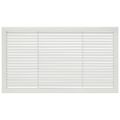


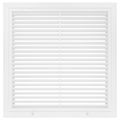


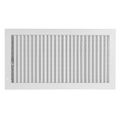

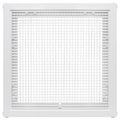



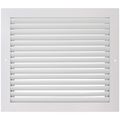


Commercial registers and grilles are the visible air distribution and return components installed in ductwork, ceilings, and walls throughout a commercial building, built to handle the higher airflow volumes and heavier duty cycles of commercial HVAC systems compared to residential-grade products. Registers include an adjustable damper to control airflow at the outlet, while grilles are typically fixed openings used on return air paths without that damper.
Specifiers choose commercial-grade registers and grilles based on the airflow volume the duct run is delivering, the finish and material needed to match the space's ceiling or wall construction, and whether the application calls for a damper for balancing. Because commercial spaces often have exposed or high-traffic installations, contractors also weigh durability and ease of cleaning alongside straightforward airflow performance.
Subcategories
- Sidewall Registers: Sidewall registers mount in wall openings and direct supply air horizontally across a room. They typically include an adjustable damper for balancing airflow between zones served by the same duct run. Contractors select blade spacing and throw pattern based on room size and ceiling height.
- Ceiling Diffusers: Ceiling diffusers distribute supply air in multiple directions from an overhead outlet, common in office and retail spaces with drop ceilings. Diffuser pattern and size need to match the duct connection and the coverage area of the space below. These are usually specified as part of the original duct layout rather than swapped freely afterward.
- Return Air Grilles: Return grilles pull air back into the system without a damper, since balancing typically happens on the supply side rather than the return. Sizing is based on the return duct's airflow capacity, and grille material is chosen for the space's traffic level and appearance requirements.
- Linear Bar Grilles: Linear bar grilles use continuous parallel bars rather than a standard louvered face, giving architects a low-profile appearance often specified in lobbies and finished commercial spaces. They're available for both supply and return applications and are typically ordered to a specific cut length rather than a standard stock size.
Buying Guide
Confirm the duct opening dimensions and airflow volume (CFM) the register or grille needs to handle before ordering, since undersizing restricts airflow and creates noise, while oversizing can leave a duct connection poorly covered by the finished piece.
Decide between a register and a grille based on whether the location needs damper control. Supply outlets generally use registers so airflow can be balanced zone by zone, while return locations typically use grilles since return air doesn't usually need the same point-of-outlet adjustment.
Match the finish and material to the space and its traffic level. Commercial applications in lobbies, retail floors, or other high-visibility areas often call for a more finished appearance or heavier-gauge material than a back-of-house mechanical room where function outweighs appearance.
For ceiling diffusers, confirm the throw pattern and coverage area against the room layout rather than the duct size alone. A diffuser sized correctly for the duct connection but with the wrong throw pattern can still leave dead air zones in the room it's serving.
On linear bar grilles and other architectural-grade products, confirm lead time and whether the piece is cut to a custom length, since these are frequently made-to-order rather than stocked in standard sizes like a basic sidewall register.
Frequently Asked Questions
What's the difference between a register and a grille?
A register includes an adjustable damper for controlling airflow at the outlet, while a grille is a fixed opening without a damper, most commonly used on return air paths where balancing isn't needed.
How do I size a commercial register for a given room?
Match the register to the duct connection's airflow volume in CFM and the room's coverage requirements, rather than sizing based on the wall or ceiling opening alone.
Can I use a residential-grade grille in a commercial building?
It depends on the airflow volume and duty cycle involved. Commercial-grade products are typically built for higher CFM and heavier use than residential equivalents, so check the manufacturer's ratings before substituting.
Are linear bar grilles interchangeable with standard sidewall registers?
Not directly. Linear bar grilles are usually made-to-order to a specific length and mounting condition, while standard sidewall registers come in stock sizes, so plan lead time accordingly if you're specifying linear grilles.
Do ceiling diffusers need to match the duct size exactly?
The duct connection needs to match, but the diffuser's throw pattern and face size also need to suit the room's coverage area, since a duct-matched diffuser with the wrong throw pattern can still leave parts of the room underserved.
