




Filters
SORT
Product Availability –
Material –
Max Flow (GPM) –
Max Head (Ft) –
Voltage –
Horse Power –
Review Score –
 --%3E %3Csvg version='1.1' id='Fill' xmlns='http://www.w3.org/2000/svg' xmlns:xlink='http://www.w3.org/1999/xlink' x='0px' y='0px' viewBox='0 0 100 100' enable-background='new 0 0 100 100' xml:space='preserve'%3E %3Cpath fill='%23F15C02' d='M79.44,0.95H20.56C9.78,0.95,0.95,9.78,0.95,20.56v58.87c0,10.79,8.82,19.61,19.61,19.61h58.87 c10.79,0,19.61-8.83,19.61-19.61V20.56C99.05,9.78,90.22,0.95,79.44,0.95z M65.38,58.24l9.38,29.58L49.69,69.78L24.5,87.82 l9.34-29.6L8.8,39.6l30.73-0.17c0,0,6.98-19.61,10-28.93c0.54,1.36,9.88,29.1,9.88,29.1H91.2L65.38,58.24z'/%3E %3C/svg%3E)
 --%3E %3Csvg version='1.1' id='With-RB' xmlns='http://www.w3.org/2000/svg' xmlns:xlink='http://www.w3.org/1999/xlink' x='0px' y='0px' viewBox='0 0 100 100' enable-background='new 0 0 100 100' xml:space='preserve'%3E %3Cpath fill='%23FBC8B4' d='M79.44,0.95H20.56C9.78,0.95,0.95,9.78,0.95,20.56v58.87c0,10.79,8.82,19.61,19.61,19.61h58.87 c10.79,0,19.61-8.83,19.61-19.61V20.56C99.05,9.78,90.22,0.95,79.44,0.95z M65.38,58.24l9.38,29.58L49.69,69.78L24.5,87.82 l9.34-29.6L8.8,39.6l30.73-0.17c0,0,6.98-19.61,10-28.93c0.54,1.36,9.88,29.1,9.88,29.1H91.2L65.38,58.24z'/%3E %3C/svg%3E)
Price Range –
H-Series Pumps


 --%3E %3Csvg version='1.1' id='No-RB' xmlns='http://www.w3.org/2000/svg' xmlns:xlink='http://www.w3.org/1999/xlink' x='0px' y='0px' viewBox='0 0 100 100' enable-background='new 0 0 100 100' xml:space='preserve'%3E %3Cpath fill='%23CECECE' d='M79.44,0.95H20.56C9.78,0.95,0.95,9.78,0.95,20.56v58.87c0,10.79,8.82,19.61,19.61,19.61h58.87 c10.79,0,19.61-8.83,19.61-19.61V20.56C99.05,9.78,90.22,0.95,79.44,0.95z M65.38,58.24l9.38,29.58L49.69,69.78L24.5,87.82 l9.34-29.6L8.8,39.6l30.73-0.17c0,0,6.98-19.61,10-28.93c0.54,1.36,9.88,29.1,9.88,29.1H91.2L65.38,58.24z'/%3E %3C/svg%3E)



 --%3E %3Csvg version='1.1' id='Half' xmlns='http://www.w3.org/2000/svg' xmlns:xlink='http://www.w3.org/1999/xlink' x='0px' y='0px' viewBox='0 0 100 100' enable-background='new 0 0 100 100' xml:space='preserve'%3E %3Cg%3E %3Cpath fill='%23F15C02' d='M30.05,70.23l3.79-12.01L8.8,39.6l30.73-0.17c0,0,6.98-19.61,10-28.93c0.54,1.36,9.88,29.1,9.88,29.1h1.58 L93.71,7.18c-3.58-3.82-8.66-6.23-14.28-6.23H20.56C9.78,0.95,0.95,9.78,0.95,20.56v58.87c0,5.41,2.22,10.32,5.79,13.88 L30.05,70.23z'/%3E %3C/g%3E %3Cpath fill='%23FBC8B4' d='M93.71,7.18L60.98,39.6H91.2L65.38,58.24l9.38,29.58L49.69,69.78L24.5,87.82l5.55-17.59L6.75,93.32 c3.55,3.54,8.44,5.73,13.82,5.73h58.87c10.79,0,19.61-8.83,19.61-19.61V20.56C99.05,15.4,97.01,10.69,93.71,7.18z'/%3E %3C/svg%3E)



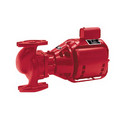
H-Series Pumps are bronze-fitted in-line circulators manufactured by Armstrong Pumps for hydronic heating and cooling systems, domestic water recirculation, and multi-stage zoning. The lineup spans compact models such as the 1/6 HP H-41 up to higher-capacity models such as the 1 HP H-67, with select models offered in a maintenance-free configuration and a three-phase 3-Series option. The H-67 uses a radially-split cast iron body with a 2 inch flange connection and a positive mechanical seal, a design that lets the pump stay in-line while internal components are serviced. Mechanical contractors specify H-Series Pumps on boiler systems, radiant loops, and commercial recirculation lines where in-line serviceability cuts down on piping disruption during repairs. Because the body stays bolted to the system piping while the motor and seal assembly pull out for service, technicians can rebuild a pump without draining or cutting into the surrounding loop, which keeps mechanical room downtime short during a seal or bearing replacement.
Subcategories
- Compact 1/6 HP Models: The H-41 represents the compact end of the H-Series line at 1/6 HP, built with a cast iron bronze-fitted body in a maintenance-free configuration. Installers use this model on single-zone radiant or baseboard loops where flow requirements stay modest and space around the boiler is tight. Maintenance-free construction removes the periodic oiling task found on older circulator designs. Smaller physical size also suits replacement projects where clearance around existing piping is limited.
- Mid-Range 1/2 HP Models: Mid-range models such as the H-53-1 and H-63-3 deliver 1/2 HP and are available in maintenance-free and 3-Series configurations. The 3-Series designation indicates a three-phase motor option suited to commercial electrical service. Contractors select this range for multi-zone residential systems or small commercial loops feeding several baseboard or radiant zones from one pump. Cast iron bronze-fitted construction matches the rest of the H-Series line for parts commonality.
- High-Capacity 1 to 1-1/2 HP Models: Higher-capacity models such as the H-67 and H-68-3 step up to 1 HP and 1-1/2 HP for larger hydronic distribution systems. The H-67 uses a radially-split cast iron body with a 2 inch flange connection and a positive mechanical seal, allowing the pump body to remain in the line during service. A 3-Series three-phase version of the H-68 is available for commercial power supplies. Facility engineers specify these models where system head and flow exceed what smaller circulators in the line can deliver.
- Replacement Seals and Flange Gaskets: Because the H-Series uses a modular design, mechanical seals and flange gaskets are sold separately from complete pump assemblies. Service technicians stock parts such as the Armstrong mechanical seal assembly and matching flange gaskets to rebuild an in-line pump without replacing the entire cast iron body. Keeping compatible seal and gasket part numbers on hand for a site's installed pump models shortens emergency repair time. Parts commonality across the H-Series line simplifies stocking for shops servicing multiple sites.
Buying Guide
Start by sizing head and flow for the actual hydronic loop rather than defaulting to whatever circulator was already installed, since undersized or oversized pumps waste energy or starve distant zones. Horsepower alone does not determine the right model. A small single-zone radiant loop may only need a 1/6 HP compact model, while a commercial boiler plant feeding multiple zones often calls for a 1 HP or larger unit with a bigger flange connection.
Next, decide between a standard bronze-fitted body and a three-phase 3-Series option based on the building's electrical service. Commercial mechanical rooms wired for three-phase power benefit from the 3-Series line, while single-phase 115 volt circuits suit the standard H-Series Pumps lineup found in most residential and light commercial jobs.
Maintenance-free models remove the periodic oiling requirement found on older circulator designs, which matters on pumps installed in hard-to-reach locations such as ceiling-hung mechanical rooms or ductwork chases. Confirm flange size matches the existing piping before ordering a replacement, since swapping flange sizes mid-project adds fitting work that a straight pump swap would otherwise avoid.
Finally, stock compatible mechanical seals and flange gaskets alongside the pump itself. Because the H-Series design lets a technician pull the motor and seal assembly without disconnecting the piping, having replacement parts on the truck turns a seal failure into a same-visit repair instead of a return trip.
Frequently Asked Questions
What horsepower range does the H-Series cover?
H-Series Pumps range from 1/6 HP on compact models such as the H-41 up to 1-1/2 HP on larger models such as the H-68-3. Picking the right horsepower depends on the head and flow the specific hydronic loop requires rather than matching whatever pump was previously installed.
What does the maintenance-free designation mean on certain models?
Maintenance-free models use a sealed bearing design that removes the periodic oiling task required on older circulator pumps, which suits installations in hard-to-reach mechanical spaces where routine lubrication visits are impractical.
What is the difference between a standard H-Series pump and a 3-Series model?
The 3-Series designation indicates a three-phase motor option built for commercial electrical service, while standard H-Series Pumps typically run on single-phase 115 volt circuits. Facility teams with three-phase mechanical rooms specify the 3-Series line to match existing electrical infrastructure.
Can the pump body stay in the piping during a seal replacement?
The H-Series uses a radially-split cast iron body that allows the motor and seal assembly to pull out for service while the body stays bolted to the system piping, cutting down on draining and cutting into the loop during a routine seal or bearing repair.
What flange size does a replacement H-Series pump need?
Flange size varies by model, with the H-67 using a 2 inch flange connection as one example within the line. Matching the flange size to the existing piping connection avoids extra fitting work when swapping an old circulator for a new H-Series Pump.
