




Filters
SORT
Product Availability –
Voltage –
MFD –
Review Score –
 --%3E %3Csvg version='1.1' id='Fill' xmlns='http://www.w3.org/2000/svg' xmlns:xlink='http://www.w3.org/1999/xlink' x='0px' y='0px' viewBox='0 0 100 100' enable-background='new 0 0 100 100' xml:space='preserve'%3E %3Cpath fill='%23F15C02' d='M79.44,0.95H20.56C9.78,0.95,0.95,9.78,0.95,20.56v58.87c0,10.79,8.82,19.61,19.61,19.61h58.87 c10.79,0,19.61-8.83,19.61-19.61V20.56C99.05,9.78,90.22,0.95,79.44,0.95z M65.38,58.24l9.38,29.58L49.69,69.78L24.5,87.82 l9.34-29.6L8.8,39.6l30.73-0.17c0,0,6.98-19.61,10-28.93c0.54,1.36,9.88,29.1,9.88,29.1H91.2L65.38,58.24z'/%3E %3C/svg%3E)
 --%3E %3Csvg version='1.1' id='With-RB' xmlns='http://www.w3.org/2000/svg' xmlns:xlink='http://www.w3.org/1999/xlink' x='0px' y='0px' viewBox='0 0 100 100' enable-background='new 0 0 100 100' xml:space='preserve'%3E %3Cpath fill='%23FBC8B4' d='M79.44,0.95H20.56C9.78,0.95,0.95,9.78,0.95,20.56v58.87c0,10.79,8.82,19.61,19.61,19.61h58.87 c10.79,0,19.61-8.83,19.61-19.61V20.56C99.05,9.78,90.22,0.95,79.44,0.95z M65.38,58.24l9.38,29.58L49.69,69.78L24.5,87.82 l9.34-29.6L8.8,39.6l30.73-0.17c0,0,6.98-19.61,10-28.93c0.54,1.36,9.88,29.1,9.88,29.1H91.2L65.38,58.24z'/%3E %3C/svg%3E)
Price Range –
Jard Motor Run Capacitors


 --%3E %3Csvg version='1.1' id='No-RB' xmlns='http://www.w3.org/2000/svg' xmlns:xlink='http://www.w3.org/1999/xlink' x='0px' y='0px' viewBox='0 0 100 100' enable-background='new 0 0 100 100' xml:space='preserve'%3E %3Cpath fill='%23CECECE' d='M79.44,0.95H20.56C9.78,0.95,0.95,9.78,0.95,20.56v58.87c0,10.79,8.82,19.61,19.61,19.61h58.87 c10.79,0,19.61-8.83,19.61-19.61V20.56C99.05,9.78,90.22,0.95,79.44,0.95z M65.38,58.24l9.38,29.58L49.69,69.78L24.5,87.82 l9.34-29.6L8.8,39.6l30.73-0.17c0,0,6.98-19.61,10-28.93c0.54,1.36,9.88,29.1,9.88,29.1H91.2L65.38,58.24z'/%3E %3C/svg%3E)
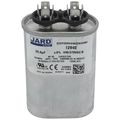
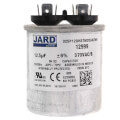
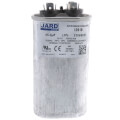
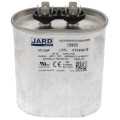
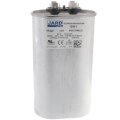
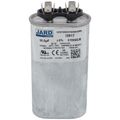
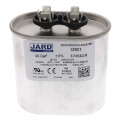
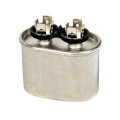
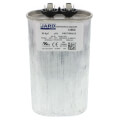
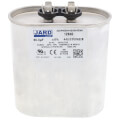
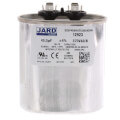

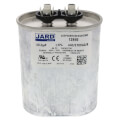
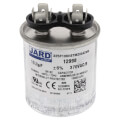
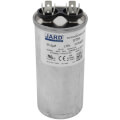
Jard motor run capacitors are oil-filled, round or oval capacitors used to keep single-phase motors running smoothly in air conditioners, furnaces, and other HVAC equipment. A run capacitor stays in the circuit continuously, maintaining the phase shift that lets a compressor or fan motor turn efficiently once it has started. Technicians reach for a replacement when a motor hums without turning, runs hotter than normal, or tests outside its rated microfarad range on a meter. Matching both the microfarad rating and voltage to the original part is necessary, since a capacitor with too little capacity will not deliver enough torque and one rated too high can overheat motor windings over time. Round and oval case styles exist mainly to fit different mounting brackets and enclosure spaces, not to indicate a difference in electrical performance. Keeping a range of common microfarad values on a service truck cuts down on return trips for one of the most frequent HVAC electrical failures.
Subcategories
- Round Run Capacitors: Round run capacitors are the more common case style, sized to fit standard mounting brackets found in most residential AC and furnace blower compartments. They are rated by microfarad capacity and voltage printed directly on the case label. Round capacitors typically cost less to stock in volume since they cover the widest range of common replacement jobs.
- Oval Run Capacitors: Oval run capacitors fit equipment with a tighter enclosure space where a round case will not clear surrounding components. They carry the same electrical ratings as round capacitors in equivalent microfarad and voltage values, so the choice between shapes comes down to physical clearance rather than performance. Checking the original capacitor's shape before ordering avoids a fit problem during replacement.
- Dual Run Capacitors: Dual run capacitors combine two separate microfarad values in one case, most often used to run a compressor and condenser fan motor from a single part. They simplify replacement on equipment where both motors share one capacitor location, reducing the parts a technician needs to carry for that specific unit.
Buying Guide
Replacing a Jard motor run capacitor comes down to matching two numbers: microfarad (MFD) rating and voltage. Both are printed on the original capacitor's case, and a replacement should fall within the manufacturer's stated tolerance for microfarad even if an exact match is not available. Voltage rating should meet or exceed the system's operating voltage. A capacitor rated too low is a common and preventable cause of early failure.
Case shape, round or oval, is determined by the mounting bracket and enclosure space in the equipment rather than electrical performance. Checking the original capacitor's shape before ordering a replacement avoids a fit problem, since a round capacitor will not always clear the same space as an oval one even at an identical rating.
For equipment running both a compressor and a condenser fan motor from a single capacitor, confirming whether that unit uses a dual run capacitor or two separate single capacitors prevents ordering the wrong configuration. A dual capacitor only fits equipment designed around its specific combined microfarad values for each motor.
Stocking a range of common microfarad values, in both round and oval cases, covers the majority of residential and light commercial capacitor failures without needing to special order a part mid-job. Since capacitor failure is one of the more frequent HVAC electrical issues, particularly during high-heat months, keeping common values on hand reduces the number of return trips for a call that could otherwise be resolved the same day.
Frequently Asked Questions
What does the microfarad rating on a Jard capacitor mean?
Microfarad (MFD) rating measures a capacitor's electrical storage capacity, and it determines how much phase-shifting current the capacitor delivers to keep a motor running smoothly. A replacement needs to match the original microfarad rating within the manufacturer's stated tolerance.
Is there a performance difference between round and oval capacitors?
A round and an oval capacitor with the same microfarad and voltage rating perform identically. The case shape only affects which mounting bracket or enclosure space the capacitor fits.
How often do run capacitors need to be replaced?
A run capacitor does not follow a fixed replacement schedule, but heat, continuous operation, and power surges all shorten its service life over time. Testing capacitance with a meter during routine maintenance catches a weakening capacitor before it fails and takes a motor down with it.
Can a capacitor with a higher voltage rating than needed be used?
A capacitor rated for a higher voltage than the system requires is safe to use and often used deliberately for a longer service life, as long as the microfarad rating still matches. Using a capacitor rated below the system voltage is the combination that causes early failure.
What happens if a run capacitor fails completely?
A motor connected to a failed run capacitor typically hums without turning, since it cannot generate enough starting torque on its own. Left running in that condition, the motor draws excess current and can overheat or trip a breaker until the capacitor is replaced.
