




Filters
SORT
Product Availability –
Review Score –
 --%3E %3Csvg version='1.1' id='Fill' xmlns='http://www.w3.org/2000/svg' xmlns:xlink='http://www.w3.org/1999/xlink' x='0px' y='0px' viewBox='0 0 100 100' enable-background='new 0 0 100 100' xml:space='preserve'%3E %3Cpath fill='%23F15C02' d='M79.44,0.95H20.56C9.78,0.95,0.95,9.78,0.95,20.56v58.87c0,10.79,8.82,19.61,19.61,19.61h58.87 c10.79,0,19.61-8.83,19.61-19.61V20.56C99.05,9.78,90.22,0.95,79.44,0.95z M65.38,58.24l9.38,29.58L49.69,69.78L24.5,87.82 l9.34-29.6L8.8,39.6l30.73-0.17c0,0,6.98-19.61,10-28.93c0.54,1.36,9.88,29.1,9.88,29.1H91.2L65.38,58.24z'/%3E %3C/svg%3E)
 --%3E %3Csvg version='1.1' id='With-RB' xmlns='http://www.w3.org/2000/svg' xmlns:xlink='http://www.w3.org/1999/xlink' x='0px' y='0px' viewBox='0 0 100 100' enable-background='new 0 0 100 100' xml:space='preserve'%3E %3Cpath fill='%23FBC8B4' d='M79.44,0.95H20.56C9.78,0.95,0.95,9.78,0.95,20.56v58.87c0,10.79,8.82,19.61,19.61,19.61h58.87 c10.79,0,19.61-8.83,19.61-19.61V20.56C99.05,9.78,90.22,0.95,79.44,0.95z M65.38,58.24l9.38,29.58L49.69,69.78L24.5,87.82 l9.34-29.6L8.8,39.6l30.73-0.17c0,0,6.98-19.61,10-28.93c0.54,1.36,9.88,29.1,9.88,29.1H91.2L65.38,58.24z'/%3E %3C/svg%3E)
Price Range –
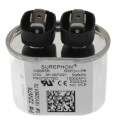
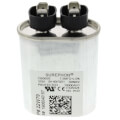
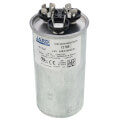
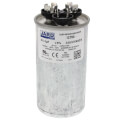
Lennox Capacitors


 --%3E %3Csvg version='1.1' id='No-RB' xmlns='http://www.w3.org/2000/svg' xmlns:xlink='http://www.w3.org/1999/xlink' x='0px' y='0px' viewBox='0 0 100 100' enable-background='new 0 0 100 100' xml:space='preserve'%3E %3Cpath fill='%23CECECE' d='M79.44,0.95H20.56C9.78,0.95,0.95,9.78,0.95,20.56v58.87c0,10.79,8.82,19.61,19.61,19.61h58.87 c10.79,0,19.61-8.83,19.61-19.61V20.56C99.05,9.78,90.22,0.95,79.44,0.95z M65.38,58.24l9.38,29.58L49.69,69.78L24.5,87.82 l9.34-29.6L8.8,39.6l30.73-0.17c0,0,6.98-19.61,10-28.93c0.54,1.36,9.88,29.1,9.88,29.1H91.2L65.38,58.24z'/%3E %3C/svg%3E)
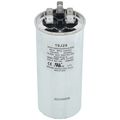
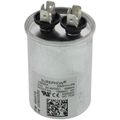
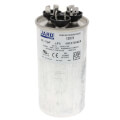
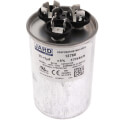
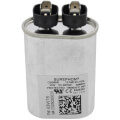
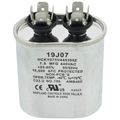
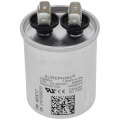

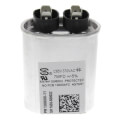
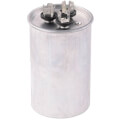
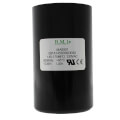
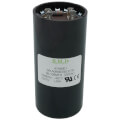
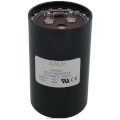
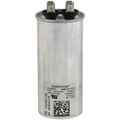
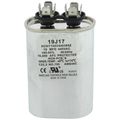
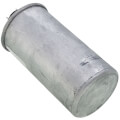
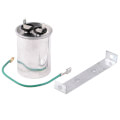
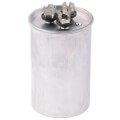

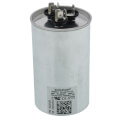
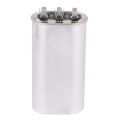
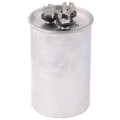
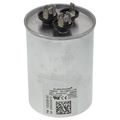
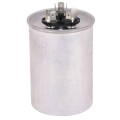
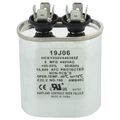
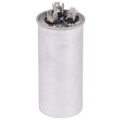

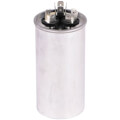
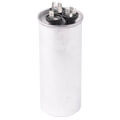
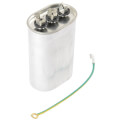
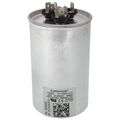
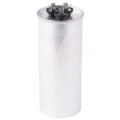
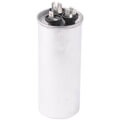
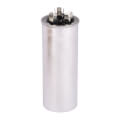
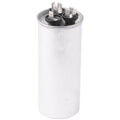
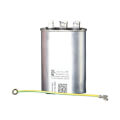

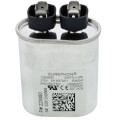
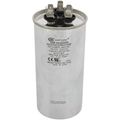
Lennox capacitors store and release the electrical charge that starts and maintains the fan and compressor motors inside a Lennox HVAC system. The lineup is organized into run capacitors, dual run capacitors, start capacitors, and hard start capacitors, each built for a different point in a motor's start and run cycle. A failing capacitor is one of the most common reasons a compressor or condenser fan hums without starting, or shuts off shortly after a system cycles on, since the motor can no longer get the electrical push it needs to begin or sustain rotation. Matching a replacement to the original part rather than swapping in a close equivalent protects both the motor and the rest of the electrical circuit from a mismatch in charge capacity or voltage rating. Technicians typically diagnose a capacitor issue with a multimeter reading before ordering a replacement rather than assuming the part based on symptoms alone.
Subcategories
- Run Capacitors: Run capacitors stay in the circuit continuously while a fan or compressor motor operates, maintaining the phase shift needed for the motor to keep spinning efficiently. They are the most frequently replaced Lennox capacitor, since they see continuous electrical stress every time the system runs. A humming motor that will not start, or one that shuts down shortly after starting, is a common symptom of a weakening run capacitor. Matching the exact microfarad rating on the original part number is important, since an incorrect rating can shorten motor life.
- Dual Run Capacitors: Dual run capacitors combine two separate capacitor functions, usually one for the compressor and one for the condenser fan motor, into a single component to simplify wiring and reduce the number of parts in the unit. These are common on packaged and split system condensing units where both motors need continuous capacitor support. Replacing a dual run capacitor requires matching both microfarad ratings, not just one, since each side of the component serves a different motor. Getting either rating wrong affects the corresponding motor's performance independently.
- Start Capacitors: Start capacitors provide a short, high-charge boost to help a motor overcome initial resistance at startup, then disengage from the circuit once the motor reaches operating speed. They typically work alongside a run capacitor rather than replacing it, adding extra starting torque for motors that need it. These are more common on compressors that have a harder time starting, particularly in colder ambient conditions or on older equipment. A failing start capacitor often shows up as a compressor that struggles to start on a cold morning but runs normally once it kicks on.
- Hard Start Capacitors: Hard start capacitors are add-on kits that combine a start capacitor with a relay to give an aging or hard-starting compressor extra torque at startup without replacing the compressor itself. They are frequently added as a repair to an older system exhibiting slow or hesitant starts rather than installed as original equipment. This option extends the useful life of a compressor that is beginning to struggle but has not failed outright. Installing one is generally less costly than a full compressor replacement, though it addresses the symptom rather than reversing the compressor's underlying wear.
Buying Guide
Replacing a Lennox capacitor starts with confirming the failure with a multimeter capacitance reading rather than assuming which type is bad based on symptoms alone, since a weak run capacitor and a failed start capacitor can produce similar hesitation or humming at startup. Once a run or dual run capacitor is confirmed as the issue, the microfarad rating and voltage rating on the original part have to be matched exactly, since an undersized capacitor will not sustain the motor properly and an oversized one can overheat the motor windings over time. Dual run capacitors need both microfarad ratings matched, one for the compressor side and one for the fan side, since the two functions operate independently even though they share a housing. A compressor that struggles specifically on cold starts, rather than every start, is a signal to consider a start capacitor or hard start kit rather than simply replacing the run capacitor a second time. Physical size and terminal configuration also matter, since a capacitor with the correct electrical rating but the wrong case size or terminal layout will not fit the existing mounting bracket or wiring harness. Discharging a capacitor safely before handling it is a basic safety step, since a capacitor can hold a charge even after the system is powered down. Keeping the original part's full rating information on hand before ordering avoids a second trip for the wrong replacement.
Frequently Asked Questions
What is the difference between a run capacitor and a start capacitor?
A run capacitor stays in the circuit continuously to help a motor operate efficiently while it runs. A start capacitor provides a short boost at startup and then disconnects once the motor reaches operating speed.
What does a dual run capacitor do compared to a single run capacitor?
A dual run capacitor combines the compressor and condenser fan motor functions into one component, each with its own microfarad rating, instead of using two separate capacitors.
When should a hard start kit be added to a system instead of just replacing the run capacitor?
A hard start kit helps when a compressor struggles specifically at startup, particularly in cold conditions, even after the run capacitor has been confirmed good. It adds torque assistance rather than addressing a run capacitor failure.
How do I know if a capacitor needs to be replaced?
A multimeter capacitance reading compared against the rated microfarad value on the part is the standard way to confirm a failing capacitor rather than relying on symptoms alone.
Can I substitute a capacitor with a different microfarad rating than the original?
No. The replacement should match the original part's microfarad and voltage rating exactly, since an incorrect rating can reduce motor life or cause the motor to run inefficiently.
